'He created spaces that are used every day'

 Richard Gleed/ PA Media
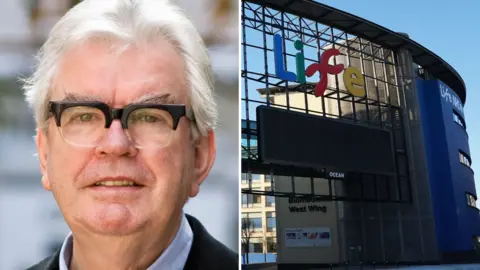
He was the mind behind iconic sites in Newcastle such as the Centre for Life and led the regeneration of the Quayside. While Sir Terry Farrell, who has died aged 87, designed buildings around the world, it is the city he grew up in where his legacy will continue.
One of those who worked closely with him, Owen Hopkins, director of the centre that takes his name, said he had a "profound impact" on the fabric of the city.
"What he has created here in Newcastle is spaces that are used every day, that have a positive contribution to the physical, social, cultural fabric of the city," Mr Hopkins said.
The Newcastle University architecture graduate also designed the MI6 headquarters in London and The Deep aquarium in Hull during his 50 years in practice.
He was awarded the Freedom on Newcastle in 2016 and established the Farrell Centre, an "urban room" where people can learn about the past, present and future of where they live.
'The Geordie Ramblas'
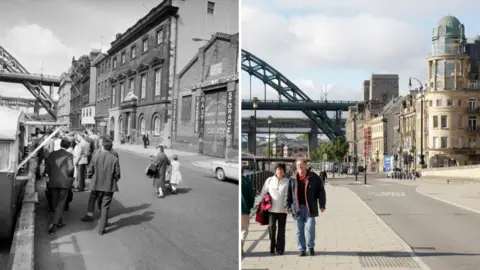
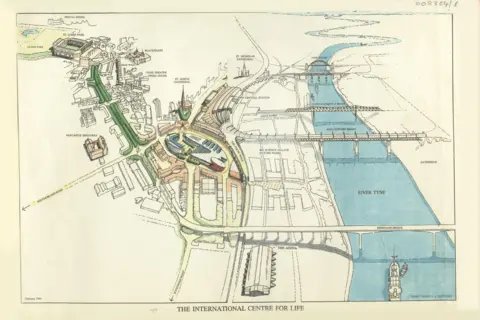
Mr Hopkins said one of Sir Terry's most important works in the city was the regeneration of the Newcastle Quayside in the 1990s.
 Getty Images
"It's a project that we now almost take for granted," Mr Hopkins said.
"Which is a testament to how successful it's been - taking a redundant part of the city, the former industrial area, and turning it into the vibrant public space that it is now."
He said the new buildings on the Quayside had been "sensitively and carefully" intermingled with the older ones.
Mr Hopkins said: "It really is a tour de force of 1990s urbanism."
 The Terry Farrell Foundation
 The Terry Farrell Foundation
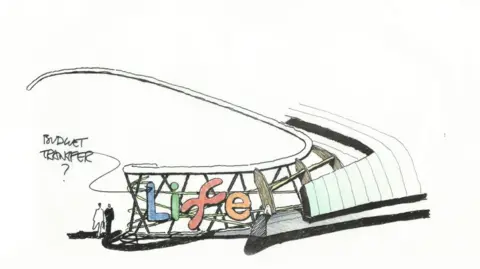
The Centre for Life - part visitor centre and part research laboratory - was a "incredibly difficult programme to bring together, but he does that incredibly well", Mr Hopkins said.
It paid tribute to Sir Terry, describing him as a "real gentleman and a pleasure to work with".
"Terry was the visionary architect... and his creativity, and innovation shaped not only our building but also the experience we share with every visitor who walks through our doors," a statement read.
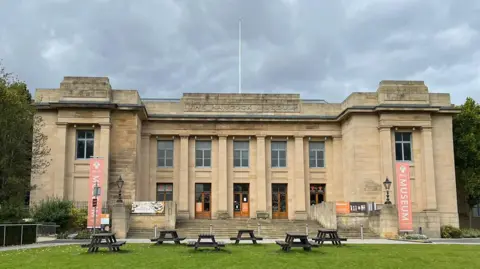
Sir Terry's practice - Farrells - also worked on expanding the Great North Museum: Hancock.
 BBC / Pamela Tickell
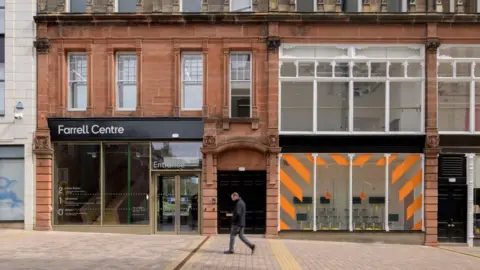
The Farrell Centre, which opened with Newcastle University in 2023, is space where people can debate the architectural future of the city.
Mr Hopkins said: "Very often the only way that we engage with the planning process is through the laminated white pieces of paper that appear on lamppost.
"The Farrell Centre is somewhere that Terry envisioned to try to change that."
 Jill Tate
Sir Terry had envisioned a future project called the Geordie Ramblas.
Similar to Barcelona's famous Las Ramblas, it would be a public promenade that connected the Quayside to Exhibition Park.
Mr Hopkins said parts along the route were already being developed in a similar way.
"I think Terry would be pleased that over time, and hopefully over the next few years and decades, that maybe the Geordie Ramblas might actually be realised in something akin to the form that he imagined."