'I need to capture it before it's gone completely'

 LDRS
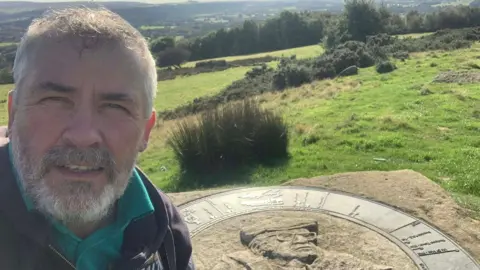
LDRSA Lancashire writer and walking guide said he was highlighting parts of northern England's history "before it's gone completely".
Clitheroe-based Nick Burton has helped develop a number of new walking trails around East Lancashire.
Mr Burton, who grew up in Manchester, also hosts guided walks about "disappearing" parts of the city. On them, he focuses on housing estates, working men's clubs and football.
"I've been devising walks charting the stories and buildings of the post-war city through the 1950s, '60s and '70s," he said. "Many aspects of that era have gone. I need to capture it before it's gone completely."
Mr Burton explained: "My dad, Roy Burton, was a steward in various working men's clubs. He used to tell stories about serving The Beatles or when the Kray twins came north.
"Today, Manchester's grand Victorian buildings may remain but many post-war buildings like working men's clubs have been swept away.
"My pipe dream is to set up a museum dedicated to this."
Mr Burton also helped develop a new trail in East Lancashire, linked to the Pennine Way and the Pendle Radicals paths network around Pendle and the Ribble Valley.
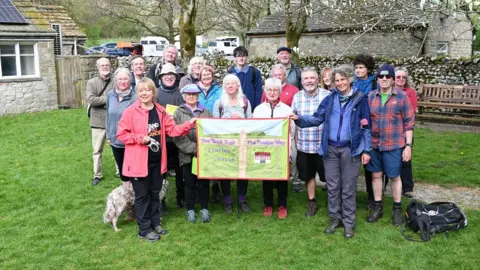
The Two Toms Trail celebrates Whalley's Tom Stephenson, creator of the long-distance Pennine Way, and the Rev Thomas A Leonard, a Victorian churchman in Colne who pioneered affordable outdoor holidays, the Holiday Fellowship.
 LDRS
LDRSHe also created Wainwright's Way, a long-distance walk highlighting Alfred Wainwright's life, from Blackburn to Cumbria.
"Wainwright is associated with the Lakes but never forgot his Lancashire roots. He spent 34 years in Blackburn and east Lancashire shaped his life in many ways," he said.
"The mill towns and surrounding countryside all influenced him. Blackburn Rovers was another love. He watched matches at Ewood Park regularly and founded the supporters' club."
Mr Burton also took part in the Pennine Way 60th anniversary events.
He said it highlighted changing tastes in outdoor activity and walking as well as the reduction of simple, cheap accommodation in some rural areas.
"It was very popular through the 1960s, '70s and '80s, but today, less people seem to walk it," he said.
"And much of the network of simple walkers' accommodation which supported it has gone. In particular, many youth hostels and basic B&Bs along the route have closed."
Listen to the best of BBC Radio Lancashire on Sounds and follow BBC Lancashire on Facebook, X and Instagram. You can also send story ideas via Whatsapp to 0808 100 2230.
