Can 'natural' defences stop homes being flooded?

 Ribble Rivers Trust
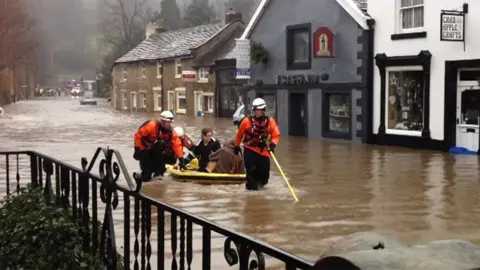
A decade ago two major storms swept through Lancashire causing substantial flooding.
People were rescued from their homes by boat in Whalley after they were deluged during Storm Ciara in 2020 - five years after the area was hit by Storm Desmond in 2015.
A flood management scheme has been proposed along the river Calder in Padiham at a cost of more than £9m after it burst its banks. But not everywhere can be protected by building new concrete flood defences.
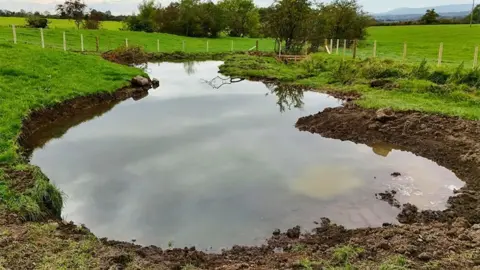
The Ribble Rivers Trust has built a series of natural defences to protect smaller communities at Mearley Brook and Worston Brook in Clitheroe from flooding, while also creating new wildlife habitats and improving river health.
 Ribble Rivers Trust
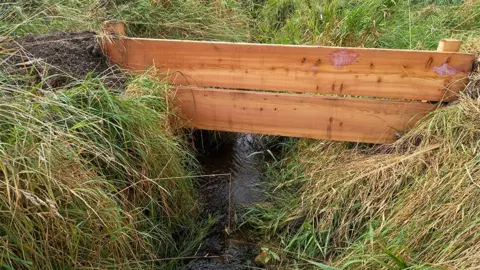
The conservation group said it had spent £400,000 on man-made features which mimic the natural effects of fallen trees, to make dams that hold back rainwater, slow river flows, and spill the water out on to the flood plain.
At Worston Brook, the trust has installed engineered log jams, leaky dams and brash barriers that, it said, could help to protect almost 500 properties.
Jack Spees, from Ribble Rivers Trust, said: "Compared to traditional concrete defences, they're a heck of a lot cheaper.
"We're hoping that we're going to be storing a volume of around 1.7 million litres of water, so holding that back rather than allowing it to flow down to Clitheroe."
On Mearley Brook, the trust has reintroduced more leaky dams and large wood to the river, removed artificially-lined riverbeds, and created new ponds.
A new rock ramp enables migratory fish to more easily access the upstream section of the brook, while the ponds offer low-moving areas of water where fish can rest.
New trees and hedgerows have been planted across the sites to provide additional food and shelter for wildlife, improving habitat connectivity between the river and surrounding landscape.
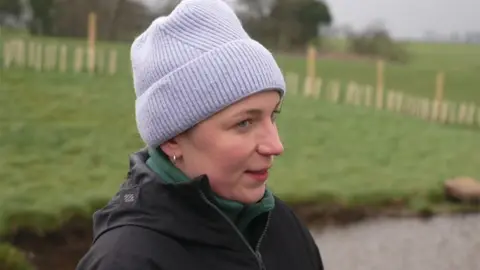
Hannah Lederer, project manager from Ribble Rivers Trust, said the plan was to add more ponds "across the whole catchment".
"If you think about the increase in capacity that would have on a wider scale, then it can really help make a difference."
"These natural approaches are not only more sustainable, but they also create habitat, improve water quality, and strengthen climate resilience," Lederer added.
These projects are funded by the Environment Agency's Natural Flood Management programme and the Species Survival Fund, which is administered by the Heritage Lottery Fund on behalf of Defra.
Listen to the best of BBC Radio Lancashire on Sounds and follow BBC Lancashire on Facebook, X and Instagram. You can also send story ideas via Whatsapp to 0808 100 2230.
