'Tinker Experiment' victims back call for reparations

 BBC
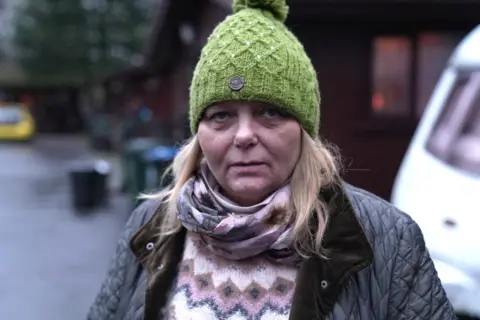
BBCVictims of the "Tinker Experiment" have backed a new report's call to award reparations to Gypsy Travellers.
The experiment - designed to "assimilate" travellers into society - ran from the 1940s to the 1980s and was supported by UK governments and Scottish local authorities at the time.
The Scottish Human Rights Commission (SHRC) report recommends financial compensation to victims and families and "urgent upgrades" to existing Gypsy Traveller sites.
First Minister John Swinney apologised "on behalf of Scotland" last year for trauma caused by "unfair and unjust policies" but the SHRC said further action is needed.
The SHRC said the No Man's Land report was a "comprehensive human rights examination" of the Tinker Experiment, drawing on legal analysis, archival evidence and victim testimony.
The effort to integrate Gypsy Travellers into Scottish society was first suggested in 1917.
Authorities wanted to take the travellers off the roads and into "normal" housing.
They were settled on sites across Scotland, including in Aberdeenshire, Argyll, Highlands, Perthshire, Fife and the Borders.
Threatened with having their children removed from them and taken into care, families were forced to leave life on the road for these settlements.
 Supplied
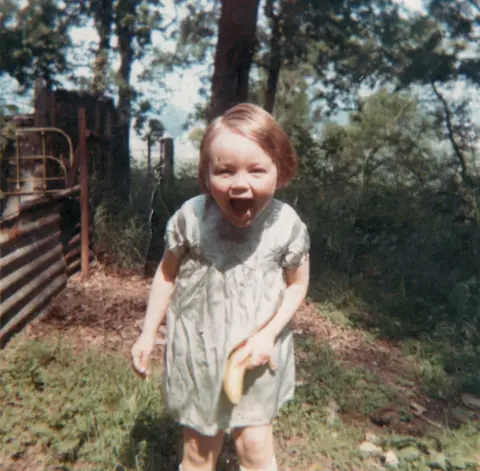
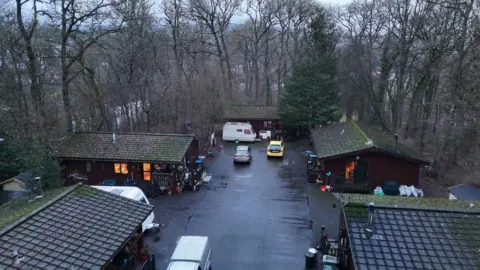
Bobbin Mill in Pitlochry is the longest serving Tinker Experiment site in Scotland.
Brother and sister Shamus and Roseanna McPhee grew up on the site and still live there.
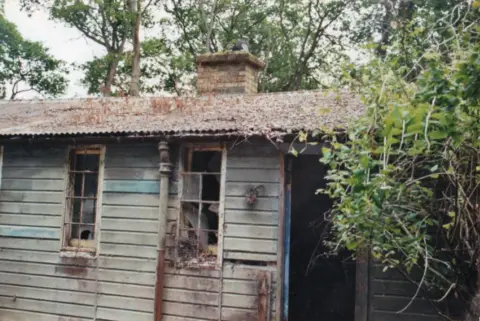
They lived in a former RAF hut which had no running water or electricity.
The site was later regenerated and the huts replaced with wooden chalet accommodation.
The McPhees both moved away for education and work but returned and, they say, suffered the consequences.
Roseanna McPhee said: "We didn't know it was an experiment growing up, I discovered that at the end of the 90s.
"Basically, it was nice until I went to school.
"When I went to school it was like walking into another world.
"You could sense hostility, even as a kid, and when you got to school, it was a terribly hostile environment for a five-year-old."
She was verbally and physically bullied and isolated and called "McFlea."
On one occasion she was pulled across the playground by her arms.
She said: "The thing that most alarmed me was I looked up and the teacher was just standing smiling out the window and not doing anything."
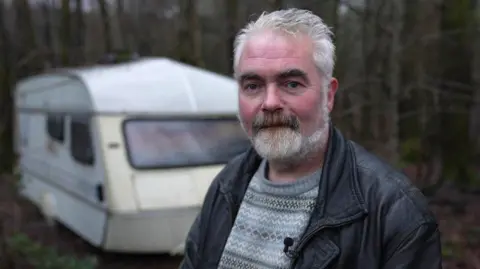
Shamus McPhee was born at Bobbin Mill in the early 1970s.
He said: "Growing up, we often wondered if this was just indicative of the level of treatment afforded to Gypsy Travellers.
"But when they actually stumbled upon the highly sensitive and deeply offensive paperwork pertaining to the Tinker Experiments, we were absolutely staggered."
Shamus said the new report "offered renewed hope" to victims of the experiment to address the "injury, harm and loss suffered over such a protracted period of time."
He said those affected may want a personalised written apology, outlining the harm experienced by the victims as individuals.
He also backed major investment in cultural infrastructure for "initiatives that are going to make a difference to people's lives."
He said: "And by that, I don't mean shelling out money to go to agencies.
"I mean, grassroots investments, and projects involving community members."
 Supplied
The report said experiment sites like Bobbin Mill were used to "forcibly assimilate Scotland's Gypsy Travellers through the provision of intentionally substandard accommodation paid for by the State."
The report said Bobbin Mill was not a short-term housing arrangement or existing home that had become outdated, but was deliberately set up to be substandard.
It said: "While authorities took action to roll out electricity to the majority population and put in place laws to ensure housing was up to an adequate standard, hutted accommodation without electricity for Gypsy Travellers was still being proposed by Perth County Council up to 1961."
It added there there was no electricity at Bobbin Mill until the 2010s.
Earlier this month, Perth and Kinross Council apologised to victims of the Tinker Experiment.
Another man, who did not want to be identified due to the continuing stigma, lived in Bobbin Mill from the mid 1960s until 1980.
He told BBC Scotland: "It was horrendous. No hot water, no bath, no shower, no electricity, it was like staying inside a fridge-freezer.
"There was only one cold water tap in the whole building and during the winter months it froze solid."
The man said it was subsequently discovered that the property was "loaded with asbestos."
He claimed that "half or more" of the people who had lived in the property died of cancer or "very extreme chest and lung problems."
He said that in the late 1960s, he had started gasping for breath but the doctor "would not come anywhere near Bobbin Mill."
Among its findings, the SHRC said that the State "systemically forced" the assimilation of Scotland's Gypsy Travellers by "conflating nomadism with vagrancy," as well as discriminating and enacting laws in the 1800s and 1900s to suppress nomadic practice and to remove children from their families.
The SHRC has recommended that the Scottish government establish a reparations scheme, including "contributions from all parties, including charitable organisations, found to have contributed to the 'Tinker Experiment' in Scotland."
No details of how such a scheme would operate in Scotland or the level of any potential financial compensation is included in the report.
The SHRC has also called on the Scottish government to issue a formal written statement recognising that the experiment "is not solely historical in nature and is a continuing human rights issue."
It added: "This should be clear that the state takes responsibility for the harms caused, and is apologising as the government, not on behalf of historic or unnamed actors."
SHRC chair Angela O'Hagan said it was "evident" from testimony that victims of the Tinker Experiment experience "ongoing substandard housing conditions, poor health outcomes, and face discrimination in education and in accessing employment."
She added: "While it is true that overt policy and practice designed to forcibly assimilate Gypsy Travellers took place in the 19th and 20th century, we cannot be clearer that the harms of the Tinker Experiment have not been addressed, are ongoing, and amount to a continuing human rights issue.
The report said today almost half of the 56 current mapped Gypsy Traveller sites in Scotland were 164ft (50m) or less from hazards and locations with pollution and environmental degradation.
It added: "Many authorised sites are situated close to hazards, including motorways, industrial estates, sewage treatment plants, recycling and refuse centres, and areas that are prone to flooding.
"Proximity to such hazards exists alongside being geographically isolated from essential services such as health and education, which would be taken for granted by the settled community."
'Positive first step'
The SHRC said John Swinney's apology last June was "a positive first step on the path to righting the wrongs done by Scotland's institutions."
The report said victims "have been clear that an apology needs to be followed by reparations."
It said: "Reparations should include, but not be limited to, financial compensation, investment in cultural programmes, and improvements in current accommodation."
O'Hagan described this as "transformative reparation that bring with it an acknowledgement of what happened" as well as "the ongoing effects of what has happened to people."
The Scottish government said it welcomed the publication of the report and would carefully consider its contents.
A spokesperson said: "We are improving the lives of Gypsy Traveller communities in Scotland through the second Gypsy Traveller Action Plan.
"Backed by £1m over the past five years, this is driving positive change to health, education, accommodation, poverty, and tackling discrimination.
"Alongside this, over £500,000 has been invested into the Community Health Worker programme to support Gypsy Traveller communities overcome barriers to accessing health and other public services.
"The Scottish government continues to engage closely with affected community members to explore further action in the immediate and medium term."
