Plans for homes to replace sewage works 'not dead'

 Anglian Water
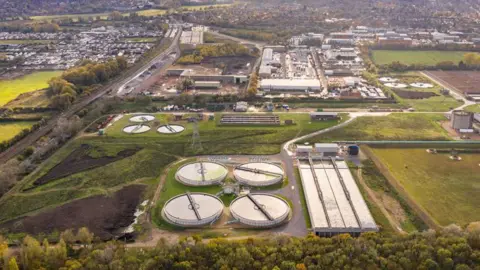
Plans to move sewage works to make way for thousands of homes are "not dead", a council meeting has heard.
Relocating Anglian Water's Cambridge treatment works was proposed to free up land for about 8,600 homes, but the Ministry of Housing ruled the scheme was unaffordable in August.
An Anglian Water spokesperson said it was disappointed the project was not going ahead.
However, speaking at a Cambridge City Council scrutiny committee meeting on Tuesday, Cambridge Growth Company (CGC) chairman Peter Freeman said he suspected in time the development "will happen".
The plans were "not dead but it's not coming back tomorrow", Mr Freeman said.
The meeting also heard that ministers were scrutinising Anglian Water over the proposed development.
 LDRS
LDRSAnglian Water had been given permission to replace its facility near Milton with a new plant on land known as Honey Hill, close to Horningsea.
Of the homes set to be built were 5,600 as part of a development known as "Hartree", which would also have included offices, workplaces and schools.
CGC is a body led by central government set up to oversee the developments in the Greater Cambridge area.
Mr Freeman told councillors Hartree was a "very difficult decision for the department to make", but said it would have needed a £575m grant from government, and that costs had risen by about 250%.
About £80m has already been spent on the project, by a combination of Cambridge City Council, Anglian Water, the government and developers.
Mr Freeman said he and Paul Leinster, chairman of the water scarcity group, met with the chief executive of Anglian Water and tried to persuade him to invest more of its own money in the project.
"We both leant on him as hard as we could to say 'surely you are getting an upgrade in the capacity or the cheaper running costs… will you lob some money on the table towards it?' and he said that within his priorities it was completely low.
"For them to spend money they have to be able to charge customers and therefore they have to make the case to [water regulator] Ofwat that they can charge customers for it and he said 'it's not actually improving our service'."
Mr Freeman explained he was "slightly annoyed" when the chief executive said Anglian Water was now objecting to other planning applications in the area because the government was not backing the new treatment plant scheme.
 Cambridge City Council
Labour councillor Simon Smith told the meeting there was a "crisis of confidence" among developers following the decision, in a city which is central to the government's economic plans.
He added that "Anglian Water did not contribute a penny but would have profited handsomely".
Beth Dugdale, CGC deputy chief executive, said ministers were now "scrutinising Anglian Water and their decision-making as part of that process and asking them to come up with solutions and to work with government to do that".
Anglian Water said it was relying on government funding for the relocation of the treatment works, and that there was an urgent need to upgrade the existing site.
As a result, it said it was temporarily objecting to new building developments due to "potential environmental risk and risks to existing customers".
"We supported the project as it was the right thing to do for the region, but as there was no operational justification for Anglian Water to vacate the existing site, it would have been inappropriate to ask Anglian Water customers to fund the work," a spokesperson said.
Follow Cambridgeshire news on BBC Sounds, Facebook, Instagram and X.
