Doctor's antibiotics regret after teenager's death

 Supplied
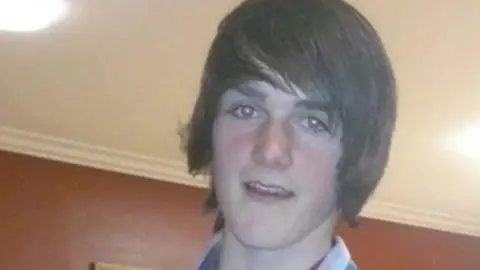
A doctor caring for a boy who later died from meningitis has said she "deeply regrets" stopping antibiotic medication, an inquest has heard.
Callum Hubbard, 14, from the Dronfield area of Derbyshire, died on 8 February 2014, three months after he had surgery on his ear.
Dr Katie Midwinter, who carried out the operation, said she believed she had cleared the infection and so it was "safe" to withdraw the medication.
Speaking at Chesterfield Coroner's Court on Wednesday, the medic said she was "so sorry" that she had not continued the antibiotics.
Dr Midwinter was speaking on the third day of a second inquest into Callum's death.
An initial inquest was held in 2018, but at the family's request, the High Court ruled a fresh inquest should explore the circumstances surrounding his treatment.
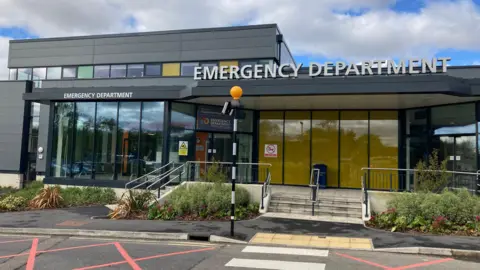
The ear, nose and throat specialist said she had first seen Callum the day after he was taken to Chesterfield Royal Hospital after becoming unwell on 17 November 2013.
Peter Nieto, senior coroner for Derbyshire, was told Callum had previously been seen by a number of doctors and had suffered from recurring infections "since a young age".
Paediatric doctors at the hospital suspected meningitis - an infection of the protective membranes that surround the brain and spinal cord - and put him on antibiotics, which saw his condition improve overnight, the inquest heard.
Dr Midwinter said she had read through his notes on 18 November and thought that the paediatrics department had finished treating the patient and were handing him over to her team.
She said there had been "no more mention" of meningitis since the admission and so she thought it had been "put to bed".
The doctor said Callum had seemed well when she first saw him, but she noticed some paralysis to the left side of his face, a symptom of cholesteatoma - a tumour-like growth in his middle ear - which needed to be removed.
Dr Midwinter said she had believed the ear infection was the cause of his meningitis-like symptoms.
During the procedure, she cleared a large amount of infected tissue and pus and cleaned any sign of infection.
She said having cleared the ear, she had believed it was "safe" to withdraw antibiotics as she believed she had cleaned the infection away.
Dr Midwinter said it was "normal practice" to withdraw antibiotics after an operation to remove infection, but that on reflection she "deeply regrets" not continuing the treatment.
"I wish I could turn the clock back, I wish I could do it again, I wish I could change what I did," she said.
"I've learned and read a lot about meningitis and talked to a lot of people and I think, in hindsight, I shouldn't have stopped them.
"I'm so sorry - I deeply regret stopping the antibiotics."
 LDRS
LDRSWhen asked if she should have checked with paediatric doctors before stopping the medication, Dr Midwinter said: "I accept now I should have contacted them.
"I wish we would have met, and I apologise for that.
"I didn't look for alternative explanations and I should have done.
"There can be very, very big similarities between a bad ear infection and meningitis.
"I think I was too sure of myself fitting it into what I could see in front of me."
Callum was discharged on the morning of 19 November but was rushed into the emergency department three days later having lost consciousness.
The court has previously heard he was transferred to Sheffield Children's Hospital later the same day and underwent a series of surgeries, but never regained consciousness.
He remained in the care of Sheffield Children's Hospital until a decision was taken in February 2014 that there was no treatment that could be given.
The inquest also heard from Dr Steve Conway, a paediatrician, who said, on the balance of probability, Callum would not have died if he had continued to receive the medication.
Jurors who have heard evidence over the past three days are due to be sent out to consider the inquest conclusion.
Follow BBC Derby on Facebook, on X, or on Instagram. Send your story ideas to eastmidsnews@bbc.co.uk or via WhatsApp on 0808 100 2210.
