Bomb disposal team finds 300 pieces of ordnance

 BBC
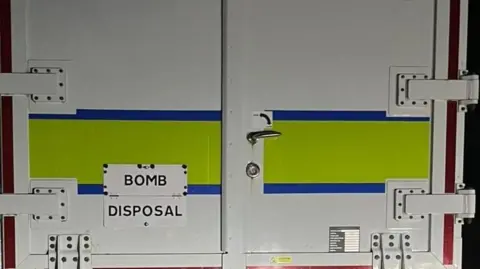
BBCA bomb disposal team dealt with more than 300 pieces of ordnance on a beach, the Ministry of Defence (MOD) has confirmed.
Eskmeals beach, near Ravenglass, in Cumbria, was closed for 11 days after unexploded ordnance was found.
The MOD confirmed its explosive ordnance disposal team had dealt "with a significant cache of historic ordnance" and had carried out 13 controlled explosions.
"Over 300 items were identified and dealt with, including Howitzer rounds, proofing rounds, and projectiles," a MOD spokesman said.
He said about 90% of the objects found were inert, with the rest being live.
Mike Sainsbury is the managing director of unexploded ordnance specialists Zetica and an expert in their removal.
Why so many items?
Sainsbury explained while he was not involved in the operation, the number of items found likely indicated that the ordnance had been washed up in separate sections.
He said: "You may get one intact item for example and then you may get a fragment or fuse, so I think that's clearly why there's so many items."
The site is close to a military firing range and Sainsbury said some fragments may also have come from exploded shells there.
He said: "[It could be] they found a few hazardous items, they decided to do a search for others and of course they pick up these fragments and pieces, which are not dangerous in themselves but if you detect them, you're going to remove them."
'Detonated in situ'
He said older ammunition that may have been buried for some time, may have been treated as live if it was difficult to determine its content or condition.
Sainsbury said Howitzer rounds were shells that could have an explosive content and he dealt with hundreds every year.
They have to be detonated "in situ" to make them safe, he said.
Ordnance like artillery shells regularly wash up on beaches across the country.
The MOD spokesman said: "Following a large-scale disposal operation, the task was brought to a safe and successful conclusion."
