Facial recognition cameras rolled out in Merseyside

 Thomas Berrington/BBC
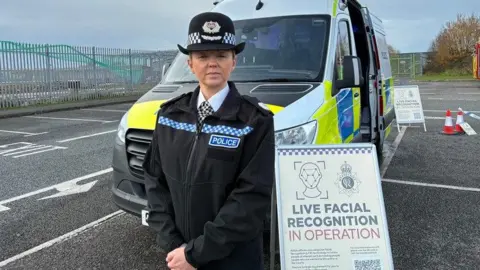
Facial recognition technology capable of picking out the faces of wanted or missing people from dense crowds has been rolled out by police in Merseyside.
Live Facial Recognition (LFR) works by comparing faces caught on live camera feeds to a "secure watchlist" containing photos of people wanted for crimes or considered a risk to themselves or others.
Merseyside Police said it would be used to assist decisions on whether to stop and speak to someone, but that final decision would always be taken by an officer.
Civil rights group Liberty has called on the government to halt the rollout of the technology and bring in safeguards after it found children had been included on police watchlists.
Assistant Chief Constable Jennifer Wilson said only the people loaded onto the pre-determined watchlist would be identified, adding: "This is not mass surveillance."
"Before this technology is deployed in the community, strict checks are in place to ensure its use is both necessary and proportionate," she said.
"LFR has already proven successful in other police forces, and we're building on their experience to ensure it delivers the same positive results here in Merseyside."
The force said no biometric data was stored from people passing through an LFR zone, as the technology, "immediately and automatically" deletes data from anyone not on the watchlist.
 Merseyside Police
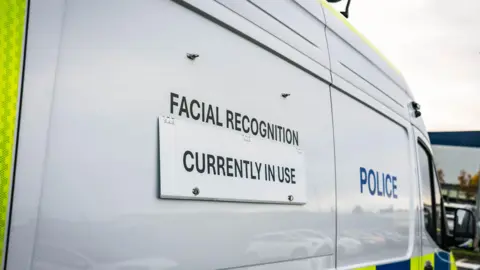
Sgt Ben Sorrell, demonstrating an LFR van to the BBC, said to allay privacy concerns and reduce the risk of data breaches, the technology was not connected to the internet when it was in use.
"It is isolated," he said. "All the technology, the cameras, are all just within this one van.
"That watch list is securely transferred and only a few officers have access to that information."
The first deployment of the LFR system took place in Liverpool city centre on Monday.
Merseyside Police said any areas covered by LFR would be marked and signposted in advance.
However, Sgt Sorrell said the technology had still been able to catch out criminal suspects in other regions.
"I believe there was a person wanted for some sort of sexual offences," he said.
"They were outstanding for 10 years and they walked through an LFR camera on that deployment and, as a result of that, they were arrested and dealt with," he said.
LFR has been used by the Metropolitan Police and South Wales Police since 2017 and is being trialled at several forces including Merseyside, Greater Manchester, Sussex, Hampshire, Essex and Bedfordshire.
Human rights concerns
Civil rights group Liberty said it was concerned that children had been included on police watchlists.
Akiko Hart, Liberty director, said: "It's disappointing the Home Office is starting a consultation with a pledge to ramp up its use.
"Police forces have been able to make up their own rules for too long – and just this week we learned these cameras have been used to target children as young as 12.
"The government must halt the rapid rollout of facial recognition technology and make sure there are safeguards in place to protect each of us and prioritise our rights – something we know the public wants."
Listen to the best of BBC Radio Merseyside on BBC Sounds and follow BBC Merseyside on Facebook, X, and Instagram, and watch BBC North West Tonight on BBC iPlayer.
