Painting hidden in attic for years back on display

 Stockton Borough Council
A 17th Century painting, which remained hidden in an attic for decades before its importance was discovered, is back on display.
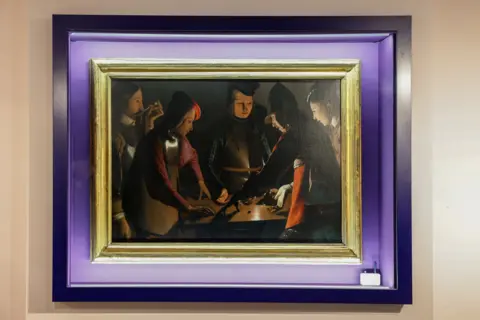
The Dice Players was painted around 1650 by French Baroque painter Georges de La Tour. Today, it is the most internationally celebrated artwork on display at Preston Park Museum in Stockton-on-Tees.
It was donated in the 1930s but it took about 40 years before its significance was discovered during a routine check of the collection stored in the museum's attic.
The painting has since been enjoyed by international audiences and has just returned from a loan to the Jacquemart-André Museum in Paris.
"While it's always a pleasure to share this rare painting with international audiences, there is something very special about welcoming it home," said councillor Nigel Cooke, who is responsible for culture at Stockton Borough Council.
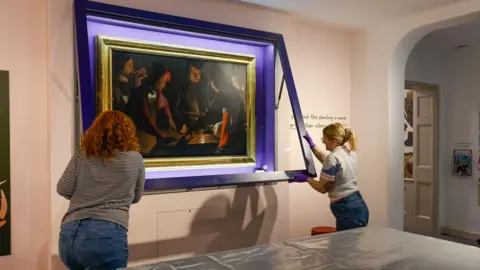
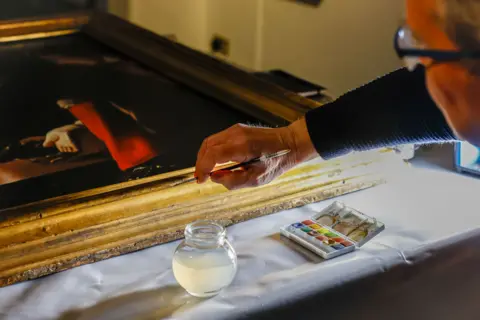
Following its return from France, a specialist conservator carried out light conservation work, including colour work on the frame.
It went back on display in Stockton this week.
 Stockton Borough Council
The Dice Players depicts a tense, candlelit game of chance.
Although the candle is not visible in the scene, its warm glow illuminates the faces, armour and expressions of the players.
The museum said it was an example of the captivating atmosphere characteristic of de La Tour's dramatic use of light.
It added loaning the artwork to other institutions helped to raise the profile of Stockton's collections.
 Stockton Borough Council
Cooke said: "We are thrilled to have it back on display, where it will continue to be a highlight for everyone who visits Preston Park Museum."
The painting was bequeathed by Annie Elizabeth Clephan in memory of her father Edwin.
During a routine valuation in 1972, its significance was revealed when Christopher Wood of Christie's recognised an inventory entry for an "old painting" titled Throwing the Dice by de La Tour, sparking widespread interest and excitement.
A Preston Park Museum spokesman said: "What had once been overlooked quickly became Preston Park Museum's most renowned artwork."
