Rare fungus found for the first time in UK forest

 Liz Frost
A fungus never before found in the UK has been discovered by a walker strolling through a forest.
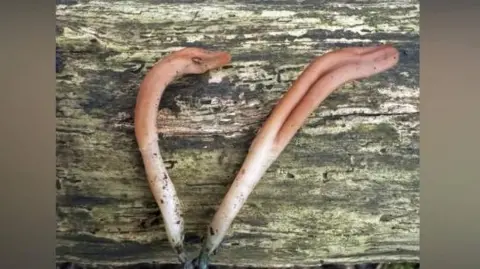
The blue-based earthtongue, which has the scientific name microglossum cyanobasis, was found at Kingley Vale National Nature Reserve in West Sussex.
Liz Frost, an amateur fungi enthusiast, said she was delighted to discover it among the reserve's ancient yews, which are estimated as being at least 500 years old.
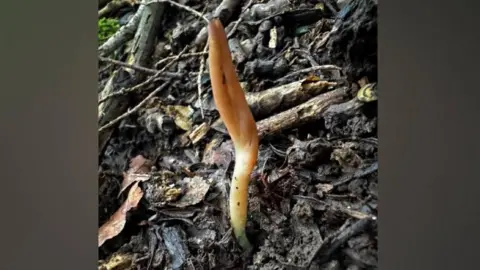
Measuring between 45 and 55mm (1.7 to 2.1in) it is the blue-green colour at the base which makes it unusual. Cyanobasis means "blue base".
 Liz Frost
Initially the 48-year-old found six specimens of the fungus, which Frost said was inedible. Returning the next day she found a further 12.
"Little did I know, I had just made the first ever UK sighting of the blue-based earthtongue," said Frost, from Southbourne, West Sussex.
Her find at the reserve, which sits in South Downs National Park, near Chichester, follows its discovery in Spain in 2009.
It was suggested it could be microglossum cyanobasis by the person who made the Spanish discovery when Frost posted on the British Mycological Society's Facebook group.
 Liz Frost
To be sure, DNA sequencing was arranged which found a 99% match.
Frost, who made the discovery last December, said: "They're incredibly easy to miss - small and well camouflaged amongst the woodland floor - which might explain why they've gone unnoticed until now."
Kingley Vale National Nature Reserve manager,Natural England's Rachel Guy, said: "The presence of the fungus signals undisturbed, nutrient poor grasslands and long-established woodland soils.
"These environments are becoming increasingly rare due to fertilisation, drainage, ploughing, and land use change."
Follow BBC Sussex on Facebook, on X, and on Instagram. Send your story ideas to southeasttoday@bbc.co.uk or WhatsApp us on 08081 002250.
