'School punished my child because I missed her parents' evening'

 BBC
BBCSeveral parents of pupils at two secondary schools in Essex say their children have been left anxious, unsupported and in some cases unsafe since the schools were taken over by the Hackney-based Mossbourne Federation earlier this year.
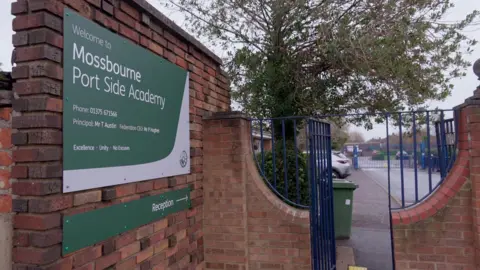
Families who spoke to the BBC described what they said was an increasingly punitive environment at Mossbourne Port Side Academy and Mossbourne Fobbing Academy in Thurrock, alleging frequent detentions for minor issues, a lack of flexibility for pupils with additional needs and poor communication from staff.
About 150 pupils have been withdrawn by their parents since the takeover, the BBC understands. Others have kept them enrolled but said they were struggling to get their concerns addressed.
The Mossbourne Federation - which took over the previously failing academies of about 2,000 pupils between them in January - said only a small proportion of pupil departures related to formal concerns raised with the academies.
It rejected suggestions of safeguarding failings, saying both schools are oversubscribed and improving academically, but added that it "accepts that it does not always get it right".
The federation said its highly structured model was based on "research, decades of experience and independent reporting", adding that when expectations were predictable "pupils feel safer, teachers can teach and learning improves".
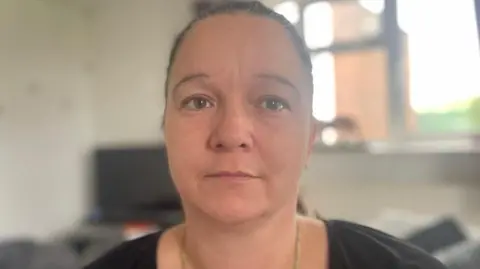
Louise Butcher said she withdrew her son and daughter from Mossbourne Port Side Academy in Stanford-le-Hope last month over what she viewed as a heavy-handed approach to discipline.
She said on one occasion she was unable to attend a parents' evening due to a shift at work, after which her daughter was given a detention.
"To punish my child, it kind of makes you as a parent then think, 'I can't actually say anything because if I try and stand up for my child, it's my child that suffers.'"
In another incident, Ms Butcher said her daughter was unable to access locked toilets while on her period.
"She had no help and she was panicking. There needs to be something in place to allow girls of that age access," she said.
Ms Butcher said pupils were punished for actions such as stopping at a shop on the way home in uniform, carrying their mobile phone or wearing the wrong colour socks.
"These are just tiny little things that, OK mention it, but you don't need to put them in isolation," she said.
"It was no longer about the welfare of the child, it just seems to be control."
A spokesperson for the Mossbourne Federation told the BBC they could not comment on individual cases but said:
- Pupils are not permitted to enter shops in uniform, as travelling directly between home and school "ensures the school can maintain appropriate safeguarding standards". Anyone seen going into a shop after school in uniform "is sanctioned… This is about safety"
- Mossbourne's uniform policy sets out that only "plain white or black socks" are to be worn and the "purpose of this clarity is to ensure that every student knows exactly what is expected of them, and what the consequences will be if those expectations are not met"
- Parents' evenings are "a critical part of the parent-teacher relationship" and the only opportunity for parents to speak to all their child's teachers in one evening
- The locked-toilet policy was an inappropriate rule inherited from the previous trust and has since been ended, but pupils must "make up any time missed at the end of the day"
Another mother, who requested anonymity and will be referred to as Becky, said her daughter - who has special educational needs, including help with dyslexia - had been "thriving" in Year 7 at the Fobbing Academy before Mossbourne took over.
The academy, previously named Ortu Gable Hall School under its former administration, was rated "inadequate" by Ofsted in its most recent inspection in May 2022.
"It is the best school year she's ever had," Becky said.
"So much support was put in place with her, both pastoral support and support with her anxiety."
Her daughter had been given coloured paper to help her with her dyslexia and was allowed to leave lessons to self-regulate when overwhelmed, Becky said.
But when school resumed in September, she said "there was a reduction of pastoral support, a reduction of being able to come out of class and self-regulate".
"They took away her resources for her dyslexia. And this all happened with absolutely no warning whatsoever."
Becky said her daughter also began receiving sanctions she viewed as disproportionate. On her first day back at the school in Corringham, she said she was told her daughter's skirt was too short despite it being below the knee.
"They rang me and said: 'She's in isolation because of her uniform and she will remain there until you sort her uniform out.'"
'Absolutely disgusting'
Later that day her daughter was given a detention for not reciting the school mantra correctly. Becky said much of the behaviour for which her daughter was sanctioned was linked to her learning needs, and that isolation worsened her anxiety.
"They were not supporting her by keeping her out of a classroom," she said.
She also said emails often went unanswered "for days, sometimes weeks", and that she was sometimes unaware her daughter had been kept behind after school - discovering it only through location tracking on her phone.
Her daughter is now being home-schooled.
"She just looks so much happier and doesn't appear miserable any more."
The Mossbourne Federation spokesperson said:
- Many special educational needs and disability (Send) plans inherited in January contained statements "not practical in a mainstream setting". The federation is reviewing each plan individually to ensure support "develops independence" and provides the structure children need
- Rather than printing worksheets on coloured paper, Mossbourne "often provides a coloured overlay", which they said allowed dyslexic pupils to access all materials and avoided singling them out
- Pupils are not allowed to leave lessons freely for safeguarding and learning reasons. A "timeout card" is available only for some pupils in specific circumstances
- All Send-related arrangements, including after-school sessions and catch-up, are communicated through the pupil planner. Some families "have found the transition to the planner more challenging", meaning parents may not realise a sanction has been set if the planner is not checked
- Mossbourne said that sometimes "it is not the initial incident that results in a sanction but the child's reaction to being corrected". It emphasised that expectations must be applied consistently to maintain a calm learning environment
- If accessibility aids or support strategies have been removed, parents are asked to raise a formal complaint so the school can investigate. The federation said some parents disengaged early in the complaints process, making resolution more difficult
- When children miss lessons, it is important that they "catch up on the work" promptly on their return to school to avoid falling behind

Luanne Miles, whose 14-year-old son remains at Mossbourne Fobbing Academy, said she had raised concerns about how the school was handling his recently developed severe allergies.
She said he sometimes needed days off because of allergic reactions and carries an EpiPen, but was then assigned what she described as detentions - the school said these were catch-up sessions for missed work.
"He then gets punished for not going to school with a two-hour detention for every day missed," she said.
Ms Miles said on one recent occasion her son was kept behind after school but she was not told, which led her to fear he had suffered an allergic reaction when he did not return home.
"Me and neighbours are now running frantic, checking the streets, [school] phone lines are off," she said. "That's absolutely disgusting."
She said the school had agreed her son would not do same-day detentions, but she claims this is not being acted on.
The mother of three also expressed concern that a second EpiPen, kept in the school office, would be inaccessible after hours.
"If he had an attack, nobody would have been able to get to the second EpiPen because everything was shut."
'They don't see a problem'
Ms Miles claimed the school was not living up to its responsibility to provide food to which her son is not allergic.
"The other week he didn't have enough money on his account so they made him go to the office, they contacted me, I had to top up his account," she said.
"By the time he got back there, [it] was pesto pasta and pizza. He can't eat either. So the child didn't eat all day. And they don't see a problem."
A spokesperson for the academy said:
- When children are off school "it is important they catch up on the work". Catch-up is best done "as soon as possible after a lesson has been missed", and Mossbourne provides time and space for this when pupils return
- The school must act on medical advice from qualified professionals, but this can only happen once the relevant information has been provided by parents. It said that at times "it can take a significant amount of time for the school to be provided with the information necessary" to ensure its actions are appropriate
- All after-school sessions, including catch-up, are communicated via the pupil planner (a physical book), which should be regularly reviewed by parents. Some parents and pupils "have found the transition to the planner more challenging", which can mean they are unaware of sessions if the planner is not checked
- Mossbourne said it could not comment on individual pupils, but noted that concerns could be difficult to investigate if parents mixed specific issues with wider claims or where no supporting record existed
- On school meals, the federation said it could check payment records if families believed a child went without food. Any pupil allergic to all options available is asked to alert a senior member of staff so that "a suitable meal" can be provided. "No child will ever knowingly go hungry," it said
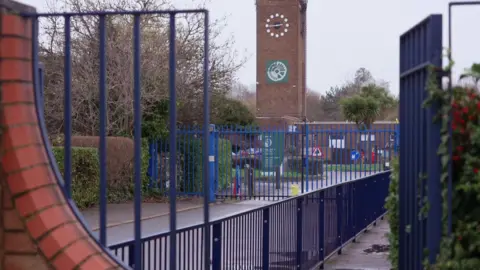
All three mothers, as well as a father who spoke to the BBC but did not wish to be identified, expressed concern over the ban on carrying mobile phones, on safety grounds.
The father, whose daughter had her phone confiscated for 10 days for briefly using it to tell her mother she was running late, said: "They've told me they believe the kids are safer walking to and from school without phones, which I completely disagree with.
"As a concerned parent, I want my daughter to be contactable."
The federation said its 10-day confiscation policy aligned with government guidance. It said it had not yet introduced its usual ban on pupils bringing in phones to school, to allow a phased transition.
At a Thurrock Council meeting in October, councillors heard that 93 pupils had been withdrawn from Mossbourne Fobbing Academy since the takeover.
Independent councillor Gary Byrne, who has been working with parents, said that number had since risen and that he estimated more than 50 pupils had left Port Side Academy since January.
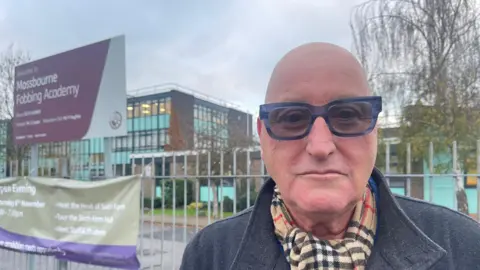
"I have to keep banging the drum and hoping somebody's going to listen," he told the BBC.
Vikki Hartstean, cabinet member for children's services, told the meeting that the departures were "obviously concerning" and that the council had begun scrutinising the situation "with Mossbourne's co-operation".
"These removals are not just numbers, they represent disrupted lives and families in distress," she told the meeting.
BBC News has asked the federation for up-to-date figures on how many pupils have been withdrawn. Its spokesperson said it was "incorrect" to say the 93 pupils had been withdrawn over "parental safeguarding concerns".
Many of the concerns raised in Thurrock echo themes identified by barrister Anne Whyte KC during a review into Mossbourne's schools in Hackney, east London.
It found that while policies were broadly compliant with statutory guidance and delivered strong overall pupil attainment, communication was sometimes slow, parents felt dismissed when raising concerns and the strict implementation of behaviour policies occasionally left little room for flexibility for children with additional needs.
The Mossbourne Federation said "highly structured" approach to teaching had kept its Hackney secondary schools "in the top 1% nationally" for two decades.
The federation added that its behaviour policy had "transformed outcomes for pupils", saying many families supported its approach.
It said that since it took over in January, it had "sought to listen, and to ensure its schools are best adapted for the communities they serve".
"This sentiment is echoed by many parents - the silent majority who do not make headlines, but who feel the positive impact every day," the spokesperson said.
They said academic improvements in Essex were already visible, highlighting "a 0.4 grade increase in Attainment 8" and added that the schools were now oversubscribed.
The federation acknowledged that the Whyte Review found communication with parents had sometimes been too limited.
It said it "fully accepts" those findings and was committed to "continuous improvement", adding that reforms recommended by the review "have already begun".
With additional reporting by the Local Democracy Reporting Service
