Fly-campers could be fined at more beauty spots

 Nicola Millner
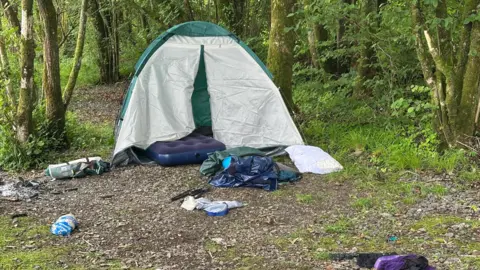
More spots in a national park could be given greater protection against anti-social behaviour, including fly-camping.
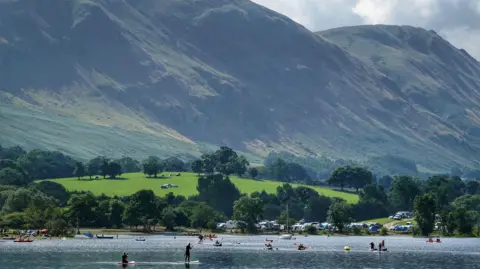
Westmorland and Furness Council said it wanted to introduce nine public space protection orders (PSPOs) in Lake District sites such as Ambleside, Ullswater, Haweswater Reservoir and Windermere.
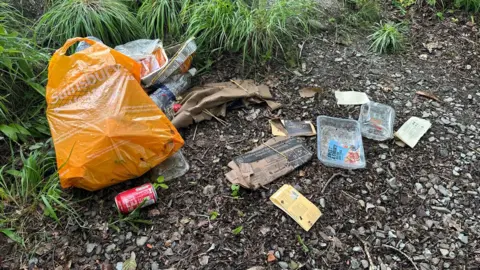
The PSPOs would allow officers to fine people up to £100 for damaging the environment when camping, lighting fires or barbeques, and littering.
The council said it had opened a public consultation after residents shared evidence of "persistent problems" in the areas.
PSPOs were introduced at other sites earlier in the month.
The National Trust, which is responsible for swathes of the Lake District, said there was a difference between fly-camping and wild camping.
Wild camping is allowed above the highest fell wall and campers should "leave no trace".
To issue a fine or be prosecuted, there must be clear evidence of anti-social behaviour or environmental damage, the council said.
Charity Friends of the Lake District said surveys sent to residents revealed that fly-camping and anti-social behaviour was making people "afraid to take their usual walks" and being "unable to enjoy the landscape".
 PA Media
The proposed locations are:
- Galava Roman Fort, Ambleside - owned by the National Trust
- Holme Crag, Ambleside - owned by the National Trust
- Brown Howe, Coniston - owned by the Lake District National Park
- Haweswater Reservoir - owned by United Utilities
- Brothers Water, Hartsop - owned by National Trust
- South Ullswater, including Glencoyne and Aira Force - owned by the National Trust
- South Ullswater including Ullswater Steamers land - owned by Lake District Estates and National Trust - and Jenkin Field, Glenridding - owned by Patterdale Parish Council
- Ullswater, laybys and land adjacent to the lake - owned by Gowbarrow Hall
- Bowness and Millerground, including Cockshot Point, Windermere - owned by the National Trust
 Nicola Millner
Jeremy Smith, head of campaigns at Friends of the Lake District, said the actions of fly-campers and litterers were causing "significant visual and health impacts" on people living in Cumbria.
He added residents were becoming "unable to enjoy the landscape around where they live out of fear of what they may encounter".
The landscape charity urged the council to enforce the "necessary powers and procedures" before the main tourism season started "so that residents can be spared these problems on the scale that we saw them in 2025".
Tensions became heightened last year with many social media posts by residents highlighting issues with dumped equipment, land damaged by campfires and rubbish.
The council said its consultation was open until 9 February.
