Anxiety, loneliness and low self-esteem in children as young as seven

 Family photo
Anxiety, lack of confidence, loneliness, worries over appearance, problematic phone use.
These are problems you might expect to hear about teenagers, but the people affected here are primary school children.
An all-Wales survey which investigates the health and wellbeing of schoolchildren has, for the first time, asked primary-aged pupils how they are and the headlines make concerning reading.
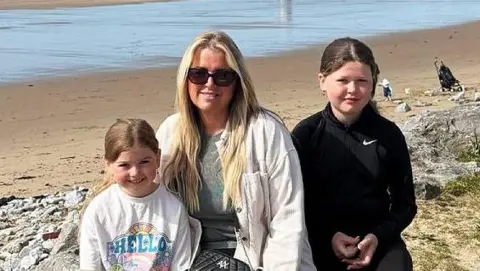
Lucy, whose daughter Lola, 11, goes to Cogan Primary School in Penarth, Vale of Glamorgan, said: "Lola is quite anxious and she thinks about everything. If you know her in school, you wouldn't think that. But she thinks ahead of everything 'that's going to happen, that's going to be the worst thing'."
The survey indicates one in seven children aged seven to 11 has "clinically significant" emotional difficulties, meaning they reach the threshold for professional intervention.
That's about four children in every class.
One in three have elevated emotional difficulties, meaning they regularly feel worried, sad and upset.
The School Health Research Network (SHRN) student health and wellbeing survey led by Cardiff University's Decipher programme asked more than 50,000 pupils at 510 primaries a range of questions about physical and mental health.
Seven out of 10 regularly had trouble sleeping, half had been bullied, less than half ate fruit or vegetables every day.
How much impact is this having on the young generation? Lucy, Sorraya and Kayleigh are three parents on the front line of this question.
All have daughters who took part in the survey, and as a result of the anonymised feedback given to each school, were invited join a targeted programme designed to improve pupils' wellbeing.
Lucy has two other daughters, aged 22 and eight, as well as Lola.
Lola took part in the school's Flourish scheme in Year 6 where a group of children are taken out of the classroom for sessions across eight weeks, with the aim of improving relationships with peers and boosting self-confidence.
 Family photo
Kayleigh's daughter Skylar tended to be shy and "hide away" in big groups beyond her close friends.
She said: "She struggles with confidence in school with getting things wrong or maybe looking silly if she gets things wrong in her work. And that was a big problem in speaking out in class or joining in on things."
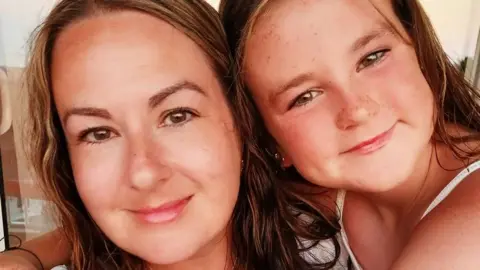
Like Skylar, Sorraya's daughter Eliza was comfortable in her small friendship group, but Sorraya noticed a big change in how that manifested after the pandemic hit.
"She was the only child at home with two parents who were frontline workers in Covid. But because of my health condition unfortunately she wasn't able to go to the hubs.
"Covid affected her in terms of a little bit of loneliness when it comes to those relationships. Those friendships that were so big to her pre Covid were suddenly taken away.
"That had an impact on her after Covid in terms of her confidence to make other friends and also really just wanting to hold on to those friends, like she was going to lose them again."
All three parents "100%" agree they have seen more anxiety and emotional distress among younger children than previously.
 Family photo
Lucy has seen a real difference in the pressure coming from social media and mobile phones Lola faces.
"When my eldest daughter went to school, she just had a phone but she didn't have all these apps. She'd come home and she wouldn't be speaking to someone all night, or things wouldn't carry on from school.
"There's 10 years between them and I've noticed a big change."
Phones loom large in these conversations.
Even with parental controls and time limits in place, Eliza will wake up to more than 300 messages sent while she was offline and then have anxiety over the fear of "not missing out, but of not knowing".
Lucy said: "Because they're exposed to so much more, I think they're just not children any more at that age, and they still should be children.
"With my eldest, she was meeting up with people in parks, friends and things on the weekend.
"Lola - I think because she's seen so many things go wrong or things online - I've noticed with her she still doesn't socialise a lot. She gets invited a lot to things but she thinks, 'oh, that could happen'."
Kayleigh agrees: "Like Lola, [Skylar] is more aware of dangers and gets anxious about things like that."
'A high number are struggling with emotional health'
Dr Kelly Morgan, director of SHRN, who led this survey and has previously worked on the secondary school equivalent, said she was unsurprised at the "worrying reports".
But, she added: "What's striking is that there already are that high number that are struggling with their emotional health and various other aspects.
"All that's going to happen is that's going to continue and worsen over time if policy and practice isn't putting something in place."
She did highlight positive messages coming through as well, including the number of children saying they felt connected to school and peers and were supported by teachers, even while struggling with their mental health.
 Tom Lewis
Tom Lewis is wellbeing coordinator at Cogan Primary School who helped identify areas for improvement after the school got its SHRN survey results.
He said: "There were relationships with friends that children are struggling with. This is in Year 6 – the data was slightly lower than Year 4 and 5.
"So it was basically how children engage with their peers and friends and the other area was their appearance and how they see themselves, so that's self-confidence."
The Flourish project focuses on teamwork, self-esteem and building confidence and, for Lola, Skylar and Eliza, the results were overwhelmingly positive.
Sorraya said Eliza learned to speak up a bit and be more assertive and it also calmed worries about keeping a small circle of friends so she could relax into being part of a wider circle, which has helped with her transition to secondary school.
Lucy was shocked when, after the course, Lola told her she wanted to join a football team, despite not knowing anyone who played.
"She's still there now and she made friends who were going up to high school. That is massive for her to step into something. She's not that sporty either so it was putting herself out there."
Skylar found having a different environment to open up in made it easier for her to realise it was OK to get things wrong and to ask for help.
Tom said class teachers noticed children who took part in the sessions had a more creative perspective and approach to solving problems, helping the wider group in the class, as well as boosting their academic performance.
The programme is now on its fifth intake and Tom thinks many factors, including Covid and the cost of living, have played a part in the survey's results.
But, he added: "Society has changed in many ways. It's down to schools to adapt to those changes and how we engage with children."
