Boats, trains and cable cars: Getting around a city's 1986 festival

 BBC
BBCVisitors had the choice of air, land and water for getting around the National Garden Festival when it was held in Stoke-on-Trent in 1986.
The city hosted the festival as it searched for a new identity after nearly two decades of industrial decline. Situated in Etruria, attractions for visitors included 70 themed gardens.
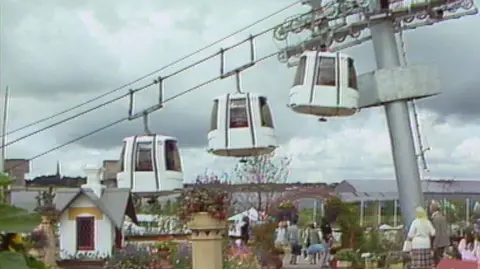
There was a cable car system specially installed for the event, as well as a festival train and, being situated next to the Trent and Mersey Canal, there was the option of a boat trip too.
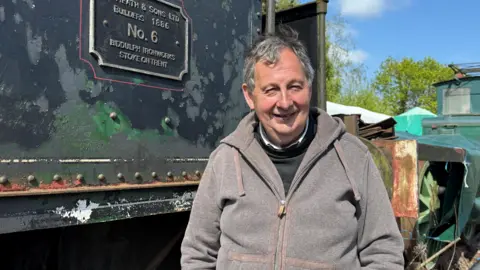
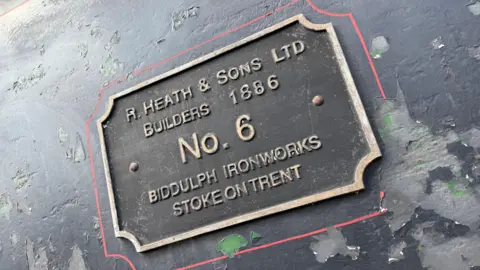
There was also a steam locomotive running on a standard gauge line, Robert Heath No 6, operated at weekends by volunteers from Foxfield Railway.
"It was great fun, something special, something different, and a wonderful opportunity to promote the railway to the hundreds of thousands of people that were coming into The Potteries at that time," said Dave Scragg, one of the volunteers.
Today, the engine is still based locally, in Caverswall, and is owned by The Knotty Coach Trust, although it is fair to say it has seen better days.
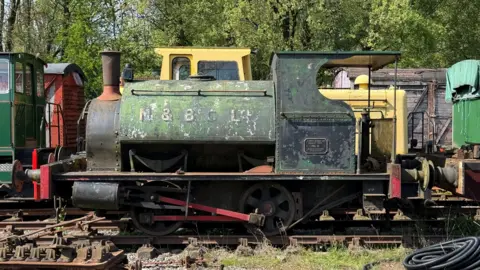
"This engine is very much something that we would like to see restored, back in working order," said Scragg but added achieving that goal would cost about £150,000.
Around £30,000 has so far been raised to bring the 140-year old locomotive back into use, in an appeal launched in January.
During the garden festival, the engine ran very short journeys of about 150 yards (137 metres), but will be remembered by many as it was one of the first things visitors saw as they walked through the main entrance.
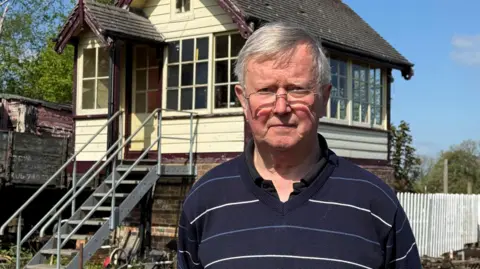
Alan Jones, who was one of the team of volunteer drivers, remembered he would occasionally cook a breakfast of bacon and eggs on a shovel, heated by the engine's furnace.
"I thoroughly enjoyed it," he said, although admitted it was "slightly boring" in contrast to the challenge of the Foxfield track which offered curves and steep gradients.
Another well-known way visitors used to get around the festival was by cable car.
Festival organisers felt they needed "some sort of dramatic, vertical feature," tall enough to be seen from nearby roads, according to the event's guidebook.
The ride extended more than 640 metres (2,000ft), rising to a height of 50 metres (164ft), and there were 18 gondolas, travelling in groups of three, which would pause on the way up and on the return journey so passengers could take in views of the festival grounds.
Heights of Abraham owner Andrew Pugh initially declined to get involved in the scheme, due to the financial uncertainty involved in such an expensive project.
"I looked at it, and I said to them I can't possibly do that because the risk factor for me is too great," Pugh said.
A subsequent conversation with the then-environment secretary, followed by further talks with festival bosses, led to the attraction's cost being underwritten by the local authorities.
"The engineering side was a masterpiece by Poma, a French team," Pugh added.
"We had quite a lot of people from Stoke working on the team, and I remember them with great affection.
"They were enthusiastic people and we all got on very well."
A talking point 40 years on, is what has happened to the gondolas.
Part of Pugh's brief included dismantling and selling the cable cars after the festival.
He told BBC Radio Stoke he sold them to an entrepreneur in north Wales, but it turned out that planning permission had not been secured and so another buyer had to be found.
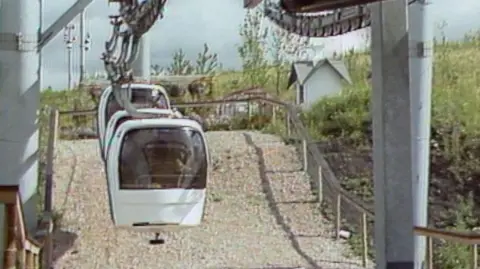
The cable cars eventually ended up in Jordan in the Middle East, Pugh said, and he believed they may still be there to this day.
"I presume, I don't know, that's where the Stoke cable car is now," he said, but added he had never "felt the need" to go to see for himself.
As a result of the Stoke-on-Trent festival, the owner of Alton Towers at the time, John Broome, had a cable car installed at his theme park.
There are also now cable cars across the Thames, Pugh pointed out, but said his were the first.
"All of these are followers, if you like, of the pace-setting of the Heights of Abraham and Stoke-on-Trent."
Follow BBC Stoke & Staffordshire on BBC Sounds, Facebook, X and Instagram.
