'I took off my hijab to keep my children safe' - Report reveals racism trauma

 Getty Images
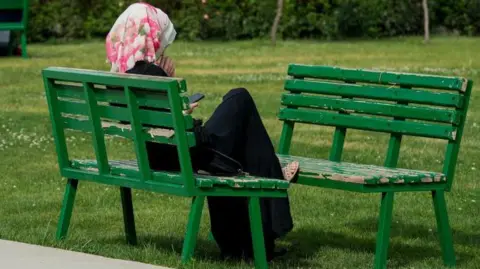
When two men hurled racist abuse at Jasmine her first thought was for her children as they played in the park, and in that moment she decided it was safer to remove her hijab.
This wasn't the first time Jasmine had experienced racism, last year she found herself fleeing a car park when a man ran at her, threatening her with a wrench, after hurling racist comments toward her and her young family.
We have changed her name to protect her family, but her experience is one of many reflected in a report looking at the realities of ethnic minority communities in Wales, commissioned by the ACE (adverse childhood experiences) Hub Wales, part of Public Health Wales.
The report documents the racial trauma experienced by people going about their lives using public spaces, education and accessing public services.
"I took my hijab off, so if they did come back, they might just pass me, even though I'm visibly a person of colour," Jasmine said, as she spoke about the incident when two men rode past as her children played in a seafront park.
"My hijab is part of my identity, I'm Muslim, but ultimately I had to do that to keep my children safe."
She rushed her children back to the car, turning it into a game, and told them to have a race, because she was terrified the men would turn and chase them.
"I did ask myself, was I wearing a colour I shouldn't have, that drew their eyes?
"Have I done anything wrong to bring this negative attention towards me and my children?"
Jasmine said she reported the wrench incident to the police and the perpetrator was taken to court, but said the process was traumatic - made worse because she has received racial abuse from a member of the public while at the police station.
The report calls for a better trauma-informed response from services when supporting someone from an ethnic minority community, to recognise the long term toll racism takes.
Jasmine said she now gives careful consideration to the parks she visits and even what her children wear.
She said: "It's almost like you're suffocated. There's anxiety and stress that comes with it because you're on a constant alert.
"Sometimes I feel like nowhere is safe apart from my own house."
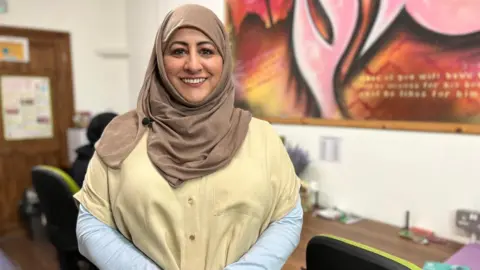
Selima Bahadur, race and policy lead at EYST (Ethnic minorities and youth support team) co-wrote the report with Dr Shehla Khan from the University of South Wales, and said there was not a shortage of policies, but existing anti-racism plans need to be taken seriously.
"It's not the time to get another act of law, we are bringing you this research, we've told you how horrific it is - take it seriously."
She said it comes at a time when "the narrative of hate towards people of colour" is getting stronger.
Selima said the most shocking part of the research was hearing children's experiences in the classroom, with some describing racial slurs being used by teachers.
"One teacher told a child of black background to stand next to the blackboard to blend in.
"Another teacher has said to a girl it's a silly way to wear a piece of cloth around her head - it goes on and on."
The report opens with a quote from someone in north Wales, describing a boy who was a top scorer at school football, but when he was chosen for the team people said: "He is taking the position away from white people and he should 'go back to Afghanistan'."
They continued: "If you are not good at school people hate you and if you are too good people hate you too. You have to blend in, but you can't outshine other people."
Selima said she would like to see racism treated in the same way as other safeguarding incidents in schools and recorded, rather than "brushed under the carpet".
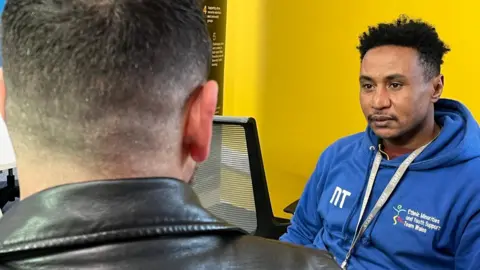
One man supported by EYST said his son has been repeatedly beaten up since the family moved to Wales from Syria, seven years ago, showing BBC News photos of the bruised face of his son over the years after attacks.
Several videos also show him being beaten by gangs of teenage boys, filmed by spectators.
Salah (not his real name) and his family came through the resettlement scheme and their three school-age children now have British citizenship.
He said they fled conflict, but he worries that the daily racism they all experience has also "marked his heart".
"I'm always trying to smile, just to give hope for others, but I'm hiding wounds behind my smile," he said, through an interpreter.
Salah said when his son was with a group of young boys and was caught throwing an egg at a car, police were called.
He offered to take full responsibility for his son's actions, aware it was wrong. No criminal damage was caused, but the owner requested £800.
As he was unable to afford that, his 12-year-old son was taken to court. Magistrates threw the case out, but he said it contrasts with a perceived lack of police action against those who have attacked his son.
Those themes of perceived discrepancies and disproportionate treatment of particular communities also run through the report.
 Getty Images
The report refers to layers of racial trauma along themes of:
- Direct verbal abuse, physical assaults and intimidation
- Institutional racism and discrimination in services
- Microaggressions and stereotyping
- Exclusion and isolation
- Hostility on transport or in shops
- Barriers to support and mistrust in authorities
- Impact on mental and physical health
- Generational trauma
It makes a number of recommendations to Welsh government, schools and local authorities, as well as the police and criminal justice system to better record and act upon racist incidents.
Do You See My Trauma was commissioned so that racial trauma would also be recognised by organisations when adopting a trauma-informed approach.
It will also feed into the development of tools to meet the goals of anti-racist action plans set out by both the criminal justice system and Welsh government.
A Home Office spokesperson said: "Racism has no place in society and we're committed to tackling it in all forms.
"This government has introduced new race equality laws to strengthen protections and we're backing the police's National Race Action Plan to ensure the public have confidence the police truly represent the communities they serve."
A Welsh government spokesperson said: "Racism is unacceptable in our schools and public services, and we expect all allegations of bullying and racism to be fully investigated, with appropriate action taken to address the matter and prevent further instances from happening.
"While this report makes for difficult reading, it is vital that we listen to people and address the issues they face."
It added systemic change takes time, but its Diversity and Anti-Racist Professional Learning project supports education and childcare professionals.
