'Palliative care in NI is a Cinderella service'

 BBC
BBCA widower has said he felt "powerless" to help as he watched his terminally ill wife "squirm" in pain because a doctor wasn't available to escalate pain relief.
Alan Sheppard said he believes palliative care patients should be able to access personalised pain relief plans no matter what time of day, especially in hospital.
Mr Sheppard said his wife, Anne, was only offered paracetamol, despite being in "excruciating" pain as hospital staffing was stretched and no doctors were available to prescribe morphine.
He was speaking ahead of a report by Stormont's health committee which found significant gaps in the provision of services, and "many" examples of patients having to be treated and dying in emergency departments as an out-of-hours service was not available.
Anne was 71 when she died from cancer in July 2023 after being diagnosed with the disease in 2010.
"I want Anne's experience to make a positive difference for others," Mr Sheppard said.
"The health service tries to add years to life and life to years - but for someone who is terminally ill and in palliative care it's adding weeks to life and life to weeks - it is crucial that the health service gets it right."
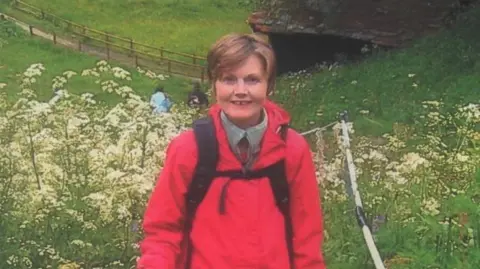 Alan Sheppard
Mr Sheppard said one of the most difficult days was when Anne was admitted to hospital months before she died.
He said that, as it was a Bank Holiday weekend, most of the doctors were providing support in the emergency department and no-one was available to administer stronger pain relief.
"Anne was in squirming on the bed in pain and squeezing my hand so tight that I told her if she needed to break my fingers to go on ahead it was terrible to watch, we felt helpless," he said.
Thirty six hours later a hospice nurse intervened and a pain relief plan was put in place.
What's in the health committee report?
Mr Sheppard told Anne's story to the health committee, which has been holding an inquiry into how palliative and end of life care can be improved across Northern Ireland.
The committee has now recommended that legislation should be introduced to ensure the commissioning and funding of palliative care in Northern Ireland.
At present, 30% of hospice services are government funded with the rest coming from fundraising.
One of the recommendations in the report is that all hospice care services receive 100% funding.
Other recommendations include that a regional independent palliative care clinical lead be appointed, and palliative services are prioritised.
Research shows about £350m is spent on healthcare for people in their last year of life but 56% of that is related to emergency admissions and 4% in hospices.
The committee said spending more on hospice care supported the health minister's policy of moving more services into the community .
Hospice Alliance NI, which is made up of Evora Hospice, Foyle Hospice, Marie Curie and the Northern Ireland Hospice and children's hospice, have called upon the health minister to move " decisively" to implement the committee's recommendations in full.
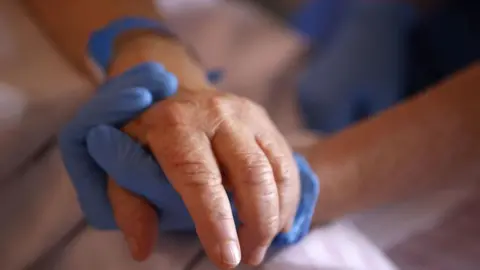 Getty Images
'The system failed her'
Mr Sheppard said Anne was "an incredible, beautiful woman, wife and mother" but there were "times when the system failed her".
"Consultants don't have enough time - often they were seeing Anne's test results shortly before our appointment and then spent the meeting staring at their computer screen," he said.
"Palliative care is a Cinderella service; I really do hope MLAs will debate this report and consider its recommendations. Surely looking after those who are dying should be a top priority."
Hospice beds are often at a premium, and the day before Anne died she was offered a place but at stage was too ill to be moved from home.
"In the end we were fortunate to have Anne at home but that was only thanks to an excellent support system managed by a hospice nurse," Mr Shepherd said.
There is wide concern this report, like others, will sit on a shelf.
How much does it cost to run a bed?
Northern Ireland has four main hospices: There are also inpatient and specialist palliative care services in the five regional
The cost of running one hospital bed is approximately £600,000 per year due to specialist nurses.
But demand is increasing with projections that the need for palliative care will rise by 57% before 2040.
Hospice cares for about 12,000 people each year with 70% of patients dying at home. That equates to around 17,000 nights of dedicated care provided by specialist staff in patients' homes.
Data also shows that 25% of hospital admissions are in their last year of life and would benefit from specialist services in the community rather than in hospital.
