Oxfordshire treatment site tops sewage spills table
 BBC
BBCA treatment site in Oxfordshire has been named Thames Water's most offending sewage works in a new report by campaigners.
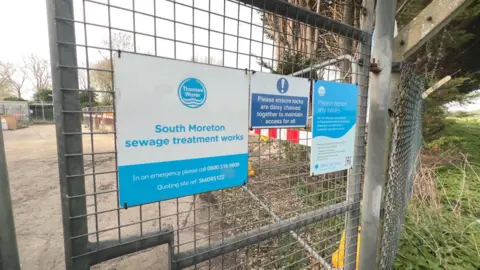
Channel 4's docudrama Dirty Business star Peter Hammond and fellow researchers from the Windrush Against Sewage Pollution (Wasp) group found that South Moreton sewage treatment works, near Wallingford, carried out 287 "illegal spills" between 2021 and 2025.
The report also found the River Pang in Berkshire was the worst-affected river under the firm's remit, with 383 "illegal spills" over the same period.
Thames Water has said the works in South Moreton would be upgraded to reduce untreated discharges this year.
The report analysed "illegal spills" at 2,241 of Thames Water's sewage treatment works between 2021 and 2025.
The company uses rivers as an overflow when its sewer systems are overwhelmed by rainfall or high groundwater levels.
The South Moreton sewage treatment works, which releases into Mill Brook, serves three villages in south Oxfordshire, with a population of about 1,250 people.
The Wasp report found 2024 was the worst year in the last five, with a total of 5,353 spill hours.
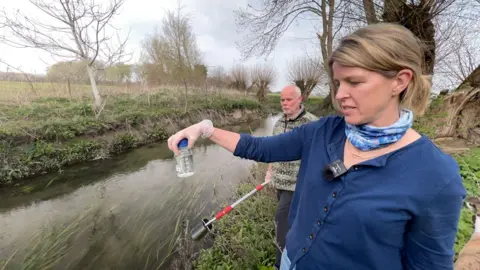
Jo Robb, Green Party councillor on South Oxfordshire District Council, said sewage fungus was "absolutely choking and coating the reeds".
She added: "There's absolutely no way that we would ever advise anybody come and swim or paddle in this little brook or even pond dip in it, although it appears to be absolutely pristine and beautiful."
Robb said the works had been discharging sewage "almost continuously" since 21 January and that the issue is reflective of wider problems across the network.
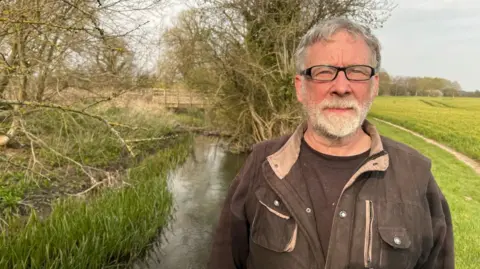
Greg Knowlson, who lives next to the site, said Mill Brook had changed significantly over the course of a few years.
"About five years ago we spotted otters further downstream, obviously looking for the fish," he said.
"I think probably just over two years ago the fish disappeared and we haven't seen any otters. There's no other sort of wildlife on it.
"We think it is something to do with the sewage plant - it's disgusting, really."
The treatment works at Faringdon were named the second worst offender in the report, with 271 illegal spills, followed by those at Hampstead Norreys with 271.
Mill Brook and Faringdon Stream were the second and third worst offending rivers after the Pang.
On a list of its investment plans published online, Thames Water said an upgrade is planned for South Moreton sewage treatment works.
"This will improve its ability to treat the volumes of incoming sewage, reducing the need for untreated discharges in wet weather," the company said.
"The scheme, which is still being designed, is due to complete in 2026. We expect this location to meet all government targets for storm overflows by 2040-2045."
Thames Water previously said it was delivering "record levels of investment across [its] wastewater infrastructure between 2025 and 2030" as part of its "biggest upgrade" in 150 years.
The company and the Environment Agency have been contacted for further comment on the report.
You can follow BBC Oxfordshire on Facebook, X (Twitter), or Instagram.
