'Having coeliac disease aged 9 means I'm normal with a tiny twist'

 Selina Burns
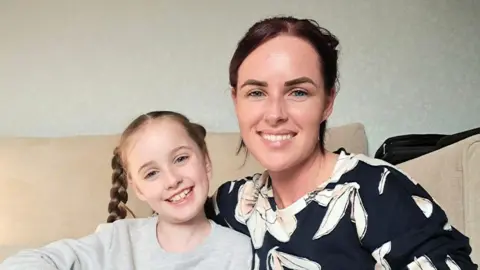
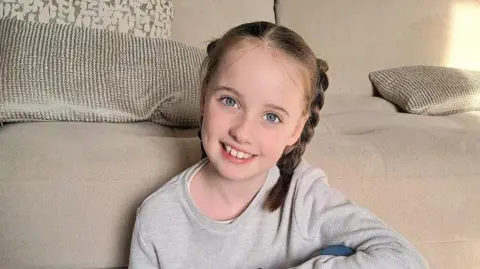
Like her classmates, nine-year-old Eliza loves a birthday party - but a slice of the cake is rarely on the menu.
Her coeliac disease diagnosis four years ago means she has to avoid any food containing gluten, a dietary protein found in wheat, barley and rye, or, as her mum Selina, from Blackburn, Lancashire, puts it, "all these really delicious foods she can no longer have".
However, her classmates have rallied round.
"I think it's pretty nice because, especially when it's someone's birthday and they're giving out cakes, they wouldn't just leave me out. They're good friends and they give me a full packet of Haribo," said Eliza.
The unremittingly positive little girl described her symptoms before she was diagnosed as "belly aches and everything, and I felt sick but other than that, I just felt like a normal person".
Selina had been so concerned about her daughter she asked for a blood test; doctors thought she must have irritable bowel syndrome.
So it was a relief when Eliza was finally diagnosed with coeliac disease, which affects one in 100 adults and children.
"As soon as you are diagnosed with coeliac disease, you can start a strict gluten-free lifestyle, and that allowed Eliza to be herself and live," said Selina.
'People want to help'
However, she said she had experienced fear and irrational guilt after Eliza's diagnosis.
"You find yourself asking, 'did I eat the wrong things when I was pregnant?'
"You start worrying then, you know, 'are there foods out there that she's going to enjoy? Are there going to be foods out there that we can afford?'
"'Is she going to be isolated? Are her friends at school not going to invite her to birthday parties because they're scared that they're going to give gluten to her?'"
She added: "Then you realise that people do want to help and they will help, and they do go out of the way to adjust things to keep her included.
"It's okay to have your doubts on how your life's going to change, but it isn't as bad as what you might initially think."
She explained: "There is support out there. There is the charity Coeliac UK that has loads of different information and advice available for parents - they've been our Bible."
What is coeliac disease?
The NHS says coeliac disease is an auto-immune condition in which a person's immune system attacks their own tissues when they eat gluten. It damages the small intestine so the body cannot properly take in nutrients.
Eating foods that contain gluten can trigger a range of gut symptoms, such as diarrhoea, stomach aches, bloating and flatulence, indigestion and constipation.
Coeliac disease can also cause more general symptoms, including:
- Fatigue as a result of not getting enough nutrients from food
- Unintentional weight loss
- An itchy rash
- Problems getting pregnant
- Nerve damage
- Disorders that affect co-ordination, balance and speech
- Children with coeliac disease may not grow at the expected rate and may have delayed puberty
 Selina Burns
Selina believes there needs to be greater awareness of the condition in children.
"We need to educate schools more," she said. "We need to educate, you know, childcare provisions from nurseries to childminders to even children's centres where these children go."
It is a mission that she puts into practice in her own kitchen, with Eliza's big brother, now aged 16, and younger sister - who was born after her diagnosis - being part of the family's gluten-free lifestyle.
"We figured that there's quite a few foods that are naturally gluten free. So we've got fruit, vegetables, rice, potatoes, so we do tend to make home-cooked meals so we know what's safe for us all to eat," Selina said.
It is a lifestyle her siblings have embraced.
Selina said: "Her brother knows a lot and is very protective over her so if Eliza is going to a friend's house, for example, he'll quiz her to make sure she understands what she can and can't have."
She added: "This is going to last her a lifetime and if it's not well managed, she can have long lasting adverse effects from infertility to other diseases, such as higher risk of cancer."
Eliza is more philosophical about her life, saying: "I've got a normal life, just like a normal person, just with a tiny, tiny little twist."
And her advice to other children if they receive the same life-changing diagnosis is equally wise: "A friend would be scared that they're not allowed to eat their favourite food and all, but they can always find better food."
Listen to the best of BBC Radio Lancashire on Sounds and follow BBC Lancashire on Facebook, X and Instagram. You can also send story ideas via Whatsapp to 0808 100 2230.
