Views split a year after bus gates put in overnight

 BBC
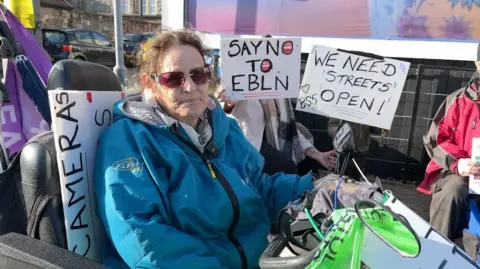
BBCIt was in the early hours of the morning when residents awoke to police, security and drones buzzing outside their homes as new bus gates were installed in Barton Hill, Bristol.
Contractors who were installing the bus gates as part of the East Bristol Liveable Neighbourhood scheme were previously stopped by protestors in the day time.
One year on from the controversial night, the BBC has spoken to people living in Barton Hill, Redfield, and St George to find out the scheme's advantages and disadvantages.
While some residents say the trial has made the area "more peaceful" and "safer", others say the lack of passing traffic has affected businesses and support networks.
The neighbourhood scheme was designed as a trial aimed at preventing drivers cutting through residential roads, with the final bus gate being installed on 13 March 2025.
The following month Bristol City Council also set up bollards and planters blocking some roads as part of the project.
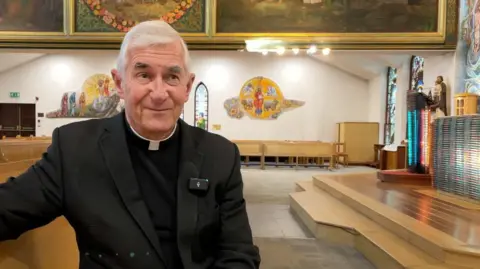
Canon Gregory, of St Patrick's Church in Redfield, said the scheme has been a "disaster" for his congregation, with numbers falling on a Sunday by about 20%.
"People don't want to spend more time in their car getting to church than the service", he says, noting that the number of worshippers has gone up in neighbouring parishes.
"People are making that choice to leave their community because it's just too exhausting," he added.
Melissa Topping, who is the leader of the anti-East Bristol Liveable Neighbourhood campaign group, said: "To be out in the street and see your access taken away, that doesn't go away, that stays with you.
"Nobody wants to come here anymore, we're all just living isolated.
"They took away our support networks, our friends, our businesses are struggling, and nobody's listening.
"If they try to make it permanent I'll take them to court.
"But I really hope it doesn't come to that."
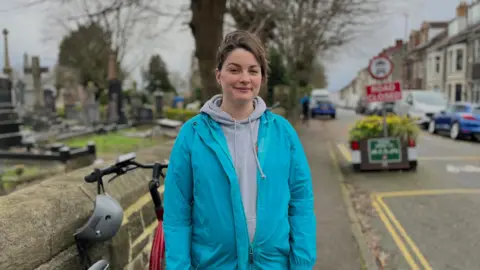
Angharad Hughes admitted to having been "anxious" about the scheme before it was brought in, but said it had made her area "much quieter, more peaceful and safer".
"I have some mobility issues so I'm very careful crossing the road," she said.
"I used to take the car but now it's a lot less hassle to walk. No one has shouted at me in the past year for being slow crossing the road."
Lucy Husskison said she has seen the benefit of the scheme and it had been "amazing".
She said: "This road used to be really busy at peak times.
"My husband used to cycle my son to pre-school and sometimes my son would be on the back of the bike saying he was scared."
Now more than seven months pregnant, she is still cycling through the area to get to work.
"With that level of traffic I wouldn't have been doing it," she added.
Decision due this year
Bristol City Council has acknowledged one bus gate has made it hard for some people to access the doctors' surgery and is in the process of moving its location.
The authority is also consulting on replacing some planters with ANPR cameras to improve access for emergency services and those with mobility needs.
Councillor Ed Plowden, chair of the Transport and Connectivity Committee, said the changes "should make it easier to access the area, while crucially retaining the benefits of more people-friendly streets."
Data published by the council suggests the scheme is "broadly meeting its objectives" of reducing through-traffic and increasing walking, wheelchairs and cycling.
A final decision on making the liveable neighbourhood permanent is expected this year after delays, while the council trials several adjustments.
