'Prostate cancer research trial was life-changing'

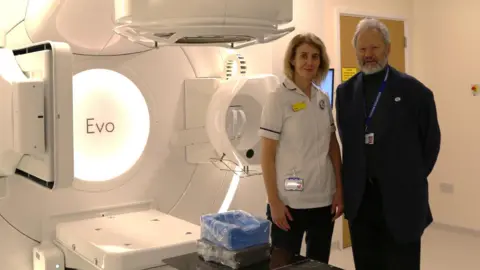 University Hospital Coventry and Warwickshire NHS Trust
A former prostate cancer patient who got the all-clear said taking part in a trial that cut his radiotherapy treatments proved "life changing".
While most patients have 20 days of radiotherapy over four weeks, the trial concluded higher targeted doses over five days could have an equivalent cure rate.
Willy Goldschmidt said the condensed treatment schedule over two weeks at University Hospital Coventry and Warwickshire had been "appealing".
After getting the all-clear, he recommends others participate in research. "I feel privileged to have been given the opportunity to take part in a trial that could change prostate cancer treatment for others," Goldschmidt said.
Prostate cancer is the most common cancer affecting males, with 55,000 diagnosed in the UK each year, but it is curable if it is caught early.
The Pace B trial was led by The Royal Marsden and involved more than 870 patients across the world, including a number from Coventry and Warwickshire.
After five years, researchers found 96% of the men who received five doses of the Stereotactic Body Radiotherapy (SBRT) were cancer-free, compared to 95% who received standard treatment.
'Now our standard treatment'
University Hospitals Coventry and Warwickshire NHS Trust said the trial findings, published in a medical journal in 2024, offered hope to "tens of thousands" and has generated more capacity for treatment.
Consultant Clinical Oncologist Dr Andrew Chan explained it provided evidence needed to support the use of higher doses over a shortened time.
"We have people who have benefited from this treatment and the first patient, who was treated in 2016, is doing very well," he said.
"SBRT is now our standard treatment for men with low risk and low-intermediate risk prostate cancer not requiring concurrent hormone therapy."
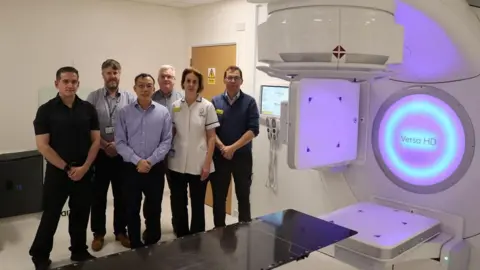 University Hospital Coventry and Warwickshire NHS Trust
Goldschmidt, who was diagnosed in 2017, said he opted for radiotherapy over surgery and was "delighted" to have been randomly selected for the SBRT arm of the trial.
His experience has prompted him to volunteer as a research champion for the trust.
"It's safe to say the treatment and follow up monitoring has been life changing for me in that it has removed any concerns I might have had about this potentially lethal disease," he said.
"[I] fully advocate patients taking part in research trials."
Follow BBC Coventry & Warwickshire on BBC Sounds, Facebook, X and Instagram.
