Tampons could help early ovarian cancer diagnosis

 Getty Images
A new trial is testing whether a specialist medical tampon could help improve the early diagnosis of ovarian cancer.
The study, launched by a team of researchers in Southampton, will use the tampon, plus other methods of sample collection, to look for the earliest clues that cancer may be present.
Women with a mutation in specific genes, including the BRCA gene, are also at a much higher risk of developing ovarian cancer.
Ovarian cancer is the sixth most common cancer in women in the UK, but only around 27% of cases are diagnosed in the early stages, statistics from Cancer Research UK show.
The clinical trial, which is funded by a grant from The Eve Appeal, is being led by Dr Jemma Longley - who is a consultant medical oncologist at University Hospital Southampton.
She is leading it alongside teams from the Southampton Clinical Trials Unit and the Centre for Cancer Immunology at the University of Southampton.
"There is currently no screening programme available for ovarian cancer," Dr Longley said.
"Women with recognised genetic mutations, such as BRCA, may opt to have surgery to remove their ovaries and fallopian tubes to reduce their risk of developing the disease."
"However, this can have significant long-term health effects by putting younger women into a surgical menopause."
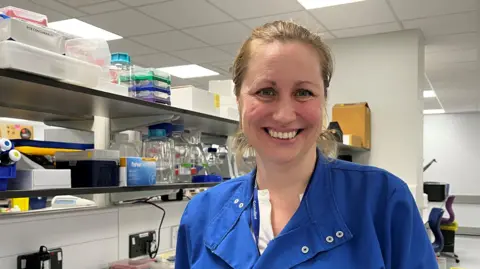 University Hospital Southampton
Alison, a 65-year-old retired psycho-oncology nurse from Southampton, was diagnosed with ovarian cancer when she was 40 after experiencing unusual bleeding.
Her cancer was caught at an early stage, and she subsequently underwent surgery to remove her ovaries and had chemotherapy to treat the cancer.
She said research into screening and earlier diagnosis was "absolutely vital", adding: "Far too many women are still diagnosed too late."
"I've lost friends, sadly, who were diagnosed at stage three and four.
"So, something like this new study with the tampon is very exciting."
 University Hospital Southampton
Dr Victoria Goss, from the Southampton Clinical Trials Unit, said the research was "an exciting trial in an area where better diagnosis is desperately needed".
"It aligns with the Government's recent announcement on the Women's Health Strategy to help overcome gender inequalities in healthcare," she said.
"We see our research as a vital part of efforts to improve outcomes for women with ovarian cancer."
