Sunken Thames barges create new island for birds

 Rob Coleman
Old Thames barges have been sunk in an estuary to reduce erosion and create a new "island" habitat for birds, in a project the National Trust believes to be the first of its kind in the UK.
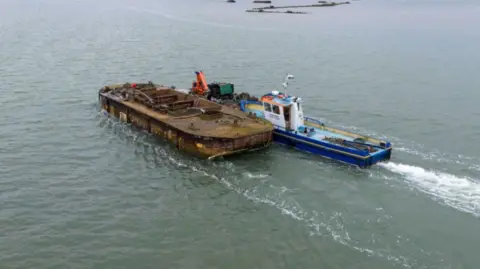
Three decommissioned lighters - old barges that were used to transport coal and other industrial materials - have been sunk in the Blackwater Estuary, between Maldon and West Mersea in Essex.
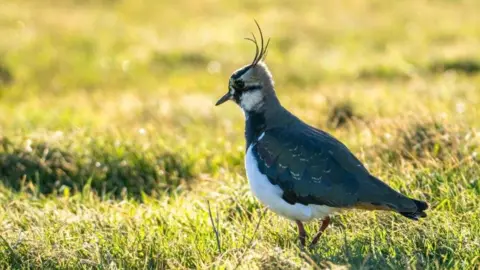
The barges were filled and covered with sediment to create a new island for birds including endangered dunlin, curlew, ringed plover and lapwing.
The trust said it was one of a number of "innovative, nature-based solutions to protect Northey Island against rising sea levels and the rapid loss of saltmarsh".
 Bluesky UAV
The old barges, once used to transport building materials, coal and food from the Port of London, have spent more than 30 years moored in Essex.
Now sitting on the inter-tidal mudflats of the estuary, they have created a new land mass on the edge of the existing saltmarsh at Northey Island.
They have now begun a new life as part of efforts to secure the future of endangered seabirds that are on the UK red list for conservation.
The new island is also expected to help reduce the erosion of saltmarsh habitat, which is at risk from rising sea levels at neighbouring Northey Island, the trust said.
 National Trust
The National Trust has described this project as "a bold marine engineering feat".
Katy Gilchrist, coastal project manager for the trust, said: "This is the ultimate act of marine recycling - transforming retired industrial vessels into a sanctuary for wildlife.
"We're basically turning history into habitat, and as far as we know, no-one has attempted anything quite like this before."
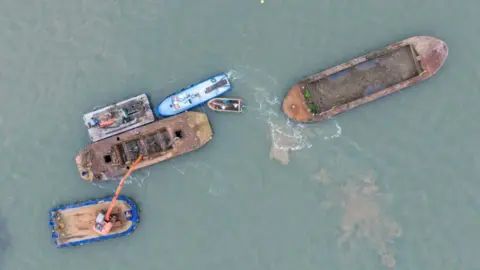
The barges, which measure between 20 and 32 metres long (66 to 105ft), had to be cleaned and made seaworthy before they could be towed into place and set on to a platform of sediment.
Holes were cut into the hulls to sink the vessels and they were then filled with sediment, mostly mud, to weigh them down and secure them.
"Once the island is fully established with gravel on top, it will sit safely above the highest tides to offer a safe refuge for some of our bird species which are in decline," Gilchrist said.
The island will add 0.55 hectares (1.4 acres) of new habitat - almost the size of a football pitch - within the Blackwater Estuary once the work is complete.
 National Trust
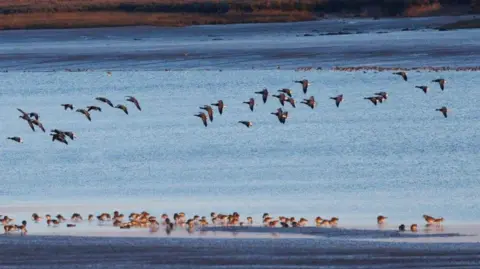
Matt Wilson, countryside manager for the National Trust, said: "The new island, located just off the eastern shore of Northey will provide a refuge for birds above the highest tides and away from disturbance on shore, acting as a lifeline for birds that are running out of safe spaces to nest and rest.
"As well as creating a new habitat for birds, the island will also help to reduce erosion of the existing saltmarsh at Northey Island," he added.
The trust is collaborating with the Environment Agency, Natural England, Maldon Harbour Improvement Commissioners, specialist engineering and environmental consultants Royal Haskoning DHV - and specialist marine contractors Landbreach Ltd on the project.
Follow Essex news on BBC Sounds, Facebook, Instagram and X.
