Heritage railway launches hydrogen-powered train

 BBC
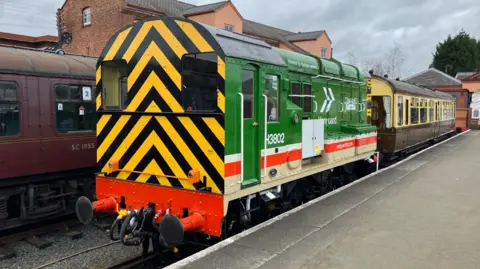
BBCA heritage railway has converted an old diesel locomotive to run on hydrogen.
Severn Valley Railway (SVR) launched HydroShunter, a hydrogen-powered shunting engine, developed from the body of a disused Class 08.
Built in Derby in 1959 it was being used for spare parts and was eventually destined for the scrap-heap, but it has been given a new lease of life at the tourist attraction.
The conversion was done in conjunction with Midlands-based Vanguard Sustainable Transport Solutions, a company pioneering use of hydrogen in trains.
The work took place at the SVR's Kidderminster service depot by apprentices and engineers drawn from the railway and the firm.
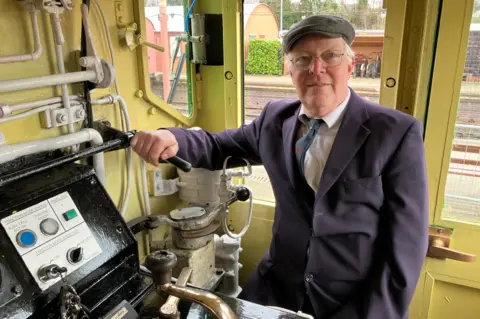
The only difference in the driver's cab is a few extra lights and meters.
SVR driver Bob Dunn said: "[The] first thing you notice is, as you open the power handle, you just start moving and of course there's no increase in sound because you haven't got a diesel engine.
"But the feel of it from a power... position is exactly the same as a diesel-electric shunt engine."
The locomotive, which will be used for its original purpose, shunting, was unveiled at the railway's Kidderminster station.
The attraction operates over 16 miles between the Worcestershire town and Bridgnorth, in Shropshire.
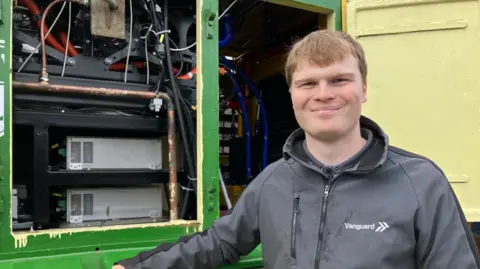
Vanguard engineer Callum Nicolson explained the space where the diesel engine used to be had been replaced with a hydrogen system.
"That includes a large traction battery and a hydrogen fuel cell, which acts to charge the battery and power the existing electric motors," he said.
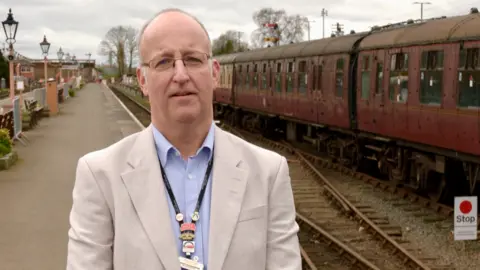
Gus Dunster, managing director of the heritage line, said it operated steam and diesel locomotives, "which by definition do use fossil fuels".
But he added the railway was "also the custodians of 16 miles of countryside, so there's a lot we can do to offset those carbon emissions".
"For example, we've got some very large buildings on the railway, which we're just embarking probably on a project to install solar panels on."
SVR said invited guests, including representatives from mainline railway companies, heard about an ambition to decarbonise railway locomotives and "potential to transform shunting operations nationwide".
CEO of Vanguard Sustainable Transport Solutions Dr Alexander Burrows said: "There is already a lot of real interest from potential customers who want to benefit from zero emissions, reduced noise, and improved operating costs in a retrofit solution."
Follow BBC Hereford & Worcester on BBC Sounds, Facebook, X and Instagram.
