Why has the world's first hydrogen double-decker fleet failed?

 Getty Images
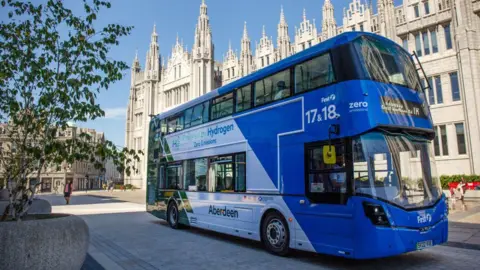
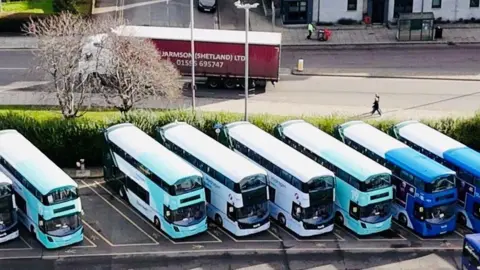
The world's first hydrogen double-decker bus fleet has reached the end of the road.
The multi-million pound project in Aberdeen - involving 25 buses - was meant to be the future of clean public transportation, with the city billed as the global hub for hydrogen-powered buses.
But the zero emissions vehicles are now being ditched, along with the ambition that 700 jobs could be created.
The council announced on Thursday evening that it was to drop its hydrogen double-decker bus fleet in favour of electric vehicles following a meeting of its urgent business committee.
Aberdeen City Council and oil and gas giant BP became commercial partners in 2022 for Aberdeen's hydrogen ambitions.
After a number of technical problems, the hydrogen fleet has now fallen foul of the fast pace of progress in electric vehicle technology.
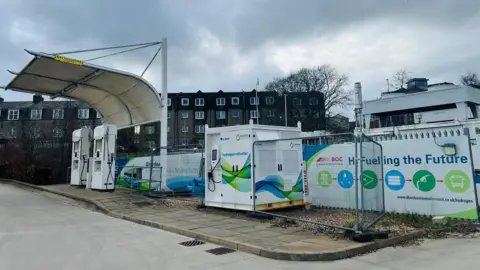
The hydrogen buses have been out action since September 2024, due to problems with fuelling stations at Kittybrewster and Cove.
The council said it had been engaged in "ongoing discussions" with BP about the future viability of the city as a hydrogen hub, prompted by significant advancements in electric vehicle technology.
"As manufacturers and operators increasingly favour EVs, demand for hydrogen in transport has diminished," a statement said.
"In light of these developments, both parties are reassessing their strategic direction to align with the evolving market landscape."
The council will now negotiate the transfer of the joint venture from BP and move towards a full transition towards electric vehicles.
The council has been asked about the total cost of the project, which is understood to have run to tens of millions of pounds.
BP said it would work closely around the "next steps" with the council.
Bus operator First Bus said it remained in discussion about the future options of the fleet.
Move towards electric vehicles
The writing has been on the wall for hydrogen buses for years, as more and more cities opted for the battery alternative.
In 2021, First Bus in Glasgow confirmed that it was investing in a fleet of 120 single and double-decker buses which could be charged very quickly overnight before spending 18 hours on the road.
More recently, the electric inter-city bus operator Ember has seen its fleet between all of Scotland's major conurbations grow to 98 vehicles.
Battery capacity and efficiency has come on enormously, meaning electric buses can be charged at incredible speeds and cover very long distances.
They cost more than the diesel equivalent, but running costs are very low, meaning operators are saving millions from the moment the vehicles hit the bus lanes.
Hydrogen, by contrast, is expensive to produce. It takes a huge amount of green electricity to create the fuel using a process called electrolysis.
And while it has the advantage that the bus can be refuelled in a matter of minutes rather than hours, that premium is now perceived as not worth paying.
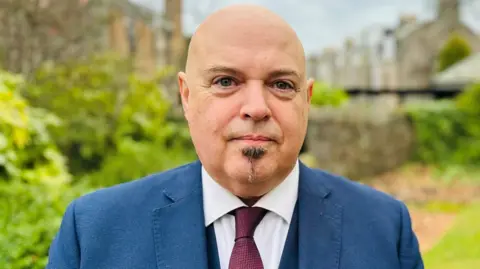
Councillor Richard Brooks, the local group leader for the Scottish Conservatives, said money had been "wasted" and answers were needed.
"It doesn't take a rocket scientist to see that this was on the horizon," he told BBC Scotland News.
"The disappointing thing is the reaction is so late in the day.
"I think the administration should come out and apologise to the public. They've backed the wrong horse which is easily done - let's be fair - but let's not hide away."
'A house built on sand'
Prof Tom Baxter, an energy expert at the University of Strathclyde, described what had happened as "inevitable".
"If you look at the commercial and technical framework around hydrogen busses, they just don't work," he told BBC Scotland News.
"It was a house built on sand. A house built on assertions without making the debate, evidence informed.
"If you do the comparison with an electric bus, an electric bus will go double the distance with the same amount of power as hydrogen."
Baxter added: "On all counts, very little speaks in its favour when you compare it with the electrical alternative.
"It was based on an ill-informed policy. It's as simple as that for me."
