Serial rail fare evader fined £3,600 over 112 unpaid tickets

 Getty Images
A "brazen" rail fare dodger has been fined more than £3,600 after failing to pay for a ticket on over a hundred journeys.
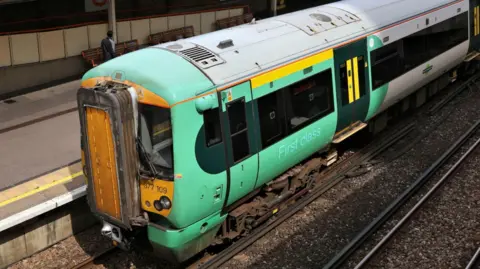
Charles Brohiri, 29, travelled without buying a ticket on 112 Govia Thameslink Railway (GTR) journeys over a period of nearly two years.
He was ordered to pay the unpaid fares and handed a three‑month prison sentence, suspended for 12 months, at Westminster Magistrates' Court.
Brohiri, originally from Hatfield in Hertfordshire, but who has been homeless for three years, pleaded guilty to 76 charges of failing to pay for a rail ticket, and was convicted in his absence in August 2024 of a further 36 charges.
District Judge Nina Tempia said Brohiri had behaved as though he were "invincible," and showed a sense of "self-entitlement" in believing he could evade the rules.
The court heard he had continued to travel without a ticket despite being banned last April from entering Thameslink stations as part of his bail conditions.
Prosecutor Lyndon Harris told the court there had also been a further 16 alleged offences since his last appearance in court on 15 January, including the day before his sentencing.
Judge Tempia, who took the additional alleged offences into consideration, said his "deliberate and repeated" behaviour would ordinarily have justified a prison sentence, but she believed probation services could help him address underlying issues.
Eleanor Curzon, for the defence, told the court Brohiri "expressed remorse and regret" for having continued to travel on the railway, "particularly the period when he has been appearing before you judge".
When asked why Brohiri had continued offending, Curzon said it was "a pattern he had gotten himself into".
 PA Media
The court heard he briefly attended university and had worked as a waiter before becoming homeless and moving to London.
Curzon said that Brohiri had been sleeping rough on trains, in hospitals and in libraries.
She told the court he had tried to seek help from charities but struggled to engage because of a "combination of a lack of support, a negative mental health space and not knowing how to go about maintaining support from services".
She added that Brohiri had never acted aggressively when challenged and said his decision to become sober three years ago "demonstrated his capacity to change".
"He reiterated to me this morning that if he is given the opportunity to work with probation they can assist him in securing accommodation and employment," Curzon continued.
"It is really these two factors which will put an end to Mr Brohiri's offending."
Brohiri was ordered to pay back £3,629 in unpaid rail fares but he was not ordered to pay prosecution costs which the court heard amounted to £15,120.
He was also ordered to complete 150 hours of unpaid work, 12 months' prohibited activity requirement - which means he must not travel on any GTR trains - and to complete rehabilitation activity requirement.
"Be under no illusion if you commit any other offences and you do not comply with the requirement on this order you will be back in court," the judge warned him.
A spokesperson for Govia Thameslink Railway said fare evasion increased costs for passengers and "diverted public funding away from improving services for passengers".
"That is unfair both on taxpayers and on the vast majority of passengers who pay for their journeys."
The operator said stepped‑up enforcement in known trouble spots, along with improved reporting tools for staff, has reduced ticketless travel on its network to its lowest level since 2022.
