Learning from New Zealand in how to reduce bovine TB

 BBC
BBCBovine TB cost Northern Ireland £60m in the last year through testing cattle, monitoring herds and compensating farmers for culled animals.
A new cross-border pilot hopes to emulate the success of New Zealand which has dramatically reduced the number of infected herds.
In New Zealand, possums are the main wildlife carriers of bovine TB, rather than badgers.
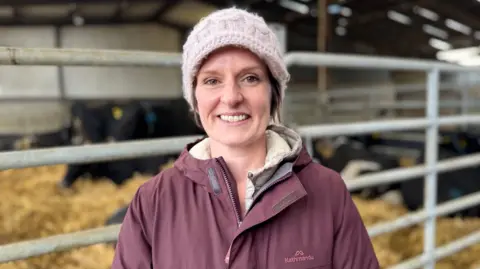
"In the 1990s, we had about 1,700 infected herds, and as of this week I think we're down to 11," said Dallas New, a veterinary epidemiologist.
Alongside cattle testing and the restriction of movement of animals from infected herds or high-risk areas, a regional approach to wildlife intervention is used.
"We have a co-ordinated programme across the entire country where we control possums to get the disease out of possums, and once it's clear, then we move on to the next area," added New.
That approach will be echoed during the pilot and badger setts have been surveyed along the border in the north west of Ireland since the start of 2026.
Badgers will be tested, vaccinated or removed.
A regionalisation approach has proved "really successful" in New Zealand, said New.
She is the lead veterinary epidemiologist at Operational Solutions for Primary Industries (OSPRI), which works with farmers in New Zealand to manage animal disease.
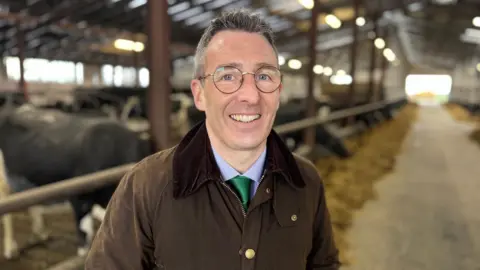
Andrew Muir, Stormont's Minister for Agriculture, Environment and Rural Affairs, said the cross border five-year pilot was a "step change" in approach to bovine TB.
The proof-of-concept project will test a regional approach to tackling the disease in a defined area before rolling out to other places.
'Disease doesn't know any invisible border'
The pilot has been funded under the Irish government's Shared Island Initiative.
Martin Heydon, the Irish Minister for Agriculture, Food and the Marine, said €11.7m (£10.2m) had been invested because "disease doesn't know any invisible border".
The project will run for five years, focusing on people, cattle and wildlife.
Muir said he would be seeking additional funding from Stormont's Executive Office to support the pilot which he said would help address a disease that is "a real concern" in the farming community.
"This initiative is based on the three pillars of people, cattle and wildlife, so in terms of giving that biosecurity advice, but also increasing testing and being able to identify incidents within herds.
"It also includes a wildlife intervention which is in terms of TVR (test and vaccinate or remove)."
He added that a consultation on wider wildlife interventions would be held in the spring.

'A great opportunity'
The disease and its associated costs are also increasing in the Republic of Ireland.
As a single epidemiological unit, Heydon said what each jurisdiction did on either side of the border "really matters".
The Chief Veterinary Officer for Northern Ireland Brian Dooher said the pilot would "find out what works with farmers, delivery bodies and ultimately lead to a better use of government resources".
"We're really looking from doing isolated interventions, to doing a more holistic strategy in collaboration with our colleagues in the Department of Agriculture, Food and the Marine to give us the evidence base for pushing forward on the control and eradication of bovine TB."
His Irish counterpart June Fanning said it was "a great opportunity" to take cross-border approach to the disease.
"Regionalisation has been shown to be a really important part of any eradication that has been successful, be it Australia, New Zealand and other countries that are well on their way to eradicating the disease."
