Farmer Tony Martin leaves £2.5m to 'loyal friend'

 BBC
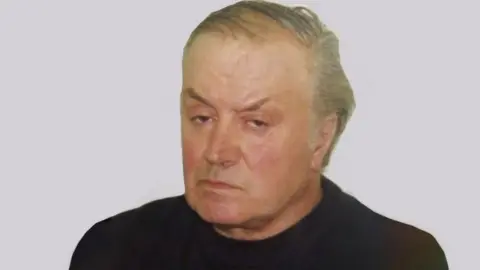
BBCTony Martin, the farmer who shot dead a teenage intruder at his isolated Norfolk home in 1999, left more than £2.5m to a "very loyal friend", his will reveals.
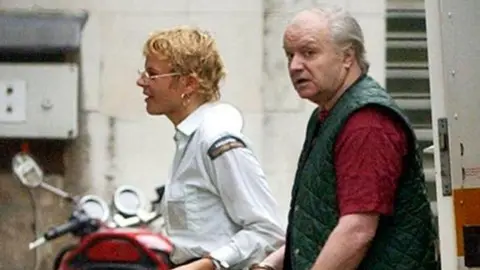
Probate and will documents show Martin, who died last February, aged 80, left his money and property to a former Cambridgeshire pub landlady, Jacqueline Wadley, and her husband David.
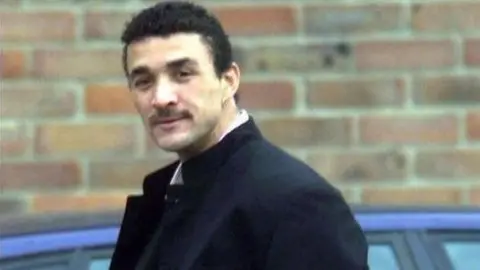
Martin was jailed in 2000 for the murder of Fred Barras, 16, and for injuring 29-year-old Brendon Fearon in the same incident. He was released three years later after the conviction was reduced to manslaughter.
The shooting at Martin's farmhouse in Emneth Hungate, known as Bleak House, caused a national debate over homeowners' rights.
According to his will, signed on 28 January 2013 and seen by the BBC, Martin made the Wadleys his executors and trustees, leaving his estate to them in the event of his death.
A probate document, dated 14 February 2026, named the couple - who live in Wisbech - as beneficiaries, and placed the net value of Martin's estate at £2,567,795.
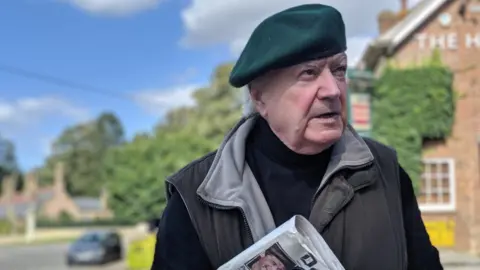
Martin's friend, Malcolm Starr, told the BBC he believed Jacqueline Wadley "deserved every penny", as she had been a "very loyal friend".
"She was very generous with her time, which he appreciated, because often if you had a phone call with him it could last three hours," he said.
He said Martin and Wadley had "become friends very slowly" after his release from prison when she was the landlady of the Hare and Hounds pub in Wisbech.
She had found him accommodation and ran errands for him, he added.
He said Martin had accrued his wealth through inheritance but had lived very frugally.
"Tony left all his money to Jacqui because after a while he found out she was the most genuine person he had within his friendship [group]. She deserved the money because she was so loyal to him," he added.
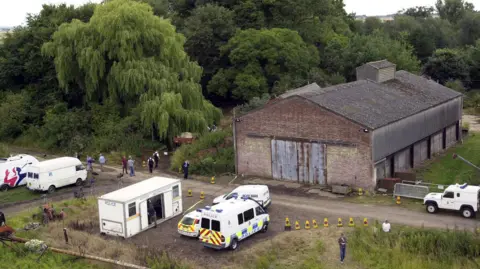
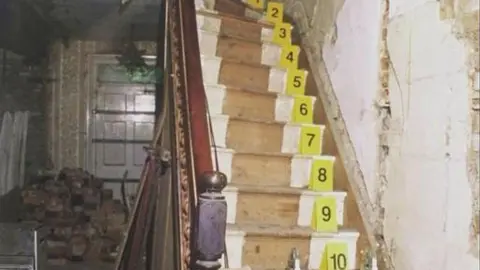
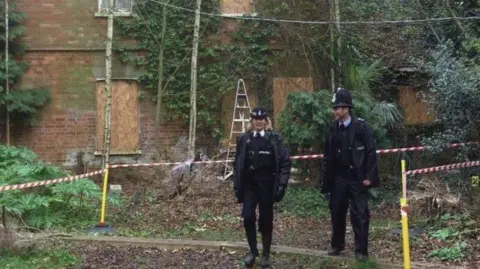
Martin lived on his own at the semi-derelict farmhouse near Wisbech, on the Norfolk/Cambridgeshire border, at the time of the fatal shooting.
His trial heard that on the night of 20 August 1999, the pair entered his home with the intention of burglary.
Barras and Fearon had travelled from Newark in Nottinghamshire that evening to raid Bleak House, where Martin stored antiques.
The farmer came down from an upstairs bedroom and opened fire with a pump-action shotgun.
Barras died at the farm while Fearon was treated in hospital for his injuries.
 PA Media
Martin claimed at his trial that he acted in self defence, while prosecutors argued he had anticipated the pair and lay in wait for them.
The case attracted huge public attention, with Martin's supporters casting him as a man taking a stand to defend his home - and others believing he was a violent eccentric turned vigilante.
 PA Media
Martin was convicted of murder and jailed for life in April 2000, with 10 years to run concurrently for a wounding offence and a further 12 months for possession of an illegal firearm.
The charge was later downgraded to manslaughter on grounds of diminished responsibility after a diagnosis of paranoid personality disorder, and he was released in 2003.
 PA Media
 PA Media
In 2013, the Crime & Courts Act gave people a "householder's defence" if they used "reasonable" force against an intruder that was not "grossly disproportionate" - a change in the law that was influenced by the Tony Martin trial and other similar cases.
Speaking to the BBC in 2019, some 20 years after the incident, Martin said: "I've always said when people get into exceptional circumstances which are beyond the norm, the law should leave you alone.
"You should be protected in law against these things."
 PA Media