How a city changed its breastfeeding culture

 BBC
BBCNew mums have welcomed an impressive rise in breastfeeding rates in one of England's most deprived cities.
More than half (52%) of all babies aged six weeks are breastfed in Hull, compared with just over 30% a decade ago.
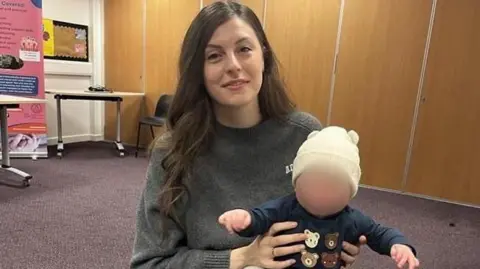
Charlotte, 28, said she had found breastfeeding her son "really challenging" after six weeks, but received "reassuring" home visits and advice from a breastfeeding peer support project, run by the Goodwin Development Trust.
Now, her son is six months old and she describes him as a "milk machine".
She added: "You know there's some long nights, but then when you're staring down and their little eyes looking up at you, it is just so rewarding, and it's just that bond that it creates – it's definitely worth it."
Caroline Scuffam, a project manager at Goodwin, described the improvement in breastfeeding rates as something she had "dreamt of".
"Hull's an amazing city, it's full of such passionate people," she said.
"And now we can say that we've got really high outcomes in the right places."
 NHS Humber
Hull has the fourth highest proportion of "most deprived" neighbourhoods in England, according to government statistics.
In 2015-16, 30.1% of babies were breastfed in the city at six to eight weeks, according to statistics from the Office for Health Improvement and Disparities, compared with an average of 43.2% across England.
By 2024-5, the rate had improved to 46.6% in Hull, compared with 55.6% for England.
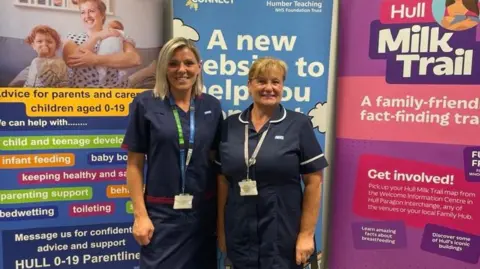
According to the Humber Teaching NHS Foundation Trust, Hull has now passed the 50% milestone, with the trust's latest figures showing 52% of babies are receiving breast milk at six weeks.
The organisation has been awarded Unicef Gold accreditation for its work to improve rates.
Ellie Talbot-Imber, infant feeding lead at the Humber trust, described it as a "pivotal moment".
"We are immensely proud of what this means for those infants, their families and the future health of people in Hull.
"We can now say that Hull is a predominantly breastfed city, which is a fantastic achievement."
 Hull City Council
Scuffam said the number of mothers choosing to continue breastfeeding had "increased massively" since Goodwin's baby feeding practitioner project was launched three years ago.
The project provides home visits, one-to-one breastfeeding support, a phone line and support for mothers from pregnancy to until they chose to stop breastfeeding.
Faith Ukpetenan, 33, from Hull, received support from the charity, including home visits to help with breastfeeding.
She described the experience as "really lovely" and added: "It makes me happy.
"I can see the bonding. I can see if she plays with me as she holds my hands, you know, it's very lovely."
The World Health Organization (WHO) and Unicef, the UN children's agency, recommend children are exclusively breastfed for the first six months of life.
WHO says breastfed children perform better on intelligence tests, are less likely to be overweight or obese and less prone to diabetes later in life. Women who breastfeed also have a reduced risk of breast and ovarian cancers.
However, in Hull, health visiting teams recorded a breastfeeding rate of just 6% at six weeks in 2008, according to the Humber trust.
Louise Hutchinson, a senior practitioner, is among those who have worked to improve that rate. She joined Goodwin after receiving support from the charity.
Describing her own experience, Hutchinson said: "I live in a council estate where nobody really breastfeeds. So the first time I'd ever seen breastfeeding was when I was trying to do it.
"That is really difficult, because I just assumed you put the baby near the breast and they know what they're doing. And that was very wrong."
'Ripple effect'
Hutchinson fed her first baby for two days, but fed subsequent children until they were three and almost five years old.
She said she had seen a "ripple effect" in the city, with people educating their families and friends and more people feeling encouraged to try breastfeeding after seeing their peers take it up.
"We've changed the culture of 'what brand of formula are you going to use?' to 'are you going to give breastfeeding a go, do you know about the support, did you know about this group?'
"The conversation's changed massively."
Scuffam added: "It's not about forcing opinions on to somebody else or forcing feeding routes that people don't want.
"We would support somebody no matter what their choice is. But it is about getting timely support for those who really want to achieve."
Listen to highlights fromHull and East Yorkshire on BBC Sounds, watch the latest episode of Look North.
Download the BBC News app from the App Storefor iPhone and iPad orGoogle Play for Android devices
