Constable's oil study a major find, says historian

 Heritage Auctions
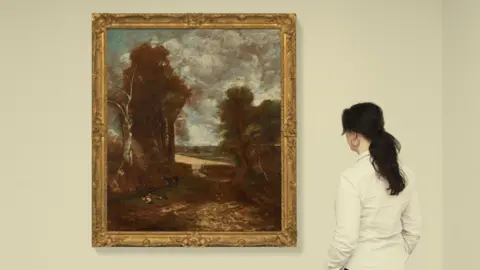
The discovery of an oil study by John Constable that could sell for about £350,000 at auction has been described as "very significant" by a historian.
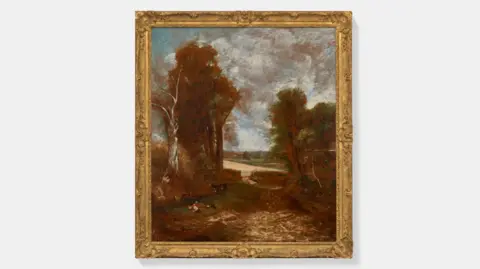
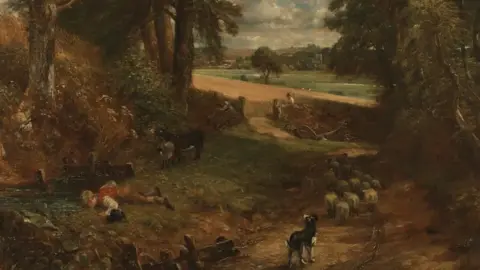
Constable's practice painting for his 1826 artwork The Cornfield will be sold at auction on 5 June, as part of Heritage Auctions' European Art event.
It was previously believed that the preparatory piece, which, similar to his final version, depicts a lane leading from East Bergholt, Suffolk, towards Dedham, Essex, did not exist.
But it was later found hanging in the Jefferson Historical Society & Museum in Jefferson, Texas, which Dr John Paul-Stonard, an art author and historian from Suffolk, said was a "major" find.
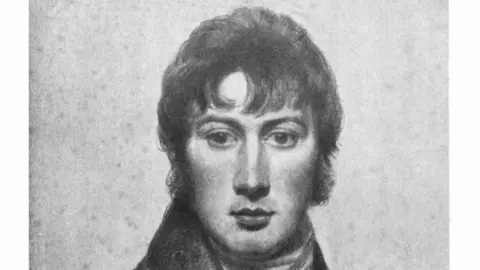
"It is very significant because any new painting by an artist of the calibre of John Constable is a pretty major event," he told the BBC.
"These paintings are important because they show how an artist came to create a work such as The Cornfield, which is one of the great paintings by Constable."
"It's certainly a very interesting thing to have come up."
 Supplied
An oil study is a type of artwork produced in preparation for a larger, finished work, giving the artist an opportunity to experiment with how they might approach the final version.
Constable's large oil study, which is expected to sell for between $300,000 (£225,120) and $500,000 (£377,775) at auction, is understood to have been produced by Constable in London at some point between 1820 and 1826.
It is believed to be the last version that the landscape painter produced before he started working on the final painting.
'He was unusual'
"This is the interesting thing about Constable, because some of his [studies] are incredibly close to the finished versions," added Paul-Stonard.
"It's never really been worked out why he made these apart from just to work out a composition or perhaps even to keep a copy of the painting for himself.
"He wasn't unusual in making studies, but he was unusual in making them on such a scale, and I think some people prefer them to the finished works because they give you a sense of getting closer to the artist and the creative moment.
"That's why this particular painting is so interesting."
 Heritage Auctions
The piece had hung in the museum in the US for decades and had long been believed to be one of at least 85 known copies of the composition.
That was until 2017 when suspicions that the darkened and heavily varnished canvas might be something far more significant started to grow.
But how did it end up more than 4,000 miles (6,437km) away from where it was painted?
"In those days it was far less common to keep records of where paintings went to, it wasn't the same art market that we have nowadays," said Paul-Stonard
"So, there could be all manner of reasons why it found its way to America, but it's not uncommon for paintings to show up in far flung places - it certainly adds to the interest around them."
 The National Gallery
After being found, years of consultation with art experts and testing followed, including cleaning tests, pigment analysis and infrared reflectography procedures in London.
According to Heritage Auctions, the results demonstrated "complete consistency" with Constable's materials and working methods.
"It's been an extraordinary journey from a museum wall in Texas to the international limelight," said Marianne Berardi, the co-director of European Art at Heritage Auctions.
"The technical analysis, from pigment testing to infrared examination of what lies beneath the surface, confirmed what we had begun to suspect," added Berardi.
"This is a work by John Constable himself. Its discovery significantly deepens our understanding of how he developed one of his greatest masterpieces."
 Getty Images
Do you have a story suggestion for Suffolk? Contact us below.
Follow Suffolk news on BBC Sounds, Facebook, Instagram and X.
