How Constable inspires today's landscape artists

 The National Gallery
This year marks the 250th anniversary of the birth of one of Britain's most important landscape artists, John Constable.
To commemorate the Suffolk-born artist, a year-long programme of exhibitions has begun and later this year his most famous piece, The Hay Wain, will go on display in the county for the first time.
Constable struggled with recognition and sold very few pieces during his life due to it not being considered fashionable to paint scenes depicting rural life in Flatford and the surrounding area on the River Stour valley on the Suffolk/Essex border.
Since then appreciation for artist has grown and grown. But what do today's artists make of Constable? How influential is he and what can his work teach us?
 Getty Images
'Quintessentially English'
 Paul Bailey
 Paul Bailey
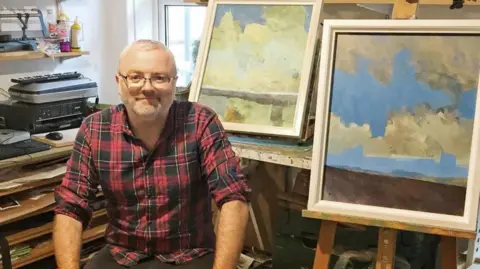
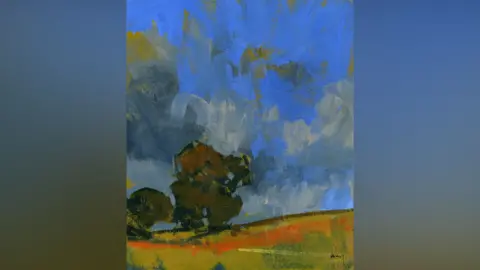
Paul Bailey, 53, originally grew up in Brentwood in Essex with family ties to Suffolk and other links to Norfolk.
Working as an abstract landscape artist, he says Constable is still "very influential" to many people today.
"He is probably the most famous landscape painter out of the UK," he adds.
Bailey also believes Constable's work, especially The Hay Wain, is "quintessentially English" which has captured people's imaginations across the world.
The simplicity in the landscape in many of Constable's works has also drawn people in, he notes.
"It's capturing the light; the light is very special.
"East Anglia, because it's relatively flat you don't get enclosed by mountains and stuff like that, so the sky plays such an important part and as you're painting a very kind of potentially uninteresting landscape, capturing the light is so important and the drama of the sky as well."
Suffolk artist Maggi Hambling has also spoken of the influence of Constable on her sea paintings.
'Excited me'
 Eden Mullane
 Eden Mullane
Eden Mullane, 29, an artist from Norwich, says she was exposed to Constable's work from school which "stuck out" to her.
She says like Constable, she was drawn to places she had personal connections with, and she has explored her Jamaican cultural roots in her work.
"Some of his work is quite large scale and he does these panoramic views.
"My first painting that really started my career was a vista and just seeing that he had the confidence to depict places and have so many different elements on such a big scale, that always excited me."
Mullane added that Constable had given contemporary artists the freedom to interpret nature in their own way and explore different styles.
'Laid the foundations'
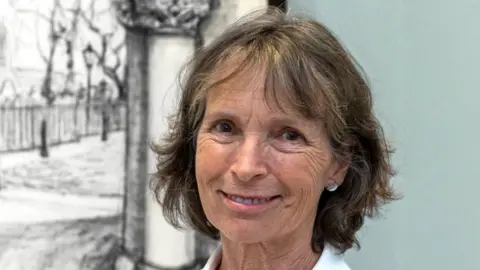 Wendy Brooke-Smith
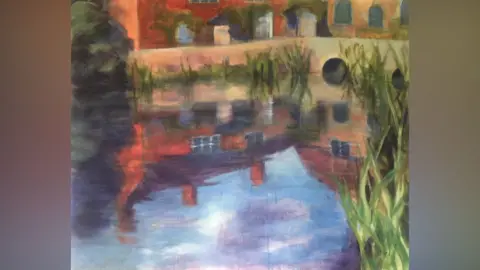 Wendy Brooke-Smith
Wendy Brooke-Smith, 67, lives in Great Oakley, near Harwich in Essex, and creates contemporary landscape pieces.
Some of her work has focused on Flatford, exploring the area in similar ways to Constable, but with a modern take.
She says it is Constable's eye for "everyday moments" that she has connected most with in his pieces.
"He really sees the picture, what it was like to be there and to experience that natural English landscape on that particular day."
She adds: "Obviously art has gone down so many directions since then, but I think he's laid the foundations for contemporary landscape painting."
'Relevant to the now'
 Nat Young
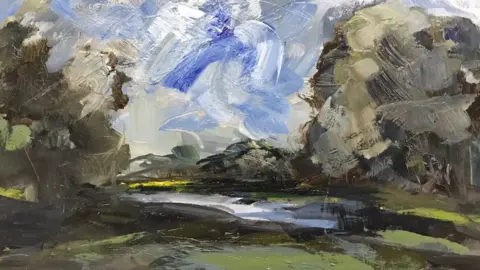 Nat Young
Artist Nat Young, 86, from West Bergolt in Essex, said Constable had been one of his favourite artists when growing up and he still appreciated his work today, describing him as a "fantastic painter".
"He paints the moment, he paints the now and it's timeless.
"Although the people in [the paintings] are 250-years-old, they're just moments in the countryside which on a personal level I can relate to and keep looking at.
"You can feel the weather, you can feel it all and that's the best compliment."
Young believed Constable was still influential today, particularly his later work which he said became "abstract".
"Some of his work, particularly his sea paintings, you can almost imagine he could have painted that yesterday. They're that relevant to the now."
'Radical'
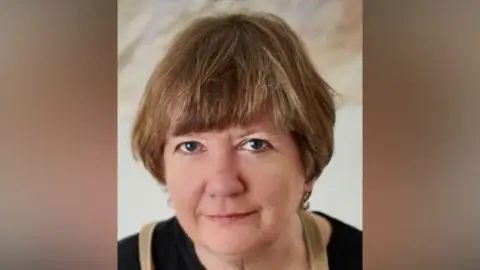 Sarah Milne
 Sarah Milne
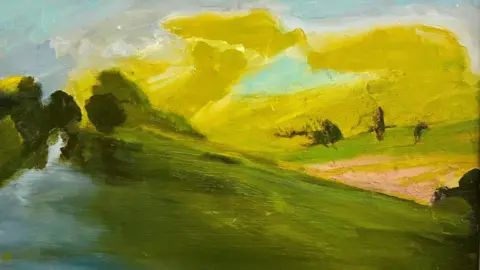
Sarah Milne is an artist based out of Cuckoo Farm Studio in north Colchester who will have one piece of her work displayed as part of the third and final Constable 250 exhibition from October.
She says it is an honour to have been asked to get involved and describes Constable as "radical" for his time.
"Landscape painting was definitely in the lower rankings of genres in his time, so he was quite new.
"We all think of him as a bit chocolate-boxy now, but certainly at the time he wasn't.
"His method of walking and drawing is something that many of us follow on today. It's certainly how I work.
"I walk with a drawing book and come back to the studio and make a painting, that's more or less how he worked."
She adds that Constable taught her that if you "love the landscape, it shows in your work".
 Ipswich Museums
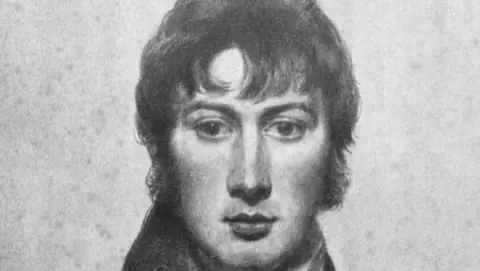
Constable was born in 1776 in East Bergholt, as the eldest son of a wealthy mill owner.
In 1799 he decided to pursue his passion for art as a vocation and throughout his career produced many works.
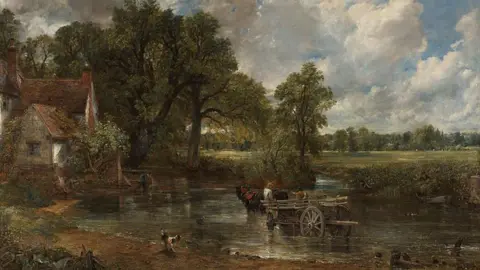
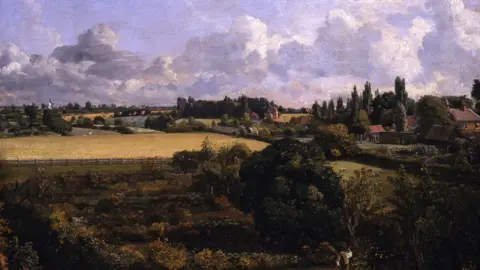
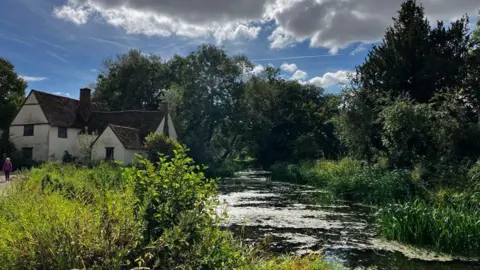
The Hay Wain was created in 1821 and is an oil painting of an idyllic scene in Flatford with a horse and cart in the River Stour and Willy Lott's Cottage on the bank.
Constable painted it in his London studio and it was actually called Landscape Noon by the artist, before his close friend later renamed it to The Hay Wain.
It was sent to the Royal Academy of Arts in 1821, but it failed to sell before it later was sent to France and the French king gave it a gold medal.
In 1886 the piece was then sent to the National Gallery in London.
Constable died in 1837 in London aged 60.
 Matt Marvel/BBC
Colchester and Ipswich Museums is holding three key exhibitions at Christchurch Mansion in Ipswich exploring the life and work of Constable.
The first began on Saturday, titled Constable: A Cast of Characters, running until 14 June.
From 11 July The Hay Wain, loaned from the National Gallery, goes on public display alongside other pieces of his work such as Dedham Vale until 4 October.
From 24 October to 28 February, the final exhibition will explore Constable's legacy through the years and his relevance today.
Follow Suffolk news on BBC Sounds, Facebook, Instagram and X.
