Kurt Jackson's Plym Stone sculpture unveiled

 Arts University Plymouth
- Kurt Jackson's Plym Stone sculpture unveiled at Arts University Plymouth
- The sculpture, named The Plym Stone features locally sourced limestone, Ivybridge granite and glass reclaimed from bottles
- Jackson used 3D scanning and printing to create elements featured on the sculpture
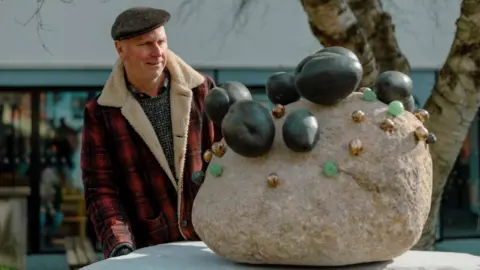
Arts University Plymouth has unveiled a new sculpture by internationally renowned contemporary artist and sculptor Kurt Jackson.
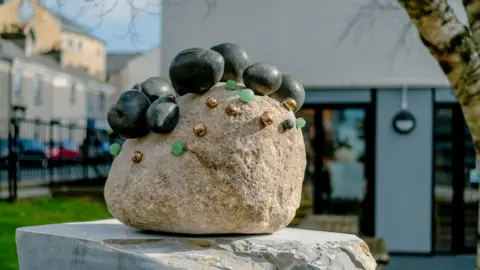
The sculpture, named The Plym Stone features locally sourced limestone, Ivybridge granite and glass reclaimed from Plymouth Gin bottles.
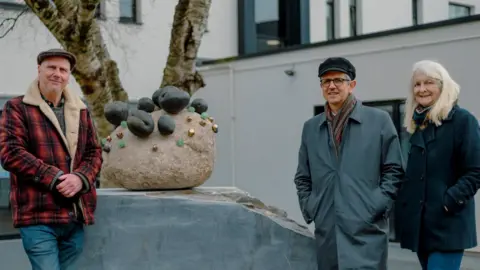
It was unveiled by the Lord Mayor of Plymouth, Councillor Sue Dann.
Inspired by the geology of the immediate Plymouth area, the Plym Stone reflects location, geological time, heritage and the natural world.
 Arts University Plymouth
It draws inspiration from the Old English name for Plympton - plymen, meaning growing with plum-trees or Plum-tree farm.
Covering the two main geological components of Plymouth’s immediate area, the Plym Stone also takes inspiration from the River Plym and its role in the history and narrative of the Plym Valley as well as the naming of Plympton and the city of Plymouth.
The stone base is made from Devonian limestone, sourced from the Moorcroft quarry in Billacombe, cut and polished to size in a quarry in Cornwall.
A granite river boulder from Ivybridge sits on the limestone with plum-like fruits cast in bronze and glass reclaimed from Plymouth Gin bottles.
Jackson used the facilities at Arts University Plymouth, collaborating with FabLab Plymouth and FabLab manager and experienced designer Ben Mundy, to create elements featured on the sculpture.
Jackson used a 3D scanner to scan damsons, a small plum-like fruit, which were then scaled up and 3D printed in bioplastic to be used for casting the fruit with other materials for the final sculpture.
 Arts University Plymouth
Pro Vice Chancellor Dr Stephen Felmingham said, "With its focus on the distinctive botany and geology of Plymouth, the sculpture stands as testament to our shared values of sustainability, place-making and care for our city and its history both for our students and visitors to the Cultural Quarter.
"We are proud to have this important work on our campus, with the message it sends to our students about working locally and globally.”
