Rock 'n' roll singer retires after 70-year career

 Ricky Ford
A rock 'n' roll musician who has been performing on stage since 1955 is retiring after seven decades of singing.
Ricky Ford, 85, from Bristol, toured Germany in the 1960s, worked with Beatles manager Brian Epstein, sang to sold-out crowds at Bristol's Colston Hall and did recording sessions at the world-famous Abbey Road studios.
"I think it's a great age to say 'adios' and it's been a great ride," he said.
"I wouldn't alter it because I've had a wonderful career as a live singer, which is what I always wanted. I don't think you could wish for much more, could you?"
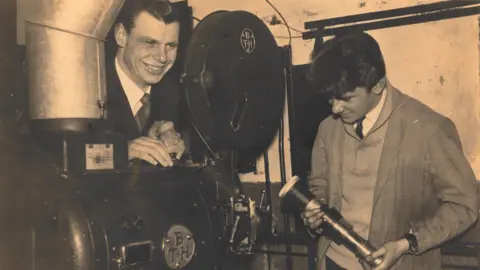
Ford's career began in 1955, when he appeared on stage while working as a projectionist at a cinema in Chipping Sodbury, to the north of the city.
"In 1959 I was working as a railway clerk at Temple Meads [station], and we used to sing in the office.
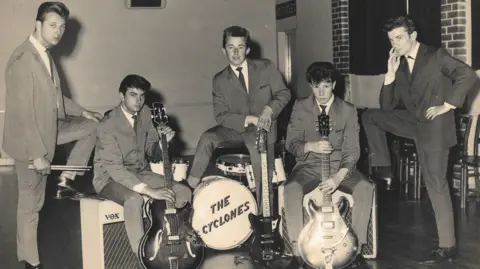
"One of the guys asked if I wanted to join the Cyclones, and within a few months we went up the barometer of local rankings.
"We did five gigs a week in youth clubs and village halls, and then eventually at the Colston Hall with 2,000 folks in.
"The village hall gigs were all about music, with strict rules: no swearing, no smoking, and no drinking.
"The promoter's mother had tables with jugs of orange squash on, that's all the kids were allowed," he remembered.
 Ricky Ford
 Ricky Ford
In 1963, the band toured Germany.
"All the bands did it, because it guaranteed three months' work, and then we got a job backing Peter and Gordon to promote their song World Without Love."
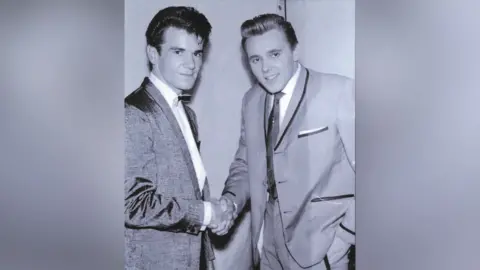
Ford's music career saw him meet dozens of stars, including Screaming Lord Sutch, Johnny Kidd & the Pirates, Terry Dene and Billy Fury.
"Billy stayed with me all night when we met, I rarely met such a lovely person, he seemed more interested in you than himself," Ford said.
He also met Roy Orbison, and his band tried to demo their composition entitled You Are My Love for the singer.
"That's a beautiful song, but too many words for me," Orbison told them.
 Ricky Ford
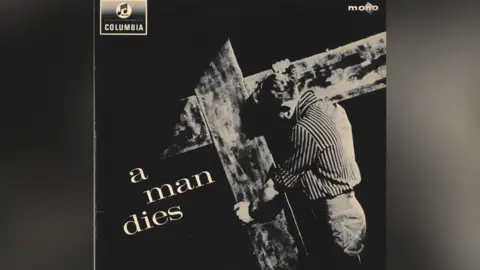
Ford was the star of the first rock 'n' roll religious musical, A Man Dies, which was staged in Bristol, the Royal Albert Hall, and on ITV.
EMI and producer Norrie Paramor recorded the whole cast at the world-famous Abbey Road studios, which Ricky remembered was a "wonderful experience."
"It was overshadowed by Jesus Christ Superstar later, but A Man Dies was the forerunner of all these musicals.
"It's still being played on evangelist radio stations in America," Ford said.
"Just when I thought things were at the end, I was 63 and I did a show in Crumlin, Wales, and the following week I had a call from a guy in Llanelli, who booked me for another 15 shows.
"I ended doing 70 clubs in the Welsh valleys which kept me going until well over 80.
"I've just really enjoyed being an all-round singer and entertainer and had a career that sustained me and kept me in demand my entire life," he said.
Follow BBC Bristol on Facebook, X and Instagram. Send your story ideas to us on email or via WhatsApp on 0800 313 4630.
