From the tennis court to the pages of Vogue

 David PH Hyde
A woman with a rare genetic condition who has modelled for Vogue says she never wants to give up coaching tennis.
Alice Dyer, 20, from Arnold in Nottinghamshire, lives with connective tissue disorder hypermobile Ehlers-Danlos Syndrome, which causes her joint pain and extreme fatigue.
She discovered tennis when she was 14 years old after a "have a go" session at Nottingham Tennis Centre.
Now she uses her wheelchair to coach children between three and 10 years of age and says: "Kids don't expect to have a disabled coach and they might not have met a wheelchair user before, so I am very grateful that I can introduce kids to that."
Growing up, she recalls how she wore ankle and knee braces and wrist supports to prevent her joints from dislocating. At school she could not take part in activities like physical education (PE).
"It was hard to explain to my friends why I couldn't do certain things," she says.
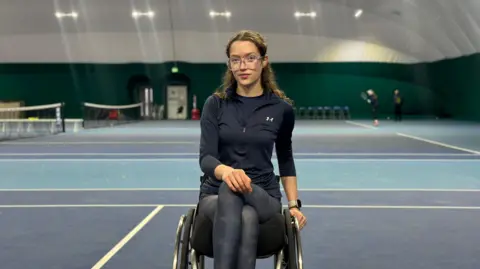
Discovering wheelchair tennis gave her a "feeling of freedom".
"I turned up and had a go," she says. "I was rubbish, but I enjoyed it.
"It connects me to so many different people. It's something that my body can do.
"I never thought it would lead to me working here as a coach."
She was about 18 years old when she landed her first modelling job.
"By putting myself out there, it means that other people have someone who is like them in media," she says.
Alice has worked with brands like Wimbledon e-commerce and online retailer Zalando. Her latest job was with Vogue Philippines in a portfolio celebrating diversity and inclusivity.
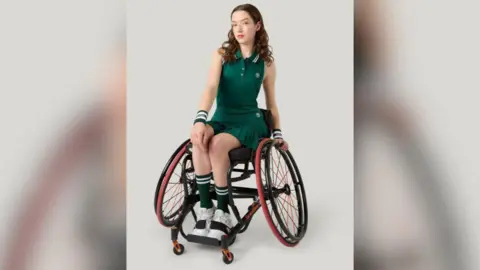 FASHOT
She found out she was in Vogue at home after her dad screamed her name on a Monday morning.
"It's a surreal feeling and I haven't fully processed it yet," she says.
Alice had been approached for an editorial shoot in London in May last year, but after months of silence, she had no idea where the photos would end up.
"Not everybody gets into Vogue," she adds.
Alice says the modelling industry is making moves with representation, but there is a long way to go.
"It's one thing to have a disabled model in a campaign, but if the clothes don't fit or aren't accessible, that's very different," she says.
Follow BBC Nottingham on Facebook, on X, or on Instagram. Send your story ideas to eastmidsnews@bbc.co.uk or via WhatsApp on 0808 100 2210.
