Family of girl, 12, welcomes brain disorder guidance

 Family Handout
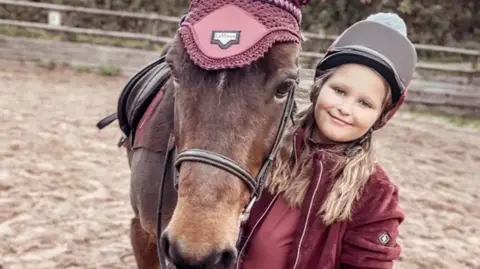
The mother of a 12-year-old girl who took her life while suffering from the effects of an undiagnosed rare brain disorder has welcomed plans to issue national guidance about recognising the condition.
Mia Lucas was found unresponsive in her room at Sheffield Children's Hospital on 29 January 2024, three weeks after she was transferred from the Queen's Medical Centre (QMC) in Nottingham.
An inquest last year heard how Mia was suffering from autoimmune encephalitis, a swelling of the brain that would have been the cause of the acute psychosis she was exhibiting.
The inquest jury found that failure to undertake a lumbar puncture at QMC before her transfer "possibly contributed to Mia's death".
 Family handout
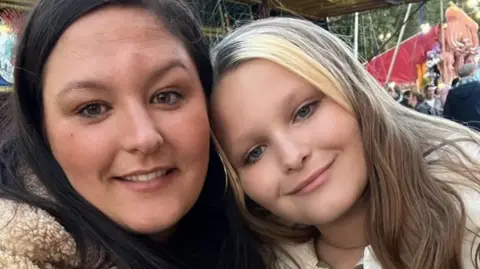
The inquest heard how Mia, from Arnold in Nottinghamshire, began to behave strangely over Christmas 2023, including hearing voices and attacking her mother, Chloe Hayes, with her family becoming so concerned she was taken by ambulance to QMC on New Year's Eve.
A diagnosis of autoimmune encephalitis only emerged part-way through the nine-day long inquest in Sheffield, after a pathologist revealed she had just received new post-mortem examination test results.
Following the inquest's conclusion, the trust in charge of QMC apologised to Hayes and her family, saying it was "truly sorry" that further tests were not carried out.
Sheffield's senior coroner, Tanyka Rawden, also said she would write to NHS England outlining her concerns about the recognition and diagnosis of autoimmune encephalitis.
'Hugely difficult'
On Wednesday, lawyers for Hayes said the Royal College Of Psychiatry had confirmed in a letter to the coroner that it is to release national clinical guidance on autoimmune encephalitis and autoimmune psychosis in the next six months.
According to Hudgell Solicitors, the letter says the new guidance will aim to "reduce diagnostic ambiguity, support clinicians working in high-pressure secondary care environments, and, most importantly, reduce the risk of future deaths by facilitating earlier recognition and treatment".
Hayes said the changes should be put in place "by the end of the year at latest" to avoid other families suffering as hers had.
"While I am pleased to see that new guidance is being developed, this will always be hugely difficult for me as all this comes too late for Mia," she said
"No family should have to lose a child to bring about changes in how known conditions are treated, and it breaks my heart that meaningful action is only being taken now, after Mia has died."
Solicitor Amy Rossall said: "The Royal College of Psychiatry is leading by example in taking positive steps to ensure guidance is being developed to improve the diagnosis of autoimmune encephalitis.
"At government level, the Department for Health and Social Care appears to have now passed this the way of NHS England, and they are due to provide their response in April.
"That must include a clear, comprehensive and detailed plan as to how it is to improve understanding, diagnosis and treatment across NHS settings."
Follow BBC Nottingham on Facebook, on X, or on Instagram. Send your story ideas to eastmidsnews@bbc.co.uk or via WhatsApp on 0808 100 2210.
