Patients left in corridors as A&E sees busiest day of the year

 BBC
BBCIt's the busiest day of the year so far in Worcestershire Royal Hospital's Emergency Department.
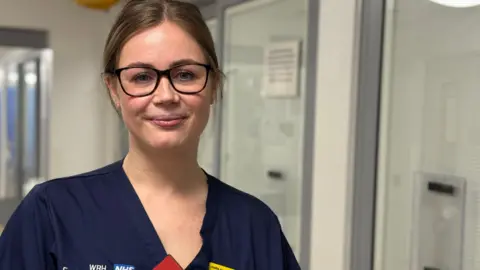
Staff work with sick people inside, and ambulances wait outside, but everyone is being assessed, Senior Sister Charlotte Moore says.
The hospital says that on an average day 270 patients come to A&E but on Monday, the day we filmed, there were 316 waiting to be seen.
"Due to capacity in the hospital obviously A&E gets very busy, it gets quite overwhelmed, there isn't space to move those patients up into the wards in the main hospital, so we end up having to stack ambulances outside as they come in," Moore continues.
"We have a nurse who goes out and triages, so that we can obviously make sure they are safe to be waiting outside and, if they're not, we make space to bring them in."
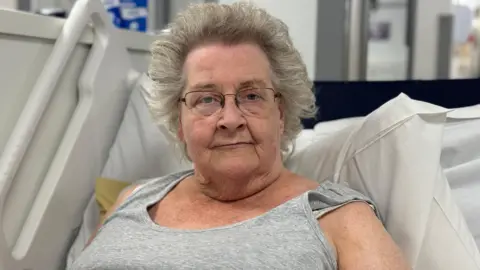
Seventy one-year-old Alison Moss has had several falls. She's been on a corridor here for two days and is waiting for a place in a community hospital.
"There's nothing wrong in my circumstances with being on a corridor. I've been looked after so well. They can't do enough for you," she said.
Despite being where she is, she says staff are "doing their best, they can't do any more than their best."
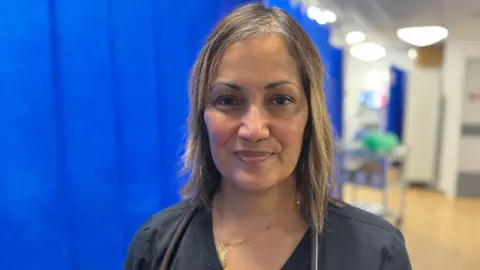
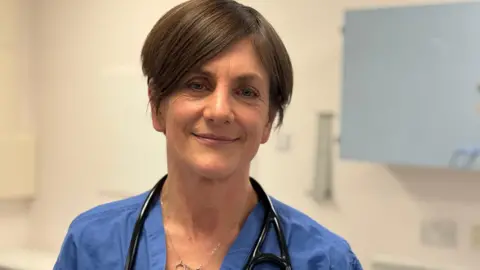
Emergency medicine consultant Dr Shewli Rahman describes the situation in the resuscitation area, where the most seriously ill are seen straight away.
"We've got somebody being seen for an acute stroke by the stroke team, somebody who has got severe breathing difficulty who's going to need support with their breathing, we've also got somebody who's got severe chest pain," she said.
"We've already had somebody with cardiac arrhythmia who's needed medication to revert them back to a normal rhythm.
"So, it's a fairly typical and busy day and that's all happened this morning since we've arrived."
Long waiting times
Rahman explains that the biggest challenges in the emergency department tend to be "demand and capacity".
"So we have limited space within the department, we've often got patients who are waiting long times for beds and then on top of that each day you have new patients coming in who need urgent and emergency treatment," she says.
"Juggling that demand of patients who need ongoing treatment as well as new patients who need assessments and treatments, that's the biggest challenge as a consultant, making sure that patients are being seen and treated in a timely fashion."
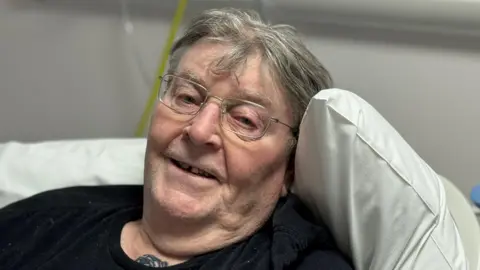
One way of easing pressure is by diverting patients to a special cardiology unit, and it's there that we find 80-year-old Ron Price.
He already had a device fitted because of his weak heart, and has come in by ambulance.
"They said I'd had a cardiac arrest and while I was unconscious a defibrillator kicked it back in," he explained.
Consultant cardiologist Dr Helen Routledge says the unit means that some heart patients "come straight into us via a separate door, not using the same door as everybody else in the hospital, to see a team of cardiology specialists directly".
"That way they get their treatment a lot more quickly, they get the right tests, the right investigations, there are no wasted encounters and often we can send that patient home the same day with the right treatment," she explains.
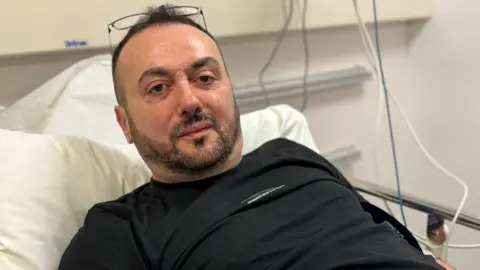
Zoran Gucev, 49, was admitted after being brought in by ambulance, suffering chest pains. Tests reveal difficult news, and Gucev is being admitted.
"There was a heart attack," he says, adding that both the ambulance response and hospital staff had been "very good and very fast."
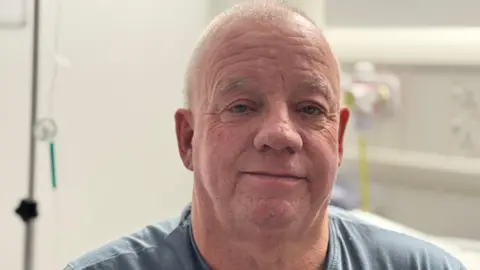
Back in the emergency department Nigel Hamnett, aged 64, is waiting to be taken to a ward. He's been here since last night with gall stones.
"I've been on the corridor since 10pm last night," he says, though he is moved into a bay shortly afterwards.
Asked how it has been for him, he said: "Under the circumstances very good. You can't fault the staff, they really put themselves out, but you're waiting a long time."
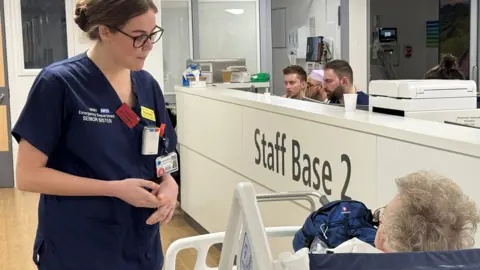
Later we catch up with Moore again, now a long way into her 12-and-a-half-hour shift.
"We've had an influx of ambulances but also been allocated quite a few beds now, so it's just trying to get the patients up onto the ward so that we can offload those ambulances into our emergency department," she says.
Accident and emergency departments are well known for long waits and busy days.
The national target is for 95% of patients attending A&E to be admitted, transferred or discharged within four hours.
But the latest NHS England data showed that no trusts achieved that last year.
Bottom of the table in the West Midlands is Shrewsbury and Telford Hospital NHS Trust, at 52%.
Second lowest was University Hospitals Birmingham, at 62%, with Worcestershire Acute Hospitals Trust third lowest, at 64%.
'Want it to be better'
Dr Jules Walton, chief medical officer at Worcestershire Acute Hospitals Trust, said it had been a busy week for the hospitals in Worcester and Redditch.
"We really wouldn't want any of our patients to be experiencing delays or to have care that is not the standard that they would expect," she said.
"We want it to be better, we think it should be better, and all our staff are absolutely committed to making improvements."
Staff were working hard to make sure patients got the care they needed, she said.
Work was being done to improve things, she added, including different ways of working in different departments.
She said the main reason for additional pressures was down to a population increase and because people are living longer.
Follow BBC Hereford & Worcester on BBC Sounds, Facebook, X and Instagram.
