Jury changes making law students rethink careers

 BBC
BBCLaw students in Birmingham say they are worried about the future of the justice system after the government announced plans to end jury trials for all but the most serious cases.
Some said they were even considering switching career.
Justice Secretary David Lammy announced the changes last week in a bid to reduce a crown court backlog which stands at 78,000 cases.
But critics have said scrapping the centuries-old right to a trial by jury should only be a last resort and that justice itself is at risk.
Tackling problems like the shortage of barristers, reopening closed courts and getting defendants to the dock on time would be more effective, they claim.
Evie Bailey is studying a BA in Law and said she had serious concerns about ordinary people being distanced from the legal proceedings.
She said having people outside the legal profession in the courtroom was vital.
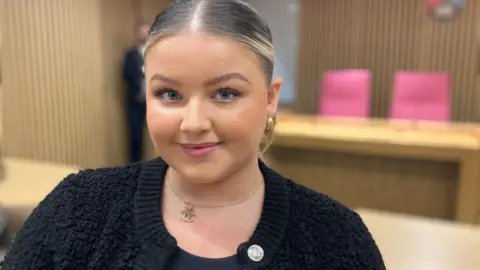
"When you take a jury away, you take away the public confidence," she said.
"The jury is the cornerstone of the public being involved in the criminal justice system. You know, everybody else in that courtroom is part of the state."
She added that removing the need to explain legal jargon in layman's terms could also put off people visiting court and lead to the system becoming "more closed-off" and less accountable to the public.
Evie said being a barrister was about upholding public confidence and for that "you want the emotional human element as well as the black letter law" which could be lost without a jury.
'Never coming back'
The government plans to scrap jury trials in England and Wales for crimes that carry a likely sentence of less than three years.
Serious offences such as murder, robbery and rape will still go before a jury.
However, it means volunteer community magistrates, who deal with the majority of all criminal cases, will take on even more work.
Reforms also include creating "swift courts", with Lammy describing the measures as a whole "bold" but "necessary".
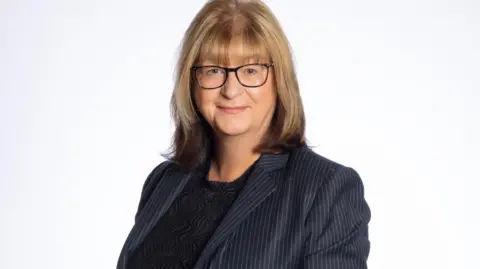
Mary Prior, a KC with the chambers 36 Crime and former chair of the Criminal Bar Association, told BBC Politics Midlands there were other measures available and the right to a trial by jury "shouldn't be removed unless or until it is the only option".
"Because the minute we remove the right of ordinary people to take part in our criminal justice system that's never coming back," she said.
 36 Crime
Josh Pegus had plans to be barrister, but said he would now train as a solicitor instead.
As well as the move to reduce the number of jury trials, he said his decision had been driven by how he saw his future earning potential.
"There's not enough funding for barristers," he said. "Criminal barristers are overlooked and there is a lack of legal aid."
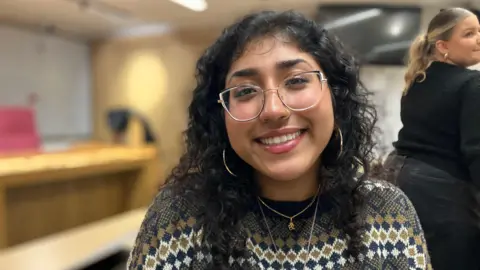
Manya Devgan said she had huge concerns about the impact the government's measures would have on justice for people from minority backgrounds.
"Juries are so important in limiting bias," she said.
"The judges have have wigs, language, and they are just so different from the defendants."
She accepted changes had to be made to deal with the backlog in the system, but that other measures should be looked at first.
"We do understand how the backlog is affecting us, and we do understand the stats - 100,000 by 2030? Nobody wants that, but not at the cost of justice."
The government's announcement follows proposals from retired Court of Appeal judge Sir Brian Leveson earlier in the year, who said "fundamental" reforms were needed to "reduce the risk of total system collapse".
Some criminal cases in the West Midlands heard in recent months have been given a provisional trial date of 2028.
Ms Prior drew attention to efficiency measures highlighted by Sir Brian that she said could make a big difference to the current backlog.
"Our view is those efficiencies would free up at least 20% of the time each case takes," she said.
"We need every courtroom in every crown court open every day. That isn't happening at the moment. Currently there's about one in five closed - so that's a really simple way of speeding up justice.
"Get prisoners to court on time... we lose whole days at courts because prisoners aren't produced."
She added more interpreters were urgently needed, while many court buildings were in desperate need of repairs, with some courtrooms unusable because lifts were broken.
Follow BBC Birmingham on BBC Sounds, Facebook, X and Instagram.
