Criticism as authority approves council tax rise

 BBC
BBCDerbyshire County Council has approved a smaller council tax rise than originally planned.
Reform UK, which leads the authority, agreed to a rise of 4.9% - a 0.09% difference from the 4.99% previously proposed - amid criticism from opposition parties.
The maximum increase allowed is 4.99% without holding a local referendum.
It was agreed as the county council's budget for the upcoming year, which includes a savings drive of more than £50m, was rubberstamped.
County council leader Alan Graves told the council Reform UK had inherited a financial position from the Conservatives - who lost control of the council in 2025 - that brought the council "perilously close to financial failure".
'Protect the vulnerable'
The revised tax rise is a saving of roughly £1.47 for the average household in Derbyshire, or roughly 3p a week.
Band D properties will see an increase of about £80 to their bill.
Reform rejected proposals from the opposition Conservative group for a smaller rise of 3.9%.
John Lawson, the council's member for finance and Doge - the name for the party's financial efficiency drive - said he did not want to "trust the financial judgement of people who ran this council into the ground".
He also argued the 4.9% hike was "the lowest [rise] in the last three years".
"[Raising council tax is] not something we particularly wanted to do, but it's something we felt unfortunately we'd been pushed into," he told the meeting on Wednesday.
"I want to minimise our tax burden but at the same time I want to protect the most vulnerable."
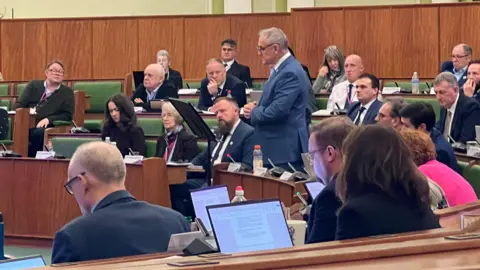
The authority's Reform UK leaders were criticised by opposition councillors for raising council tax during the budget setting meeting at County Hall in Matlock.
The Conservatives and Green Party showed the meeting Reform UK election literature from the 2025 local elections pledging to "cut your taxes".
The leader of the Conservatives, Alex Dale, said the party had promised "quite explicitly to lower taxes".
"Money has been a challenge, but despite all of that, in five out of those eight years that we set council tax, we chose not to max it out," he said.
"Because we believed then, and we do now, that you have to stand on the side of taxpayers wherever you can.
"Despite what Reform say, council tax is not set by the government, it's set in this chamber."
Defending the plans, Graves said the budget was being set in the context of "years of underfunding".
He said most of the increase in the council's core spending power came from raising council tax, not government funding increases.
"Whilst funding is redirected towards metropolitan inner-city and London councils... in real terms that means Derbyshire residents are being asked to pay more," he said.
"[The Conservatives] relied too heavily on short-term fixes rather than sustainable financial strategies.
"Difficult decisions were delayed and delayed at a cost. That cost is now being felt by residents."
The leader of the Derbyshire Greens, Gez Kinsella, said the party had behaved "irresponsibly" by giving the impression bills would be cut through Reform's "Doge" programme.
"Despite promising, they failed to deliver a council tax cut," Kinsella said.
"The difference between 4.9% and 4.99% is a packet of M&Ms per household per year.
"But that's going to cost the council £400,000 for each year of this administration.
"It could reduce the deficit by nearly a third."
The meeting also saw opposition to proposals to close Glossop's tip, including from a Reform UK councillor from the area, who said he could not support his own party's budget while the proposal remained in place.
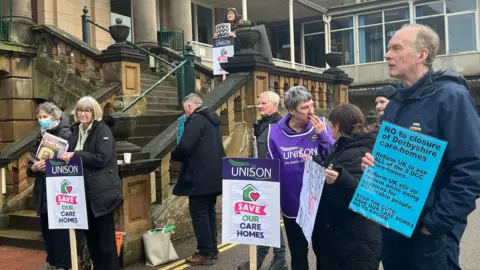
Protesters also gathered outside prior to the meeting against the planned closure of eight of the council's last authority-owned residential care homes.
The council has an overall spending envelope of about £800m for the upcoming financial year and a deficit of £1.5m.
The authority anticipates it will face pressures on its finances of more than £100m, with particular concerns about children's services and adult care.
Special educational needs and disabilities, or SEND, also remains a concern, with the deficit expected to reach about £84m by March.
A council report outlining the robustness of the finances also warns that "periods of lower than allowed council tax increases can contribute significantly to exacerbating other financial issues".
The authority also noted that while a balanced budget is possible for the upcoming year without the need to use its reserves, the ability to set a balanced budget over the next few years "is a concern" because of continued pressures and forecasted funding cuts.
"Tough decisions will need to be taken and planning needs to start as soon as possible to achieve this," it said.
"The council remains a going concern, although difficult decisions and strong, robust financial management will continue to be required."
Follow BBC Derby on Facebook, on X, or on Instagram. Send your story ideas to eastmidsnews@bbc.co.uk or via WhatsApp on 0808 100 2210.
