The Scottish rugby player so good a match was named after him

 Getty Images
A rugby hero from southern Scotland is still helping school pupils pay for college or university more than half a century after his death.
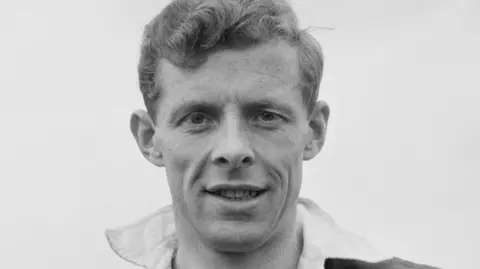
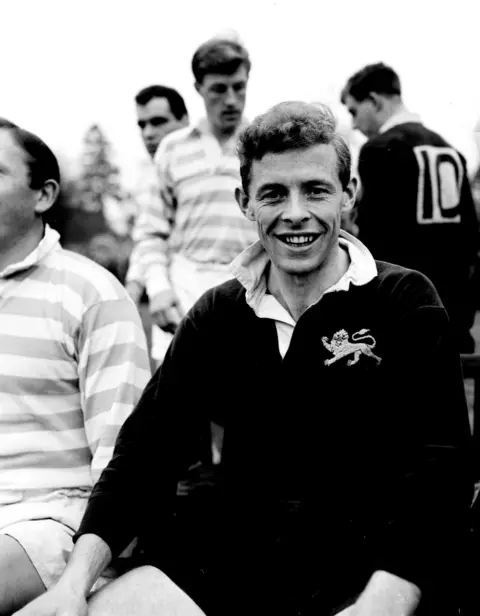
Arthur Smith was a gifted mathematician who studied at both Glasgow and Cambridge universities - but it was his talent on the rugby field for which he is remembered.
He played such an important role in his debut with the Scotland national team, the game went down in history as "Arthur Smith's match".
Smith died from cancer in 1975 aged just 42, but children at his former school in Kirkcudbright are still benefiting from a legacy in his name.
 Iain Smith
Smith was born at Upper Torrs Farm near Castle Douglas on 23 January 1933, according to details recently released by the National Records of Scotland (NRS).
At the age of 20, while studying mathematics at Glasgow, he became Scotland's national long jump champion with a distance of 6.17m (20 ft 3in).
Gaining a first class degree, Smith went on to complete a PhD in applied physics at Cambridge, between 1954 and 1957.
It was while there his love of rugby was ignited and he took part in Varsity matches against rivals, Oxford University.
Smith was tall and his speed became an advantage as he played for several clubs including London Scottish, Barbarians, Edinburgh Wanderers and Ebbw Vale in South Wales.
 Getty Images
It was during his international debut that he played a key part in ending Scotland's losing streak.
They had suffered 17 straight defeats but that day - 5 February 1955 - Scotland beat the Welsh at Murrayfield 35-10.
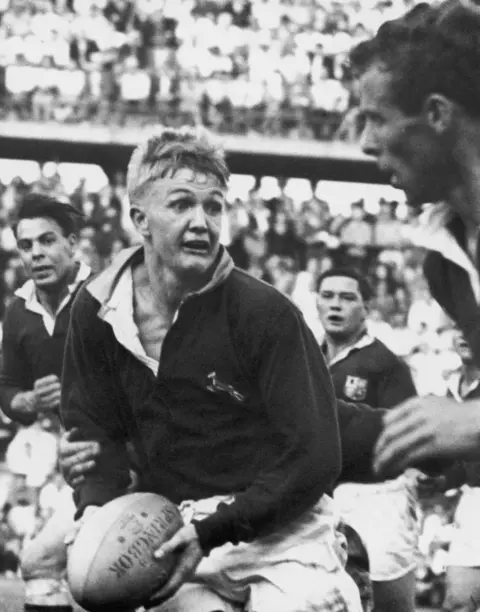
He played such a pivotal role at right wing - scoring a try in the victory - that it became known as "Arthur Smith's Match" as highlighted by NRS.
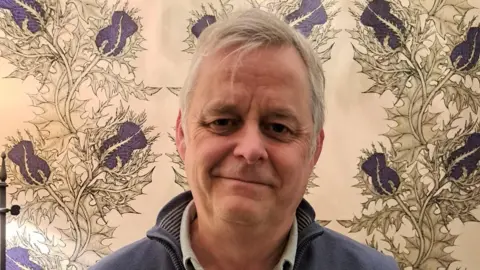
His son, Iain, 60, from Edinburgh, said he remembered sitting on his father's knee asking him to regale him with the tale of the match.
 Getty Images
"He would obviously massively exaggerate it so by the time he'd talked me through his try he had beaten at least 20 players but I used to love it," he said.
"When I finally saw it on the Pathé newsreel, classic Pathé, he gets the ball, you see him run about five yards and beat a tackle.
"It randomly cuts away to the crowd with cheering and then it cuts back and you see him go over in the corner but nothing in between."
It was the first of 33 caps for the national side and Smith would be selected for every international he was available to play in until he retired in 1962.
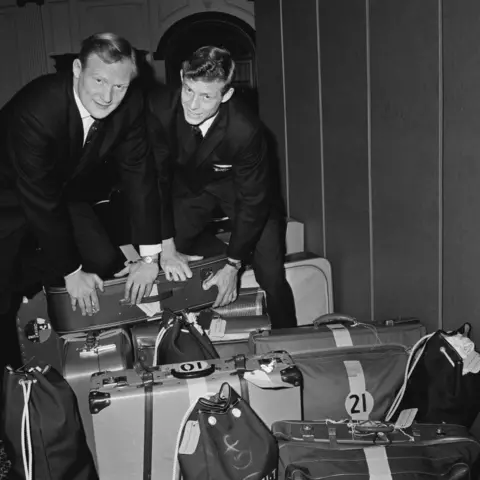
He also captained Scotland on multiple occasions and took part in two British Lions tours in 1955 and in 1962, when he was selected as team captain.
At the time, he was the first Scottish captain of the British Lions since 1927 when David MacMyn - from Kirkcudbright - skippered the side.
 Getty Images
Smith had brains as well as brawn and built a career in finance with several brokerage firms.
He was an executive of the Edinburgh Fund Managers at the time of his death.
He had lived with his wife, Judith, in Wales and Newcastle before they settled in Edinburgh in 1960.
Iain said his father was trying to earn a "bit more money for the family".
"He was at the forefront of using statistics to see how the markets were moving and, therefore, to inform people what they should do with their stocks and shares," he said.
"It seems blindingly obvious now but it was a new concept back then."
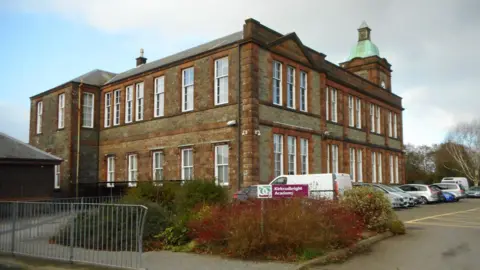
Smith's high school education was at Kirkcudbright Academy and pupils there have been benefiting from a fund set up in his name since his death.
 Richard Sutcliffe
The Arthur Smith Memorial Fund grants pupils up to £3,000 spread over the years they are in tertiary education.
Anthony Tuffery, head teacher at Kirkcudbright, said pupils who applied were given information about the man the fund honours.
Over the years it has helped numerous pupils and efforts are currently under way to try to encourage more students to take advantage of it as there are concerns the application and interview process may be putting them off.
Iain said the fund was originally set up in the wake of his father's death - from cancer - by his parents' friends to support him, his two sisters - Jacqueline and Joanna - as well as his mother, Judith.
He is often asked if he ever gets sick of being known as Arthur's son but he laughs that off.
"It never did me any harm at all, I got lots of free drinks out of it and good chats," he said.
And, along with his sisters, he is proud to see his father's legacy continue at the school which set him on his way to sporting, academic and business excellence.
