'Winning Polar Medal together is doubly nice'

 Supplied
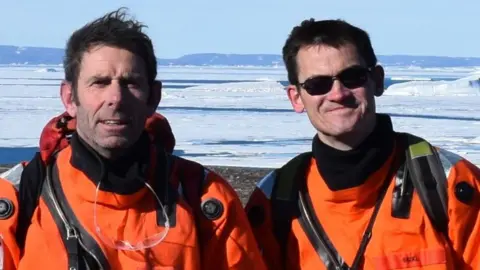
Two colleagues awarded the Polar Medal have called it "doubly nice" to get their recognition at the same time.
The medal, which is given to individuals for outstanding achievements in the field of polar research, has previously been awarded to the likes of Sir Ernest Shackleton and Sir Edmund Hilary.
Prof Colm O'Cofaigh and Prof Dave Roberts, both from Durham University, were named in the King's New Year's Honours list alongside six other Polar Medal recipients, including Prof John Woodward at Northumbria University.
"We're good colleagues and good friends," O'Cofaigh said of him and Roberts, adding: "Therefore it's doubly nice to receive the award at the same time."
O'Cofaigh said the pair met in 1992 when they were both postgraduate students on a field trip in Ireland looking at glacial sediments.
They ended up working at the Durham University in the early 2000s.
 Supplied
O'Cofaigh said working in the field had its unique challenges.
He recalled sleeping with a knife and a rifle while he camped in the Canadian Arctic during his PhD in case of bear attacks.
"Luckily we never had any problems," he said.
Roberts said one of the best parts of working in the polar regions was the wildlife he encountered.
"You bump into some of the big whales, the fin whales or the humpbacks, or you bump into a polar bear, it makes being in those places really special," he said.
"You don't get that anywhere else on the planet."
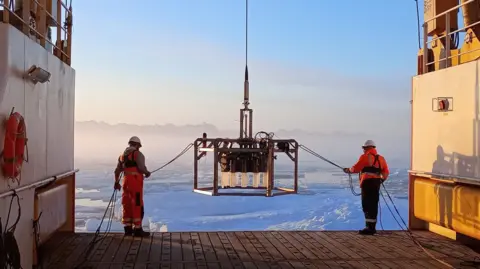
Both O'Cofaigh and Roberts were on the RRS Sir David Attenborough when it went to Greenland in 2024 as part of a research expedition.
The team was aiming to collect data on how exactly the country's ice sheet had responded to climate change in the past.
 Supplied
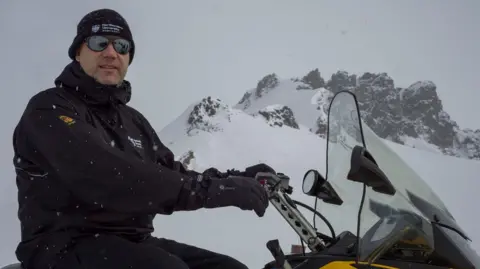
Woodward said he had known he wanted to work in the polar regions since school and that it was "humbling" to win the medal.
He said being a polar researcher meant living in extreme conditions for months at a time.
This involved spending hours melting water to drink and struggling to dry clothes in the night.
"Then you're trying to conduct science with equipment that was never designed to work in -10C or -15C," he said.
"It's a very strange existence for the time you are in the field," he said
