STV staff back strike action over planned pay freeze

 PA Media
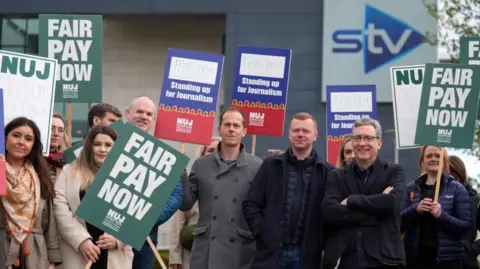
Broadcaster STV is facing the prospect of widespread strikes which could disrupt coverage of the Scottish election campaign.
Members of the NUJ and BECTU unions have voted overwhelmingly for strike action over a planned pay freeze.
The company says it understands what this could mean for staff but argues it is dealing with challenging marketing conditions.
NUJ members went on strike in January over job losses and planned cuts to news programmes.
The NUJ said 84% of those who voted backed a strike while 94% voted in favour of action short of striking.
The turnout was 73.5%.
The turnout among BECTU members was 57% with 73% of those who voted backing a strike.
Both unions now have the legal right to call members out on strike or call other action, such as a work to rule.
It is understood the unions expect to hold talks with management - potentially next week - before it decides on its next step.
The unions need to give 10 days' notice of a strike or any other industrial action.
 PA Media
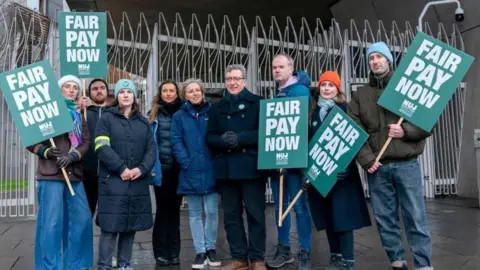
The NUJ is urging the company to make what it would consider to be a fair pay offer to avoid strikes.
The union's Scottish organiser Nick McGowan-Lowe said: "This is another powerful ballot result from NUJ members at STV which clearly shows that they won't accept that debts run up by senior management should be paid for out of the pay of hard-working journalists.
"It's time for management to sit down with the unions to find a fair pay offer, as well as addressing the excessive workloads of staff working in STV News".
Paul McManus, BECTU negotiations officer for Scotland, said staff were "deeply frustrated and angry".
He added: "Members feel it was extremely presumptive of STV to assume that staff would take a real terms cut in pay while money was clearly found to invest in other areas of the business."
McManus also urged the company to meet with the union in a bid to resolve the dispute.
The pay freeze follows a difficult period for some STV staff.
The company plans to stop producing news programmes in Aberdeen and a number of staff in a variety of roles have left in recent weeks,
The unions argue this has increased the workloads of those who remain.
Although this dispute is over pay, some newsroom staff at STV claim their workloads have increased significantly as a result of recent redundancies.
It has also been claimed that some staff who recently took redundancy have been offered chances to return as freelance workers.
Previous strikes by the NUJ have meant there were no Scottish news programmes broadcast on STV and fewer new stories on the company's website.
If the dispute is not resolved, STV and BECTU are likely to discuss whether to strike on the same days or different days.
An STV spokesperson said: "We recognise a temporary salary freeze is challenging for colleagues, but we've had to take a range of measures to respond to the market conditions that the media sector faces.
"We remain committed to open and transparent communication with both our colleagues and union partners."
The broadcaster has previously defended the need for a pay freeze.
The company has been dealing with the effects of falling advertising revenue and declining TV viewing. Other broadcasters are facing similar challenges.
On Tuesday it said advertising revenue fell by 10% last year and by a further 5% in the first three months of this year. The company also said it would not be paying a dividend to shareholders,
STV has also been embroiled in controversy over plans for major changes to its news programmes.
It proposes to stop providing an entirely separate service for viewers in the former Grampian TV region and cut the amount of purely local news it shows.
TV regulator Ofcom is set to announce whether it will allow this shortly after the Scottish election in May.
