Businessman Cushnahan found not guilty in Nama fraud trial

 PA Media
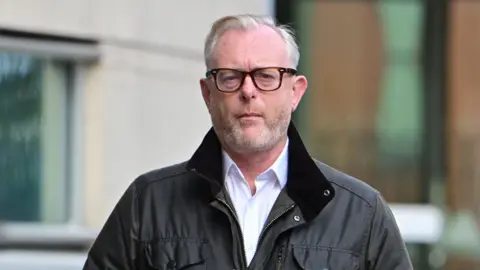
The Belfast businessman Frank Cushnahan has been found not guilty of fraud.
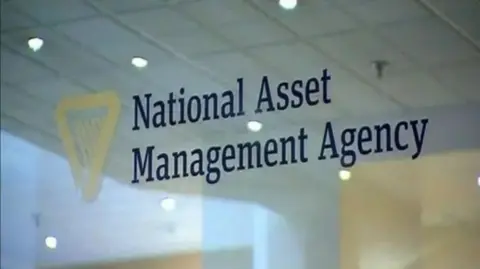
Cushnahan, 84, had been charged in relation to his role as an adviser to the National Asset Management Agency, known as Nama, which was set up in 2009 after the property crash.
He denied a charge of fraud by failure to disclose information in 2013.
The jury's majority verdict came on Monday after a four-month trial and three days of deliberations.
The judge, Madam Justice McBride, had told the jury to keep trying to reach a unanimous verdict if possible but this was ultimately not possible.
The trial at Belfast Crown Court, which began in September, was held before a jury of nine men and three women.
Outside the court on Monday, solicitor Paul Dougan said that for legal reasons, Cushnahan could not comment.
However, he added that they were "delighted with today's outcome".
He said Cushnahan was grateful to the jury, judge and his legal team.
Solicitor Joe Rice said his client was grateful to the jury for "bringing this to an end" and that he was "greatly relieved".
Cushnahan, from Alexandra Gate, Holywood, County Down, has been a prominent businessman in Northern Ireland over many years, working in both the private and public sector.
The case dates back to 2013, when Cushnahan was an adviser to Nama, and there was the potential sale of its Northern Ireland loan book after the financial crash.
It was alleged that between April and November that year, he provided assistance to an American firm called Pimco but did not tell Nama, even though, the prosecution said, he was under a legal duty to do so.
At the time, Pimco was interested in buying the Northern Ireland loan book from Nama.
In the end, it was sold to another firm, Cerberus, in a deal worth more than £1bn.
It was alleged that by failing to disclose information to Nama, Cushnahan was in a position to make a gain for himself or someone else.
It was claimed that he stood to gain about £5m in a success fee if the deal went through.
The charge was denied.
 Pacemaker
Cushnahan is still facing a separate charge in connection with the case, fraud by false representation, which he denies.
That charge was initially included in the trial, but it was excluded last month for legal reasons.
Former Belfast law firm managing-partner Ian Coulter was also on trial, facing the same charge, but a health issue arose with his senior barrister and his trial could not continue.
In total, Coulter is facing five charges, which he denies.
The trial on those charges is due to be rescheduled.
Coulter, 54, from Templepatrick Road in Ballyclare, County Antrim, used to be the managing partner at Belfast-based Tughans law firm.
What is Nama?
Nama is the Republic of Ireland's "bad bank", set up to deal with toxic loans after the 2008 property crash.
The agency was established by the Irish government in 2009.
It was responsible for recovering the value of problematic loans made by other Irish banks during the Celtic Tiger period.
Nama bought these loans (land and property and associated loans) at a discount and sold them.
The Northern Ireland loan book was packaged into one portfolio, to be sold in one lump.
That portfolio was called Project Eagle.
