'We train canine heroes to help those in danger'

 Tim Cain
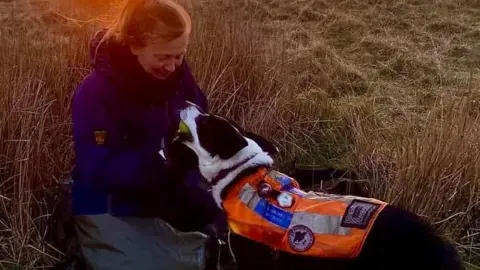
It's cold, it's dark and I'm crouched in a muddy ditch with Sam de Belle, who couldn't be happier as she hides in silence from a border collie.
Sam is one of a group of volunteers at Swaledale Mountain Rescue, known as "dogsbodies", who help train rescue dogs to find missing people or anyone in difficulty in the countryside.
Come rain, shine or snow, she makes the three-hour round trip to Richmond, in North Yorkshire, every Thursday night, to hide in the undergrowth or other tricky-to-find spots in the area to help the dogs refine their search and rescue capabilities.
"It's just nice being able to work with dogs and get together with like minded strange people who like to sit in ditches," explains Sam, who is head zookeeper at Flamingo Land by day.
Dogsbodies volunteer with mountain rescue teams across the country, hiding for dogs on training sessions and assessment courses.
They assist from the very start, helping train the dogs up from puppies.
Ian Speirs is rescue controller at Swaledale Mountain Rescue and owns Olly, a border collie who has been working as a search dog for over 11 years.
He said: "Our dogsbodies are just outstanding. They're out in all weathers. They'll hide in most places, some of them you wouldn't even imagine where they'd go, but they work really well, and they interact so well with the dogs."
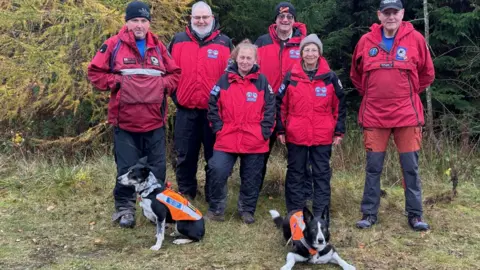
Using play and fun, the dogsbodies help train the dogs to sniff out the scent of a human body and when they find that scent, they are then rewarded with fuss, praise and time to play with a ball.
Retired policeman Ron Allan has been a dogsbody at Swaledale Mountain Rescue for eight years, prior to that he was a member of Cleveland Mountain Rescue for 15 years.
He explained: "They can pick up scent from hundreds of metres away. To search on foot would take some time.
"A person lying behind grass might not be visible to someone, but a dog would pick it up.
"They produce results and they save lives."
The organisation says new dogsbodies are always welcome, receiving mentoring at first before moving through the different stages of training.
Unsurprisingly, the requirements for a successful dogsbody include "patience and a sense of humour".
Mr Speirs said: "Sometimes our volunteers can be lying out there for up to an hour, especially if we're working in bigger areas.
"Some of the conditions they go and lie in, even as a handler you think, 'really?' But we make sure they have the appropriate equipment. Most of them also have a real passion for dogs."
Listen to highlights from North Yorkshire on BBC Sounds, catch up with the latest episode of Look North.
