Seagrass and kelp projects inspire artwork

 Durham Wildlife Trust
A project to reduce flooding and coastal erosion has inspired artists to create pieces on important marine habitats in their region.
Durham Wildlife Trust has worked with artists in the North East to help them find out how seagrass and kelp can help protect the region's coast.
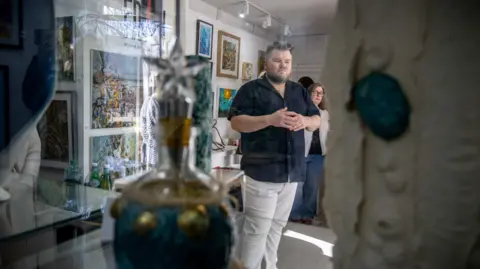
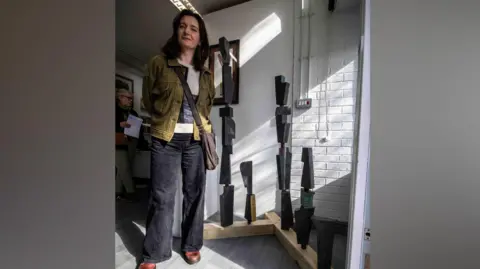
Their learning has inspired paintings, photographs, jewellery and pottery, which are now on display at exhibitions in Seaham and Amble.
The trust's marine engagement officer Blair Watson said he was excited to see the artists taking a real interest in the habitats and doing their own research to learn more about them.
"I was absolutely over the moon with how these projects have gone," he said.
"Kelp's not the most exciting thing in the world when you see it washed up on the beach, people just think it's a bit of a nuisance almost, or spoiling the nice beach."
The Stronger Shores Exhibition about seagrass can be seen at the Dry Water Arts Centre in Amble until 2 April.
East Durham Artists Network (Edan) in Seaham will be exhibiting Kelp until 25 April.
 Durham Wildlife Trust
Watson said the exhibitions were part of the Stronger Shores Project, funded by Defra, looking at how to reduce flooding and coastal erosion in the region.
Projects include some looking at monitoring of rivers, building infrastructure and helping communities respond to flooding.
As part of nature-based solutions, they are exploring how three habitats - kelp, seagrass and oysters - can make shores stronger.
"The projects are exploring how they can help to slow down the wave energy before it reaches the shoreline," Watson said.
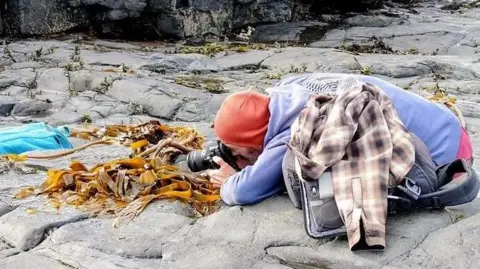
He said kelp grows tall in the water in tight and dense forests, slightly offshore.
"That can help to create a bit of friction as the waves pass over, which reduces wave energy, helping to limit the erosion before it reaches the coastline there."
 Durham Wildlife Trust
He added seagrass grows in tight meadows, meaning its roots create "dense mats underneath the seabed" binding the sediment, making it harder for it to wash away during storms.
A number of partners are involved, including the Tees Rivers Trust, which provided some of the seagrass used in pilot projects to see if it could grow in nurseries.
PhD students from Newcastle University were also involved, studying how the habitats can protect shores.
Watson said he was impressed with how the artists interpreted their learning of marine habitats, including a 6ft (1.82m) pottery piece representing a model of sugar kelp.
"It's based on the colours of the pH scale to look at how kelp can help and combat ocean acidification," he said.
"I couldn't pick out a single piece, they are very much individually based on the artist's expertise, so we had glassworks, metalworks, jewellery, some gorgeous photography and incredible imagery painted as well."
