Restoration hopes for seagrass plantings scheme

 Durham Wildlife Trust
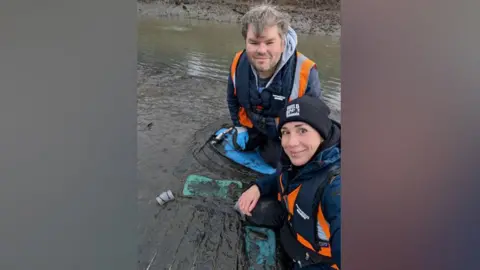
Two patches of seagrass have been planted in the latest trial to see if the species could grow again.
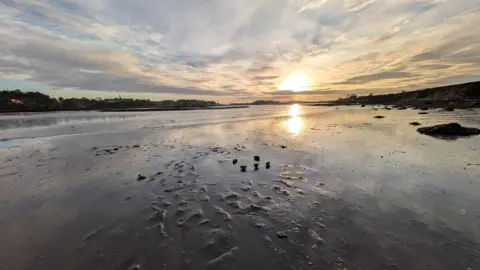
After two years of background work, Durham Wildlife Trust carried out the plantings at the river Don at Jarrow and the river Aln at Alnmouth at the end of November.
Dr Martina Bristow, the trust's seagrass and seaweed research officer, said the plants looked healthy, which was a "a very good sign".
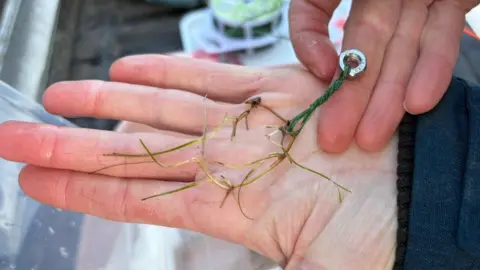
The seeds were grown by project partners Tees Rivers Trust at their specialist seagrass nursery in Hartlepool, and the latest project follows plantings in the Tees Estuary last year.
Seagrass meadows once thrived along the coastline, including in north-east England.
Although some pockets remain, over time a combination of human activity and environmental change has led to widespread habitat loss.
 Durham Wildlife Trust
It is hoped the trials, which will last until the end of September, will inform if the plant could grow again in areas where it previously existed.
"It's likely that we'll see some loss of seagrass plants, just because transplanting these very fragile plants is quite a difficult thing to do, but we hope to learn along the way what kind of things might be impacting their survival", Dr Bristow said.
A third planting at Wansbeck Estuary is expected to take place next week.
 Durham Wildlife Trust
The young plants spent a year at the Hartlepool nursery before being transported to the trial sites, where they undergo biosecurity checks before being planted into custom-made frames sunk in the mud.
The frames help protect the plants as they become established and allow environmental sensors to be securely attached, helping the team track conditions on the mudflats.
Dr Bristow said that, during a recent visit at the River Aln, researchers found plants had remained both on the frames and in the mud.
"Seagrass is considered a bit of a miracle plant," she said.
"It's the only flowering plant that's truly marine. It captures carbon at a really impressive rate.
"It provides habitat for a huge number of species and it also cleans the water, so it helps improve water quality."
The work is part of the the Stronger Shores project, which explores how working with nature can help protect coastlines.
