When is the Scottish Budget and what might be in it?

 Getty Images
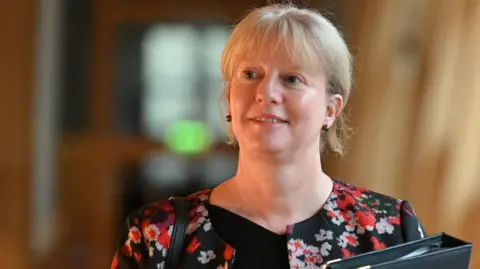
Finance Secretary Shona Robison is set to announce the Scottish government's Budget for the coming financial year.
She will reveal on Tuesday how the SNP administration intends to spend about £60bn in 2026-27, and whether there will be any tax changes.
The announcement comes just four months before Scots head to the polls for the Holyrood election.
What happens during the Scottish Budget and what time is it?
Robison is scheduled to deliver her draft Budget in the Scottish Parliament at 14:20 on Tuesday. She will get 30 minutes to make the statement, followed by an hour of questions from MSPs.
The Budget is the Scottish government's opportunity to set out its tax and spending plans for the next financial year, which runs from 1 April 2026 until 31 March 2027.
This includes raising or lowering taxes, as well as major decisions about spending on areas controlled by the Scottish Parliament - such as health, transport, education and justice.
The government can also set out proposals for new taxes, welfare benefits, public services and infrastructure projects.
The finance secretary's speech will be accompanied by a Budget bill, which sets out the plan in a legal document.
MSPs will debate the proposed budget and are able to table amendments before a final vote on whether it should be passed into law.
 PA Media
After the UK government was criticised for leaking much of its Autumn Budget, Scottish ministers have made a point of emphasising that they will remain tight-lipped until the finance secretary gets to her feet at Holyrood.
What we do know is the Scottish government will have to set out how it intends to use about £100m coming from the UK government as a result of its decision to scrap the two-child cap on benefits.
First Minister John Swinney has pledged to use the cash on tackling child poverty, with some speculating that could include a hike in the Scottish Child Payment.
The Scottish Conservatives have urged the government to reduce the "crippling financial burden" on families by cutting income tax, and to lower business rates.
Labour have called for SNP ministers to use health funding to bring down waiting lists and reform the NHS, and to focus spending on efforts to get people back into work.
What taxes are devolved to Scotland?
A key concern for most Scots will be any changes to income tax.
Holyrood ministers have used their devolved powers to create a distinct system from the rest of the UK. Scotland has six tax bands, in contrast to England, Wales and Northern Ireland, where there are just three.
In Scotland people earning below about £30,000 pay slightly less tax than they would elsewhere in the UK, with a maximum saving of about £28.
Above that threshold they pay increasingly more.
Although the Scottish government can set its own bands and rates, the UK government determines the point at which people start paying the levy.
SNP ministers have previously pledged not to increase rates, but thresholds at which people start paying higher tax rates could change.
If thresholds are not increased with inflation, taxpayers could be dragged into paying higher rates as their wages increase.
Holyrood ministers are wholly in control of several other taxes.
This includes non-domestic rates, often called business rates, which are based on the rental value of a shop, office, factory or warehouse.
Holyrood also sets Land and Business Transactions Tax, the Scottish equivalent of stamp duty, which is paid on property purchases of £145,000 or more.
The government has faced calls from opposition MSPs and business groups to lower both of those levies.
Council tax - another key concern for voters - is set, administered and spent by local authorities.
Yet in recent years the government has effectively frozen rates by offering a financial incentive for local authorities to comply with a cap.
That freeze was ended last year, and Robison is not expected to reimpose it in 2026-27, meaning people across the country could face tax hikes come April.
How is the Scottish economy doing?
Scotland's economy is struggling with long-term issues, such as relatively low productivity and ill health.
In recent months, however, it has outperformed the UK as a whole.
The chancellor said that the UK Budget, announced in November, would deliver an an extra £820m for Scotland by the end of the decade.
But that pales in comparison with a projected £4.7bn funding gap between what Scottish ministers want to spend on public services and what funding is available to them.
About £2bn of that is expected to come from a rising social security bill, with the government also expected to face rising workforce costs.
The auditor general has criticised ministers for failing to explain how they intend to make up for the projected budget black hole.
The Scottish government's plans to ensure sustainable finances are heavily reliant on tax and economic growth, but the auditor general warned there was a lack of detail about how it intended to grow its tax base.
What happens after the Scottish Budget speech?
MSPs will begin debating the proposed Budget early next month. A final vote, when ministers hope to pass it into law, is scheduled for 25 February.
The government has a minority in parliament, with the SNP group having been cut to 60 MSPs.
The government would need the votes of five other MSPs to get to a true majority of 65 - or they could try to reduce the numbers on the other side by convincing MSPs to abstain.
Last year, the Budget was passed with the support of Green and LibDem MSPs, who negotiated concessions with the government.
Scottish Labour abstained on the vote, and it has been speculated that the party could do the same again this year after leader Anas Sarwar said his MSPs would not make the Budget fall.
- BBC Scotland will air a special Budget programme on Tuesday, and you can follow live coverage on the BBC Scotland News website.
