How to get a good night's sleep during hot weather

 Getty Images
A period of extreme heat across the UK this week has broken records for the hottest day and night temperatures ever recorded in June.
It can be hard to sleep during periods of hot weather, but these simple tips could help.
1. Don't let yourself nap
Hot weather can make you feel tiredand lethargic during the day.
That is because you are using more energy to regulate your internal temperature.
But if your sleep is disturbed at night, try to avoid napping during the day.
When it is hot, feeling sleepycan be precious - save it for bedtime.
2. Keep to your normal routines
Hot weather can encourage you to change your habits. Don't. That can disrupt your sleep patterns.
Try to keep to your usual bedtime routine, and do the things you normally do before bed.
3. Remember the basics
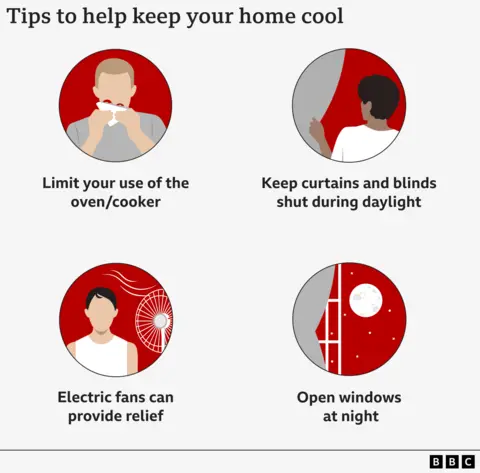
Take steps to make sure your bedroom is as cool as it can be at night.
During the day, closethe curtains or blinds to keep out the sun. Make sure you shut the windows on the sunny side of your home, to keep out hot air.
Open all the windows before you go to bed, to get a through breeze.
4. Use thin sheets
Reduce your bedding but keep covers handy. Thin cotton sheets will absorb sweat.
Wearing loose-fitting clothes made of natural fibres like cotton or linen can keep you cooler than sleeping naked.
However hot it is in your bedroom, your body temperature will fall during the night.
That is why you sometimes wake up feeling cold even though the temperature is higher than usual.
5. Use a fan and chill your socks
Using even a small fan can be sensible in hot weather, especially when it is humid.
It encourages the evaporation of sweat and makes it easier for your body to regulate your internal temperature.
If you don't have a fan, try filling a hot water bottle with ice cold liquid instead.
Alternatively, cool socks in the fridge and put those on. Cooling your feet lowers the overall temperature of your skin and body.
6. Stay hydrated
You should make sure you drink enough water throughout the day but should avoid drinking very large amounts before bed.
 Getty Images
It's about striking the right balance.
You don't want to wake up thirsty - but you don't want to have to take an additional trip to the bathroom in the early hours either.
7. But think about what you drink
Be careful about soft drinks. Many contain large amounts of caffeine, which stimulates the central nervous system and makes you feel more awake.
Avoid drinking too much alcohol as well. Many people drink more when the weather is hot.
Alcohol might help you fall asleep but it also promotes early morning waking and a poorer quality of sleep overall.
8. Stay calm - and leave your phone alone
If you are struggling to sleep, get up and do something calming. Try reading, writing, or even folding your washing.
But avoid using your phone. Mindless scrolling might seem appealing, but the blue light from the screen can stimulate your brain and leave you feeling more awake.
Return to bed when you feel sleepy.
9. Keep to the usual bath and bed times for children
Children are often quite robust sleepers - but they can be very sensitive to changes in family "mood" and routine.
 Getty Images
Make sure usual bedtimes and bath times do not go out of the window just because it is warm.
As part of the bedtime routine, the NHS UK website recommends lukewarm baths. Make sure they are not too cold, as that will boost your child's circulation which could increase their temperature.
A baby cannot let you know if they are too hot or too cold, so it is important to monitor their temperature.
They generally sleep best when their bedroom temperature is between 16C and 20C - use a room thermometer to check.
10. Remember that you will be OK
Most of us need about seven to eight hours of good-quality sleep each night to function properly.
Teenagers, children and babies typically need more sleep because they are still growing.
But remember that the majority of people can still function well after a night or two of disturbed sleep.
Although you might yawn a little more frequently than usual, you will probably be fine.
These tips were based on suggestions by Prof Kevin Morgan, former director of the Clinical Sleep Research Unit at Loughborough University, and Lisa Artis, of the Sleep Council. This article was first published in July 2019.
