What is humidity and why does it make us feel so uncomfortable?

Some times a cooling sea breeze can provide respite from hot, humid weather
- Published
Muggy, sultry, clammy, sweaty - all words used to describe a hot and humid day.
High humidity can often make people feel uncomfortable and have difficulty sleeping.
And humid weather is sometimes accompanied by thunderstorms and heavy rain.
What is humidity?
Humidity is a measurement of the amount of water vapour in the air.
Warmer air can hold more water vapour than cooler air, if there is plenty of water available.
The tropics are very warm and also very humid and the air there contains lots of water vapour.
Conversely, there is very little water vapour over the cold Arctic and Antarctic or the deserts of the Sahara, therefore humidity would be much lower.
Heatwaves: The New Normal?
How hot is too hot? From heat labs to firefighting helicopter pilots and wineries, we look at how extreme heat impacts people and environments in the UK.
How do you measure humidity?
We tend to measure humidity in terms of Relative Humidity (RH). This looks at how much water vapour there is in the air compared to how much there could be at that temperature.
You can find the RH for where you are on the BBC Weather app. If it's 100% then it is fully saturated.
Dew point temperature is also a measurement of humidity. This is calculated by cooling a surface to the point at which the air condenses and looks like the dew seen on grass in early mornings when the temperature has dropped over night.

Find the relative humidity on the BBC Weather app by selecting an hourly forecast time
Does humidity affect the human body?
While there are health effects from low humidity - including dry skin and itchy eyes - our bodies tend to find it more difficult to cope with high humidity.
When we get hot, our bodies sweat to help cool us down but high humidity makes it more difficult for your sweat to evaporate into the air and this can leave you feeling hot and sticky.
Combine high humidity with high temperatures and for some people this can lead to dangerous levels of overheating and heat stress.
Heatwaves: The New Normal?
How hot is too hot? From heat labs to firefighting helicopter pilots and wineries, we look at how extreme heat impacts people and environments in the UK.
Where does humid air in the UK come from?

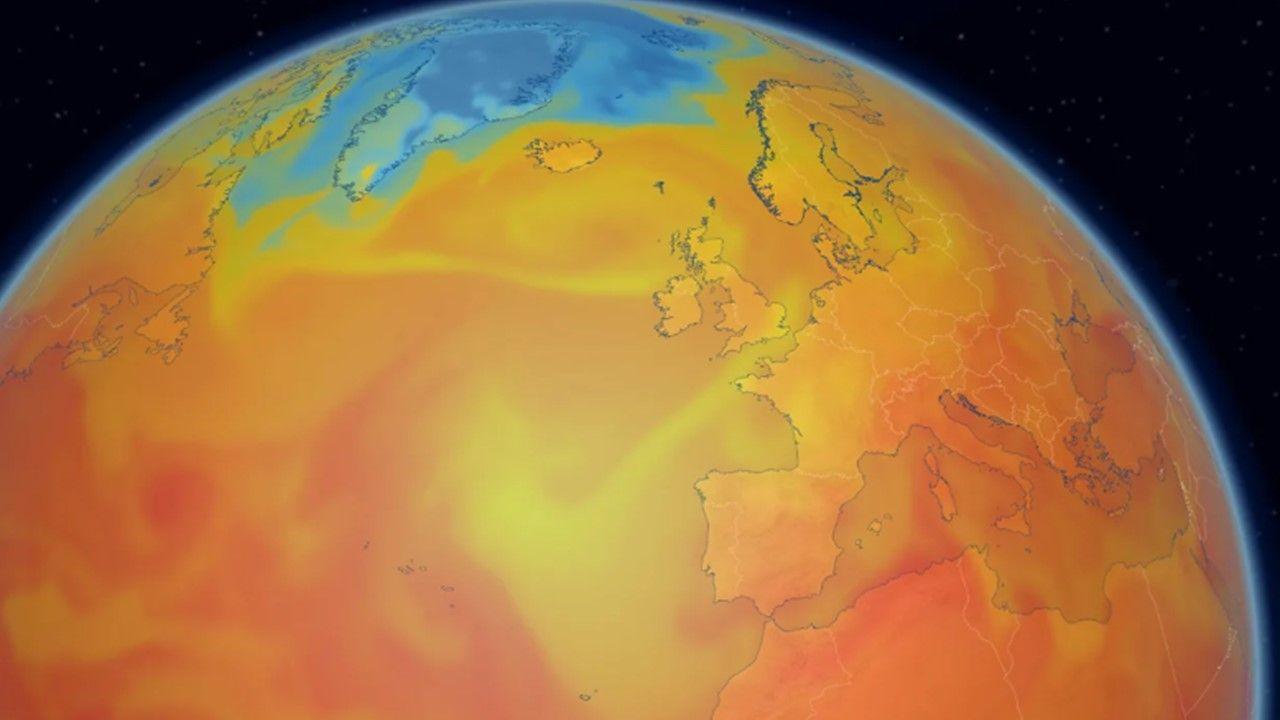
Winds from the Mediterranean or north Africa bring hot and humid weather and storms
In the UK, humid weather tends to happen when winds are coming from the south. That can be from a tropical maritime airmass bringing moisture laden air from the Atlantic, but, a tropical continental airmass can bring a more dramatic change in humidity and weather.
Our highest temperatures of the year come with a southerly wind and usually with high humidity.
Often, this muggy air gives way to thunderstorms and heavy rain and once they pass, the air that follows is usually cooler, less humid and more 'comfortable'.
- Published16 September 2019
- Published11 June 2025

- Published1 June 2025