'Collapsing wildlife and polluted rivers now a life or death issue'

 BBC
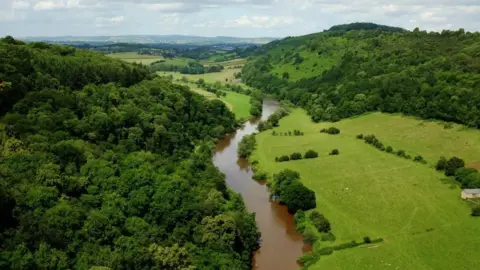
BBCA major review of the state of the Welsh environment has warned of "polluted rivers, failing soils" and "collapsing wildlife".
Parts of the country also have some of the worst air quality in Britain - causing up to 1,400 premature deaths a year - according to Natural Resources Wales (NRW).
The organisation, which is often challenged by campaigners over whether it is tough enough on tackling pollution, said it was impossible to "regulate our way out of this", calling for action across society to allow people to live more sustainably.
The Welsh government said it would lead efforts to "restore nature, tackle pollution and build resilience to climate change".
NRW is required by law to publish a report on the state of Wales' natural resources every five years.
Its latest runs to over 800 pages, looking in detail at areas like air and water quality, soil health, the resilience of ecosystems and people's access to green space.
Wales continues to fail all four of the assessment's key aims, which are geared around ensuring the environment is managed sustainably for both people and wildlife.
Rivers, streams and lakes are a particular concern, with the resilience of freshwater ecosystems having not improved since the last report in 2020.
Salmon are expected to disappear completely from some Welsh rivers by 2030, with just 40% of water bodies in Wales classed as being in good condition.
Semi-natural grassland also continues to be lost, despite being seen as a priority habitat and vital for a whole range of plants, fungi, insects, ground-nesting birds, small mammals and reptiles.
At sea, around half of the species and habitats assessed in marine protected areas were in unfavourable condition, a situation that has recently brought housebuilding to a halt along parts of the Welsh coast.
The report blames pollution and unsustainable land use and says climate change is intensifying pressures on the environment.
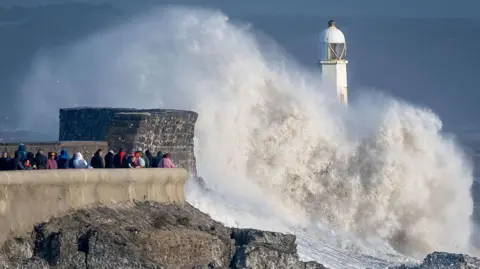
Sea levels are expected to rise in Wales by up to a metre by 2100, alongside more frequent and severe storms, with more than 350,000 properties set to be at risk of flooding.
During prolonged dry weather, 70% of Wales' population could see water shortages by 2050, it claims.
Meanwhile, towns and cities are already "struggling to cope" with the increased risk of heat stress and flooding, and lower income areas are disproportionately affected.
"We need more street trees, rain gardens and other green infrastructure to keep the places where we live habitable," the report says.
Despite some improvements, Wales also continues to have issues with air pollution, thought to cost the country £1bn each year in lost workdays and healthcare expenses.
 Getty Images
Throughout the report, NRW warns of data gaps and the need for further monitoring, raising the prospect the picture may be even worse than described for the environment.
Lack of effective monitoring is a criticism often levelled at the organisation by campaigners, and most recently by the interim Environmental Protection Assessor for Wales (IEPAW), Prof Lynda Warren.
In a report last month she said years passed without full assessments of the condition of Wales' most protected sites for nature with the condition of many features "unknown".
It follows a warning from Audit Wales in November that "staff capacity constraints, gaps in key data, and fragmented digital systems" were holding NRW back in work to enlarge and better connect sites of special scientific interest.
NRW points to efforts to restore peatlands, tackle metal mine pollution, increase recycling rates and reform farm subsidies in Wales as examples of progress.
But the State of Natural Resources report's stark findings provide a "reality check" that should put the environment "at the heart of every decision, every policy and every investment Wales makes".
It is published with months to go until May's Senedd election, alongside a separate "Bridges to the Future" report, setting out how the challenges might be addressed.
These are not "quick fixes" and involve "redesigning the systems that shape our lives" such as energy, food, heating and transport.
'Life-and-death issue'
Evidence of environmental damage was "no longer abstract, technical or distant", said NRW's chair Neil Sachdev.
"It is visible on our doorsteps: flooded homes, polluted rivers, failing soils, collapsing wildlife, unaffordable energy bills, rising food costs, and communities living with growing risk and uncertainty.
"Let us be clear, incremental change will not save us. We cannot regulate our way out of this. We cannot recycle our way out of this," he said.
Derek Walker, Wales' future generations commissioner, said restoring nature was "a literal life-and-death issue, and everyone has a role in it".
The report was "essential reading for NRW itself, but also for economists, financial planners, land managers, health professionals, ministers and decision-makers," he said.
"The strongest levers for change sit in the decisions we make across public policy, investment and delivery, not only within the environmental sector."
Climate Change Secretary and Deputy First Minister Huw Irranca-Davies said the report's "robust assessment of the challenges facing our natural environment" would "play an important role in the development of our future natural resources policy in Wales".
"Protecting and enhancing nature is essential for people today, and for future generations," he said.
"The people of Wales have made real progress but we need to go further again.
"This report sets out how we can work together to respond, strengthening action to restore nature, tackle pollution and build resilience to climate change," he said.
"The Welsh government will lead this work alongside partners across the public sector, business and communities to turn evidence into meaningful action."
