Saltmarsh restoration to boost natural habitats

 Cbec
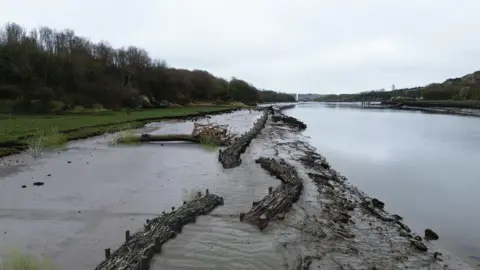
CbecThe restoration of a saltmarsh will combat centuries of development on a river, a charity has said.
Groundwork NE & Cumbria has secured more than £1.4m funding for the restoration on the River Wear in Sunderland.
It is hoped the project will help to tackle losses of natural habitats and improve water quality, as well as increase the numbers of fish, crabs and other marine life.
The charity said it wanted the local community's support to back the project, after the past several trial projects in other parts of north-east England had been impacted by anti-social behaviour.
The focus will be at Baron's Quay on the river's North bank and Claxheugh Rocks on the south bank of the river.
Groundwork NE & Cumbria said historically the River Wear would have been lined with miles of mudflat and saltmarsh, but centuries of industrialisation and human interference had stripped it away.
It added saltmarshes were "important ecosystems which are highly efficient at storing carbon naturally".
'Protect our work'
Restoring the mudflat and saltmarsh would bring back native plant species which provide nurseries and safe havens for juvenile fish and crabs, the charity said.
Nature-based solutions lead at Groundwork Helen Hornby said: "This is our largest saltmarsh restoration project in the region.
"Previous, smaller trials elsewhere in the North East have been hampered by anti-social behaviour.
"To avoid this happening in Sunderland, we want to liaise with any interested parties, community groups and users of the river and estuaries to explain what we are doing and what we hope to achieve.
"By explaining the benefits for all river users and how the work will improve the river by bolstering fish and crustacean stocks, we hope will encourage people to protect our work on the mudflats."
The project is also being funded by the Environment Agency and the Caterpillar Foundation.
Environment programme team leader for the Environment Agency in the North East Rebecca O'Connell said: "Restoring these precious estuarine coastal ecosystems will enhance our connection to the natural world, help tackle the impacts of biodiversity loss, provide sustainable food, and improve the health and wellbeing of our communities."
