Council tax rise blamed on government funding

 BBC
BBCA council has blamed the level of government funding for its decision to propose raising council tax bills.
Westmorland and Furness Council claimed it "had no choice" but to raise council tax to the maximum 4.99% after changes to the government's funding settlement meant it would lose millions of pounds each year.
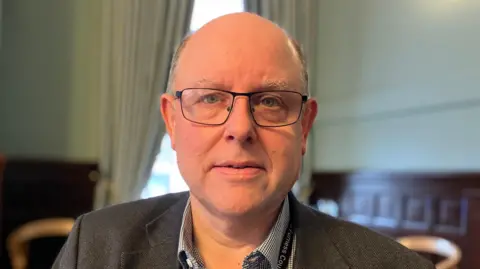
The deputy leader and cabinet member for finance, Liberal Democrat Andrew Jarvis, said the reduction in government funding was a "total disgrace".
The Ministry of Housing, Communities & Local Government (MHCLG) said it had made £314.2m available to the council in 2026-27, which was an increase of 10.6% on the previous year.
Jarvis said the council had "suffered grievously" in the funding settlement and the changes had reduced its support from the government by about a third over the funding cycle.
He said the changes left the council with a £12m shortfall for 2026-27, which would increase to £43m by 2028-29.
What is increasing?
Jarvis said the council had looked to save money by "fundamentally challenging what the council does" and how it delivers services.
"But even with the savings we have identified, these will not be sufficient to offset the significant loss in government funding," he said.
"Consequently, we feel we have no option but to implement increases and charges that we had hoped we could avoid."
The council's cabinet has made a number of recommendations which will be voted on at a full council meeting on 26 February.
These include:
- Increasing council tax by 4.99%
- A new annual £60 charge for garden waste collections
- Increasing car park charges by about 10%
- Increasing charges for the Windermere Ferry and the removal of the Blue Badge exemption
- Increasing other fees and charges in line with inflation
A spokesperson for the MHCLG said it was "for councils to decide the level of council tax, but we expect them to put local taxpayers first in these decisions".
MHCLG recently said it had made £78bn available to councils across England through the Final Local Government Finance Settlement.
It also said councils most impacted by historic funding cuts would receive investment through a £440m Recovery Grant uplift, while authorities would also have 90% of their historic SEND-related deficits written off.
The Local Government Association said it welcomed aspects of the settlement but some councils would be "deeply concerned that the outcome has not provided sufficient resources to meet growing demand and cost pressures".
